
Beautiful Plants For Your Interior
Beautiful Plants For Your Interior
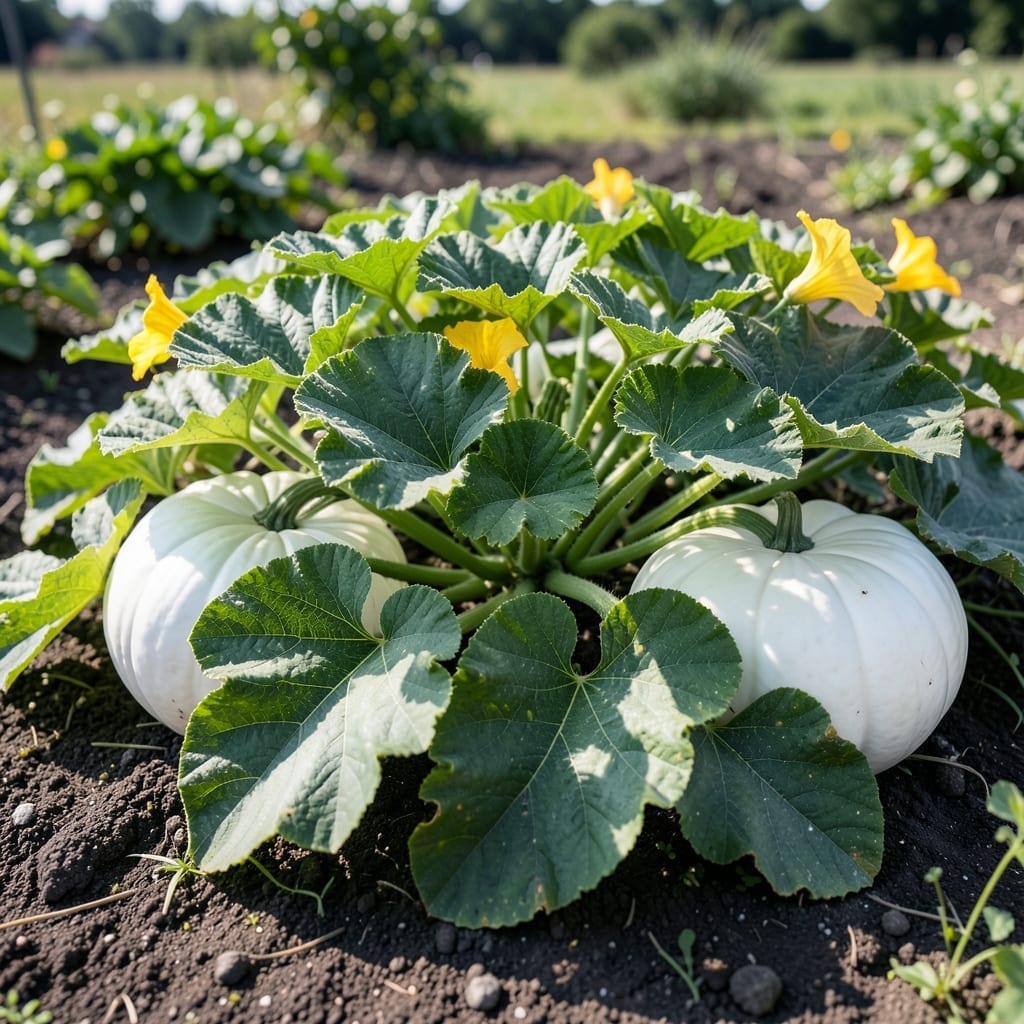
White pumpkin is a pale-skinned winter squash variety with sweet, mild flesh, often used for cooking, baking, or decorative purposes. It belongs to the Cucurbita family and matures with a hard, smooth rind.
I love how this variety stands out from its orange cousins with its ghostly white exterior. Unlike traditional pumpkins, it’s often chosen for its subtle sweetness and creamy texture, which works beautifully in soups, pies, or even as a centerpiece. 💫
What makes it special is its adaptability—it thrives in similar growing conditions but offers a unique visual appeal for seasonal displays.
💡 In This Article
The Lumina variety stands out with its pure white skin and bright orange flesh, weighing 8-12 pounds. It grows best in warm climates with 100-120 days to maturity, producing smooth, globular fruits perfect for pies. 🔥
Valencia white pumpkins are smaller (4-6 pounds) with ribbed exteriors and dense, sweet flesh ideal for soups. They thrive in well-drained soil and require consistent watering during fruit development. The flesh has a fine, grainy texture similar to butternut squash.
Unlike orange pumpkins, white varieties have thinner rinds that harden fully at maturity. Their flesh typically contains 30-50% more natural sugars, making them sweeter when roasted. The skin’s pale color comes from reduced carotenoid pigments compared to orange types.
Growers prize white pumpkins for their resistance to powdery mildew and ability to store for 3-6 months in cool, dry conditions. The vines spread 10-15 feet, requiring generous spacing in gardens. Their leaves are deeply lobed and slightly hairy.
Ghost pumpkins offer a medium size (10-25 pounds) with a stark white exterior and vibrant orange interior. They’re popular for carving due to their thick, stable walls that hold intricate designs well. ✨
All white pumpkin varieties share the Cucurbita maxima classification, meaning they can cross-pollinate with other winter squashes. Their seeds are typically cream-colored and slightly larger than those of orange pumpkins.
White pumpkins have a sweeter, milder flavor with 30-50% more natural sugars. Their flesh is creamier and less fibrous than typical orange varieties. Many describe it as similar to butternut squash.
Yes, all white pumpkin varieties are edible, though some are bred more for decoration. Varieties like Lumina and Ghost are prized for both their appearance and culinary uses. Always cook the flesh before eating.
They need 100-120 days of warm weather, well-drained soil, and 10-15 feet of space for vines to spread. These are resistant to powdery mildew, making them easier to cultivate than some orange types.
Keep in a cool, dry place with good ventilation. Properly stored white pumpkins can last 2-3 months or even longer. Avoid direct sunlight and check periodically for soft spots.