
Beautiful Plants For Your Interior
Beautiful Plants For Your Interior
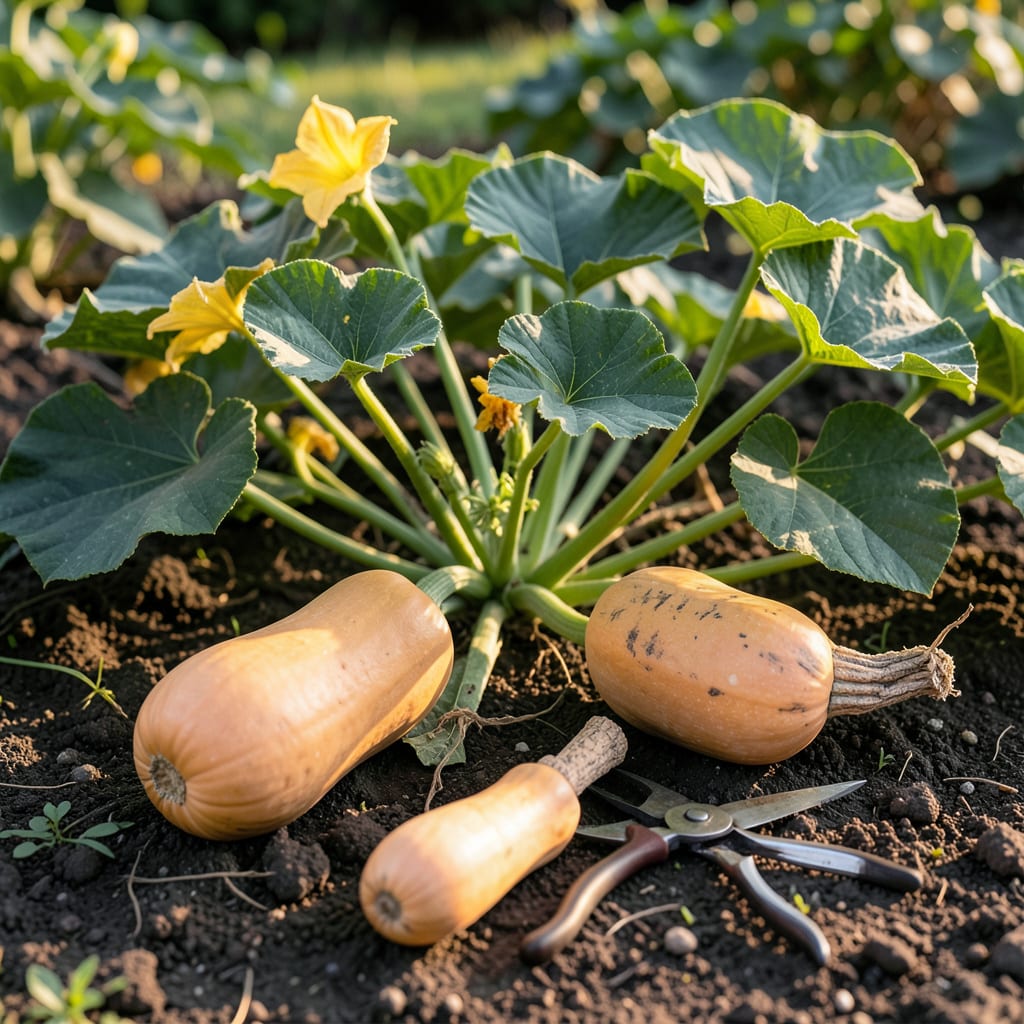
Picking Butternut Squash 🎃 at the perfect time ensures the best flavor and storage life. Even experienced gardeners sometimes struggle to spot the exact moment.
The key lies in observing subtle changes in the stem, skin, and vine behavior. I’ll show you how to read these signs with confidence.


Knowing when to harvest Butternut Squash is all about spotting the right visual cues. I look for a deep tan color first, as the skin transitions from pale to rich hue.
The stem is another telltale sign—it should turn brown and woody when the squash is ripe. These changes happen gradually, so I check daily as harvest time nears.
| Sign | What to Look For |
|---|---|
| Skin Color | Deep, uniform tan |
| Stem Condition | Dry, brown and hard |
| Rind Hardness | Resists fingernail pressure |
| Vine Behavior | Leaves yellow and die back |
I always perform the fingernail test—if the skin resists pressure, it’s ready. This simple check prevents picking immature squash that won’t store well.
The vine’s condition also offers clues. When the leaves near the squash start to yellow and wither, it’s a sign the plant is redirecting energy to the fruit.
Another reliable indicator is the hollow sound when tapped. Ripe Butternut Squash produces a dull thud, while unripe ones sound solid and dense.
I’ve found that cool mornings are ideal for harvesting. The squash is firmer, and the stem is easier to cut cleanly without damaging the fruit.
Don’t rush the process—patience pays off. A fully mature Butternut Squash will store for months in a cool, dry place, rewarding your careful timing.
If you’re unsure, leave the squash on the vine a few extra days. It’s better to wait than to harvest too early and miss out on the best flavor and texture.
Finally, always use sharp pruners to cut the stem, leaving 2-3 inches attached. This prevents rot and ensures the squash stays fresh longer.
☀️Harvesting Butternut Squash too early is a common mistake I see. If the skin punctures easily with a fingernail, it’s not ready. The seeds inside will be underdeveloped too.
Waiting too long can be just as problematic. Overripe squash may split open or attract pests and diseases. I always check the vine for signs of decay or mold.
❌ Picking too early: Soft skin, immature seeds
❌ Waiting too long: Risk of rot, pest damage
❌ Cutting stem too short: Leads to faster spoilage
Another mistake is cutting the stem too short. I always leave 2-3 inches of stem attached to prevent rot and extend storage life. This small detail makes a big difference.
Improper handling can cause bruising or damage. I gently lift the squash and use sharp pruners for a clean cut. Never carry it by the stem, as this can break the fruit.
I also avoid harvesting in wet conditions. Moisture can promote mold growth during storage. I wait for a dry morning to ensure the squash stays in the best condition.
Lastly, don’t store unripe squash with ripe ones. Ethylene gas from ripe squash can speed up ripening, but it won’t improve the flavor or texture of immature fruit.
🌿Testing Butternut Squash for ripeness doesn’t have to be a guessing game. I rely on a few hands-on methods to confirm it’s ready to pick. These tests are simple but incredibly effective.
The fingernail test is my go-to. Press your thumbnail into the skin—if it resists pressure, the squash is ripe. If it punctures easily, it needs more time on the vine.
Another method is the tap test. Gently tap the squash—if it sounds hollow, it’s ready. A solid or dense sound means it’s still maturing.
For absolute certainty, I sometimes open a test squash. If the seeds are fully formed and the flesh is firm, the rest of the crop is likely ready too. This is especially useful for first-time growers.
These tests work best when combined with visual signs like skin color and stem condition. Together, they give me confidence that I’m harvesting at the perfect time.
🌱Look for a deep, uniform tan color all over the squash. Pale or green patches mean it needs more time on the vine to develop full sweetness and texture.
The stem should be completely dry and woody. If it still looks green or moist, the squash isn’t mature yet. Always leave 2-3 inches of stem when harvesting.
A light frost won’t harm mature squash, but a hard freeze can damage it. Harvest before the first frost if possible. If caught by frost, use it quickly as storage life will be shorter.
A hollow sound means it’s ripe! Ripe squash has a dull thud, while unripe ones sound solid. This test works best with the fingernail and color checks.
