
Beautiful Plants For Your Interior
Beautiful Plants For Your Interior
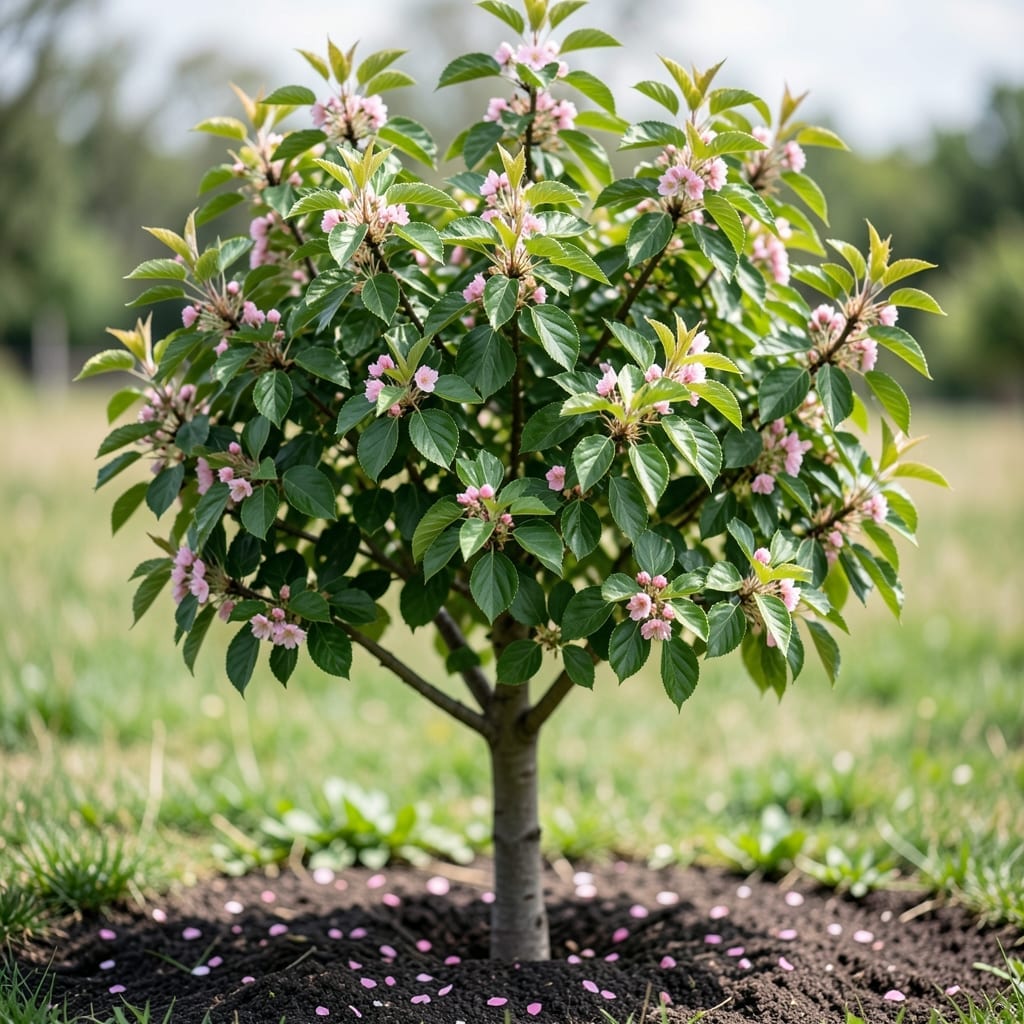
Cherry tree leaves are typically oval or lance-shaped with pointed tips, featuring serrated edges. They range from 2 to 5 inches long, have a glossy dark green surface, and turn vibrant red or yellow in autumn.
I love how these leaves transform through the seasons, starting with a deep, shiny green that feels almost waxy to the touch. 🌟 The serrations are fine but distinct, giving them a jagged appearance that helps distinguish them from similar trees. By late summer, you might notice subtle changes in texture as the leaves prepare for their spectacular fall color show.
💡 In This Article
The unique shape of cherry leaves comes from their pinnate venation, where a central midrib branches into smaller veins that create the serrated edges. These edges aren’t random—they form a precise, doubly serrate pattern with both large and small teeth, unlike the smoother margins of maple leaves. This design maximizes sunlight capture for photosynthesis. 🌟
Size varies significantly between species. Sweet cherry leaves often reach 4-5 inches long, while sour cherry varieties typically max out at 2-3 inches. The width-to-length ratio is also telling: most maintain a 2:3 proportion, creating that distinctive elongated oval that tapers to a sharp point at the tip.
Texture changes dramatically with age. New spring leaves emerge soft and slightly fuzzy, with a matte finish. As they mature, the surface develops a glossy cuticle—a waxy layer that reduces water loss and gives the leaf its characteristic shine. This adaptation is particularly pronounced in wild cherry species growing in drier climates. ⚡
Vein patterns offer another identification clue. The primary veins (about 5-8 pairs) branch alternately from the midrib, creating a feather-like structure. Hold a leaf to the light and you’ll see these veins form a network that’s more intricate than oak leaves but less parallel than those of willow trees.
This venation supports the leaf’s structure while optimizing nutrient transport.
The leaf base often features a subtle rounded or slightly heart-shaped form, particularly in young trees. As the tree matures, this base may become more symmetrical. This detail, combined with the serrated edge pattern, creates a silhouette that’s unmistakable once you know what to look for. 💫
Cherry leaves have doubly serrated edges with both large and small teeth, unlike maple’s smoother margins. Their 2:3 length-to-width ratio and glossy surface also help distinguish them.
Yes, but the hues vary by species. Sweet cherries often turn fiery red, while sour varieties may shift to golden yellow or orange. The change begins at the edges in late October.
New spring leaves emerge pale green to reddish and slightly fuzzy. They develop the characteristic glossy finish and defined serrations as they mature.
In winter, look for teardrop-shaped reddish-brown buds at branch tips. Their smooth texture and position are distinctive, even without leaves.