
Beautiful Plants For Your Interior
Beautiful Plants For Your Interior
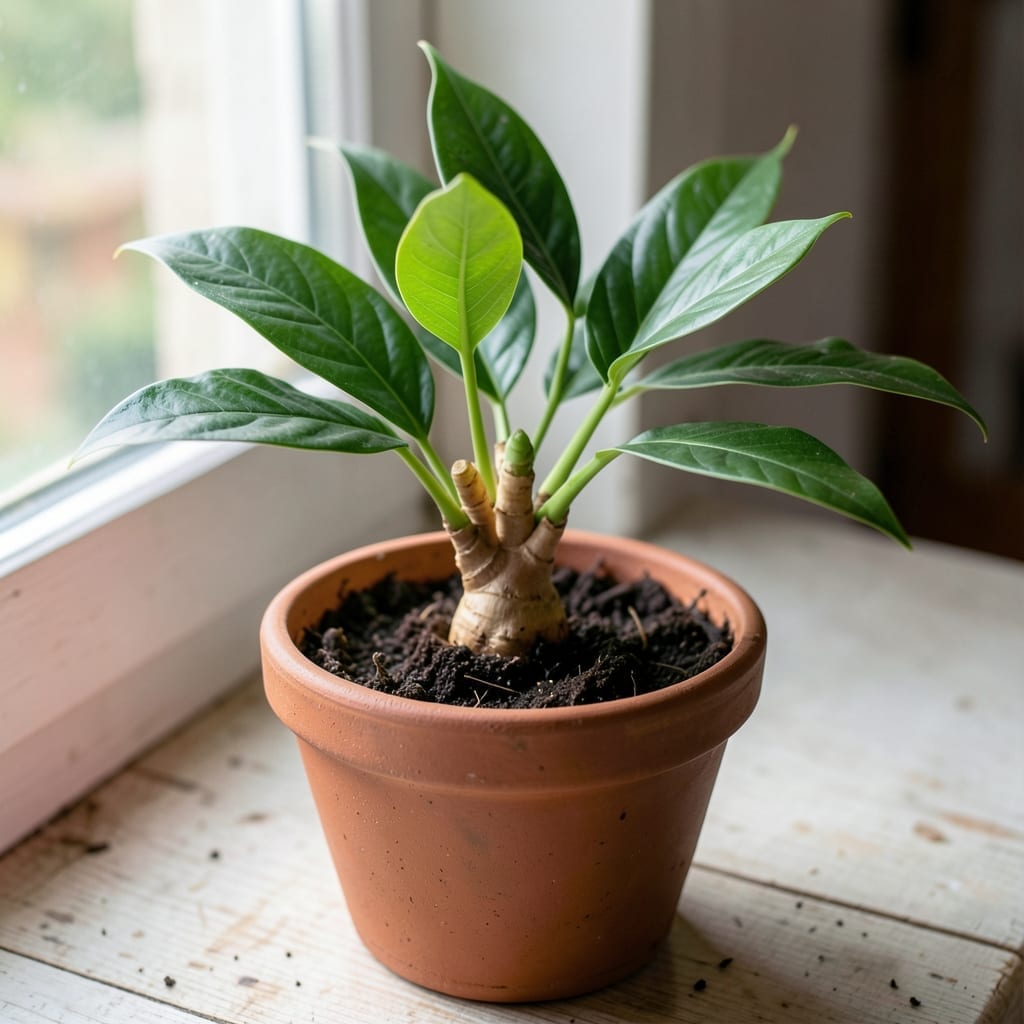
Sprouting ginger root develops small green shoots or nubs, indicating it’s ready to plant. These buds signal active growth and the potential to produce new ginger plants in warm, moist soil.
I look for these green nubs as the first sign my ginger is ready to grow. They emerge from the root’s nodes, which are those bumpy sections along its surface. 🔥 This natural process shows the rhizome is alive and has enough stored energy to support new plant development. The warmer the environment, the faster these growth points will appear and strengthen.
💡 In This Article
Those tiny green nubs emerging from your ginger root are actually new shoots called “eyes” or buds. They typically appear as small, firm bumps that gradually turn bright green as they grow, usually reaching 1/4 to 1/2 inch in length when ready for planting.
The buds form at the nodes—those knobby sections along the rhizome where leaves and stems naturally develop.
Healthy sprouts feel slightly firm to the touch and have a vibrant green color, not white or brown. White or pale buds often indicate the root is still dormant, while dark or mushy spots suggest rot or fungal growth.
The sprouting process begins when the rhizome’s internal hormones (like gibberellins) activate in response to warmth and moisture, signaling the plant to break dormancy. 🔥
You can distinguish viable growth from mold by checking the texture. New shoots are smooth and slightly pointed, while mold appears fuzzy or powdery. Another key difference: sprouts emerge from the nodes in a uniform pattern, whereas mold spreads irregularly across the surface.
Properly stored ginger (in a warm, humid environment) will sprout within 2-4 weeks.
The biological trigger for sprouting involves the rhizome using its stored starches as energy. As temperatures rise above 70°F, enzyme activity increases, converting these starches into sugars that fuel the emerging shoots. This is why ginger kept in a dark pantry at 75-80°F with occasional misting sprouts fastest. ✨
For best results, select rhizomes with multiple plump nodes, as each can potentially produce a shoot. The most vigorous sprouts often appear at the tips of the root, where growth hormones are most concentrated. Avoid pieces with wrinkled skin or soft spots, as these indicate dehydration or decay that will hinder sprouting.
In ideal conditions with warmth and moisture, ginger typically sprouts within 2-4 weeks. Keep it at 75-80°F and mist occasionally to speed up the process.
Yes, but sprouted ginger has a head start. Dormant roots may take longer to grow or fail to sprout at all. Look for firm, plump rhizomes with visible nodes for best results.
Brown sprouts often indicate too much direct sunlight or underwatering. Move to partial shade and maintain moist soil. If the rhizome feels soft, it may be rotting from overwatering.
Use a well-draining mix of 50% potting soil and 50% compost. This provides nutrients while preventing waterlogged roots, which can cause rot.