
Beautiful Plants For Your Interior
Beautiful Plants For Your Interior
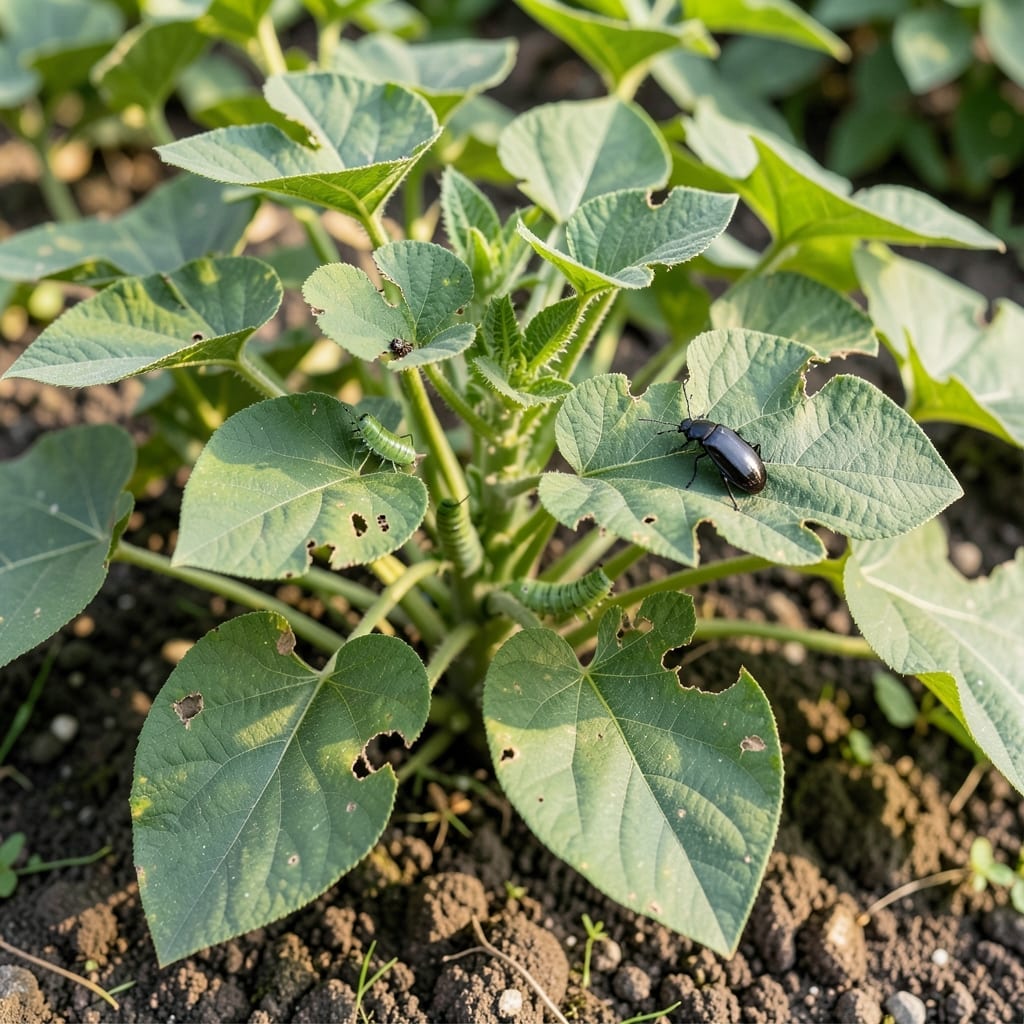
That ragged edge on your sweet potato leaves isn’t normal. I’ve seen deer, rabbits, and flea beetles turn healthy vines into lace overnight—each leaves a distinct pattern if you know where to look.
First step is identifying the culprit by examining the damage closely. Deer leave jagged tears, rabbits make clean cuts, and beetles create tiny shot holes. The solution changes completely depending on what’s causing the problem.
Once you know what you’re dealing with, targeted action works fast. Fencing stops deer, row covers block rabbits, and neem oil handles most insect issues without harsh chemicals.
Your plants can recover quickly with the right approach. Here’s how to diagnose and fix it before the damage spreads.
Sweet potato leaves are a magnet for pests and problems, but the damage isn’t random. Here’s why it happens, broken down by the most common culprits and their scientific triggers.
Sweet potato weevils (Cylas formicarius) lay eggs in the soil near the plant. Larvae hatch and burrow into stems and leaves, feeding on vascular tissue. Flea beetles chew small, irregular holes in young leaves, thriving in warm, dry conditions. Aphids and whiteflies suck sap from the undersides, causing yellowing and curled edges while excreting sticky honeydew that attracts sooty mold.
Deer, rabbits, and groundhogs are drawn to the tender foliage, especially in early growth stages. These mammals can strip entire plants overnight, leaving jagged, torn edges. Slugs and snails also target leaves, leaving slime trails and irregular, ragged holes as they rasp tissue with their radula (a tongue-like organ).
While not “eating” in the traditional sense, pathogens like Alternaria leaf spot cause dark, circular lesions that may resemble pest damage. Overhead watering and poor air circulation create the damp conditions these fungi love. Bacterial leaf scorch (Xylella fastidiosa) clogs xylem vessels, leading to marginal leaf burn that mimics chewing.
Drought or nutrient deficiencies (especially nitrogen or potassium) can cause leaf edges to brown and crisp, mimicking pest damage. Herbicide drift from nearby applications may also lead to distorted or “eaten” appearances as chemicals disrupt cell growth.
Here’s how to tackle each culprit head-on and protect your sweet potato plants for good.
Fill a bucket with soapy water and pluck beetles off leaves in the early morning when they’re sluggish. For larger infestations, use pheromone traps (place them far from your garden to avoid luring more). Prevent future attacks by applying neem oil weekly or planting trap crops like marigolds nearby. 💡
Create a copper tape barrier around beds—slugs hate the electric charge! Or lay down diatomaceous earth (reapply after rain). For a quick fix, set out beer traps (bury a shallow dish filled with beer at soil level). Prevent overnight feasts by watering in the morning so soil is drier at night. 🌡️
Use a strong jet of water to knock mites off leaves, focusing on the undersides. Follow up with insecticidal soap or horticultural oil, applying every 5–7 days until they’re gone. Prevent outbreaks by keeping plants well-hydrated (mites thrive in dry conditions) and removing dusty leaves. ✨
Install a 6-foot tall fence for deer or a 2-foot chicken wire barrier for rabbits. For a temporary solution, spray leaves with hot pepper wax or commercial repellents (reapply after rain). Prevent return visits by rotating repellents and planting deer-resistant varieties like lavender nearby. 🎯
Hang yellow sticky traps near plants to catch adults. For nymphs, spray with insecticidal soap or introduce beneficial insects like ladybugs. Prevent infestations by avoiding over-fertilizing (whiteflies love new, tender growth) and pruning heavily infested leaves. 🔥
Look for jagged, torn edges on leaves and stems. Deer don’t have upper teeth, so they rip rather than cleanly cut. You may also spot hoof prints or droppings nearby.
Flea beetles or Japanese beetles are likely culprits. Flea beetles create small, irregular holes, while Japanese beetles skeletonize leaves. Check undersides for pests during daylight.
Yes! Use neem oil for insects, copper tape for slugs, or hot pepper spray for deer. Companion planting with marigolds or lavender can also deter pests naturally.
Overwatering can lead to fungal growth, causing brown spots or ragged edges. Check soil moisture and improve drainage to avoid mimicking pest damage.