
Beautiful Plants For Your Interior
Beautiful Plants For Your Interior
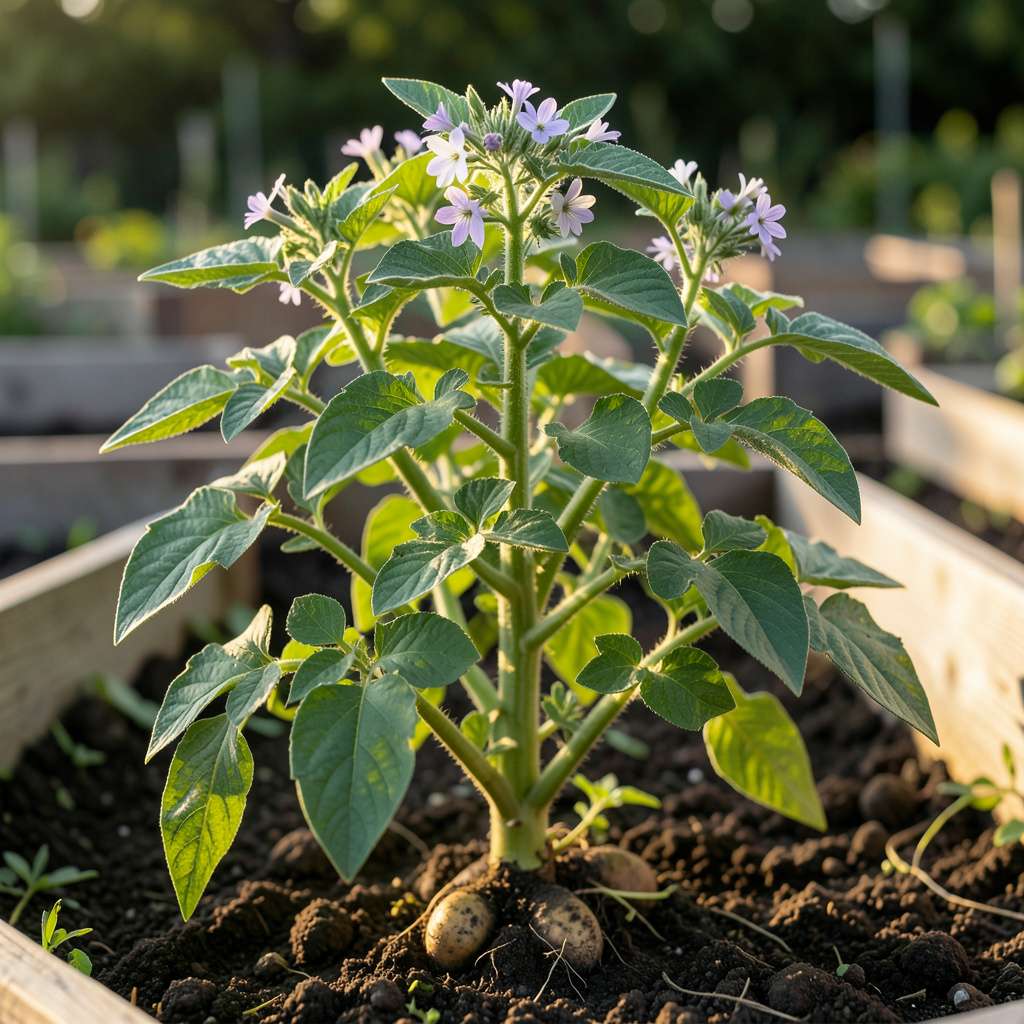
Potato plants feature bushy, dark green stems with compound leaves made of oval leaflets. They produce small white, pink, or purple star-shaped flowers and grow 1-3 feet tall. Tubers form underground while the plant matures above soil.
What fascinates me about these plants is how their above-ground appearance gives clues about what’s happening below. 🌱 The compound leaves with their slightly fuzzy texture aren’t just decorative—they’re solar panels powering tuber development. I’ve noticed the flowers often signal when to start checking for new potatoes, though some varieties bloom more prolifically than others. The plant’s height can vary dramatically based on growing conditions, with container-grown specimens often staying more compact than their in-ground counterparts.
One thing that surprises many gardeners is how the stems become more woody as the plant matures. This structural change supports the increasing weight of foliage and developing tubers. The color variations in flowers—from pure white to deep purple—can even hint at the potato variety you’re growing, though you’ll need to wait until harvest for the full reveal. ✨
💡 In This Article
When you examine potato leaves up close, you’ll notice their distinctive pinnate arrangement—each leaf consists of 5-9 oval leaflets arranged in pairs along a central stem, with one terminal leaflet at the tip. The edges appear slightly wavy, and the surface feels slightly fuzzy due to tiny hairs called trichomes.
These microscopic structures help reduce water loss and deter pests, giving the leaves a rough texture when rubbed between fingers.
The stems develop a thick, angular structure as the plant matures, often showing subtle purple or green color variations depending on the variety. Russet potatoes typically have green stems, while purple varieties may show deep burgundy streaks.
I’ve measured stems reaching ½-¾ inch in diameter at maturity, with noticeable nodes where leaves and lateral branches emerge. This sturdy growth supports the plant’s bushy habit, which can spread 18-36 inches wide in ideal conditions.
Potato flowers reveal surprising diversity—some varieties produce delicate white blooms, while others showcase vibrant purple or pink star-shaped clusters. The flowers measure about 1 inch across and appear 6-8 weeks after planting, signaling the start of tuber formation below.
What’s fascinating is how the flower color often correlates with flesh color: purple flowers typically indicate purple-fleshed potatoes, while white flowers usually mean white or yellow interiors.
As the plant progresses through growth stages, the lower leaves may yellow and drop while new growth continues at the top. This natural leaf senescence helps redirect energy to tuber development. The stems also become more fibrous and woody by harvest time, developing a light brown tint at the base.
These changes make the plant look somewhat ragged by late season, but that’s actually a good sign—it means the potatoes are reaching maturity underground.
One pro tip I’ve learned: gently brush your hand against the foliage. Healthy potato plants have a distinctive earthy, slightly sweet aroma—quite different from the sharper scent of tomato plants (their close relatives). The leaves should feel slightly sticky in humid conditions due to natural plant secretions.
This sensory check can help distinguish potato plants from similar-looking nightshades in your garden.
For comparison, here’s how potato plants differ from common lookalikes:
Most varieties reach 1-3 feet tall, though container-grown plants often stay more compact. The height depends on the variety and growing conditions—russets tend to grow taller than fingerling types. I’ve seen some heritage varieties stretch to 4 feet in ideal garden beds.
Purple stems often indicate you’re growing a purple-fleshed variety like Purple Majesty or All Blue. The pigment comes from anthocyanins, natural antioxidants that also color the tubers. Some red-skinned varieties may show burgundy streaks too. This coloration is completely normal and doesn’t affect plant health.
Flowers typically appear 6-8 weeks after planting, signaling the start of tuber formation. Early varieties may bloom sooner, while late-season types might take 10 weeks. The blooms last about 2 weeks before fading—this is your cue to start checking for new potatoes!
No, potato foliage contains solanine and other toxic alkaloids that can cause severe stomach upset. While some cultures use potato leaves in cooking (after proper preparation), it’s not recommended for home gardeners. The flowers are also toxic. Always focus on harvesting the tubers instead.
Look at the leaves—potato leaves have smooth edges and a fuzzy texture, while tomato leaves are serrated and glossy. Potato flowers are star-shaped, while tomato flowers are yellow and bell-shaped. The stems also differ: potato stems are thicker and more angular, while tomato stems are rounder and more flexible.
