
Beautiful Plants For Your Interior
Beautiful Plants For Your Interior
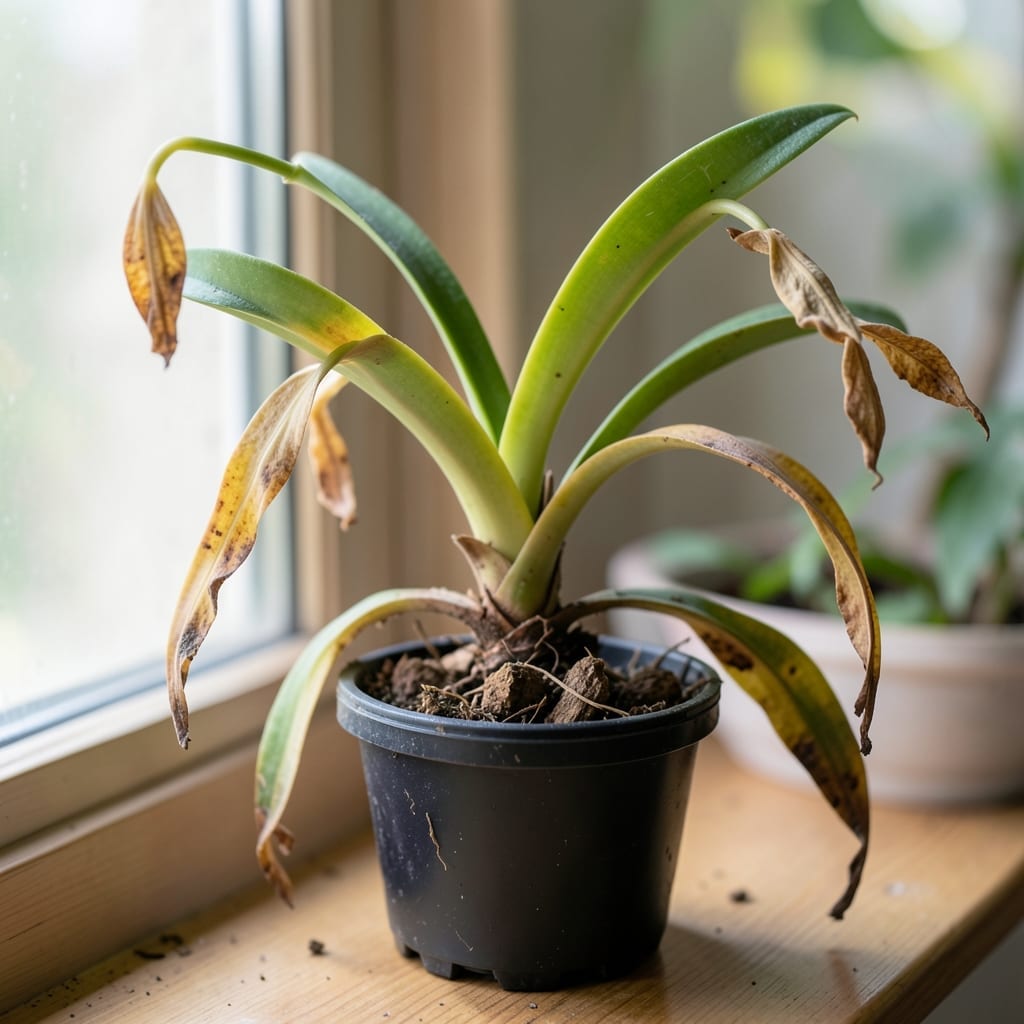
Yellow leaves and mushy roots are the silent killers of orchids. I’ve lost more than a few to overwatering, and the signs are always the same—soft, black roots and leaves that turn yellow from the bottom up.
This happens because orchids hate soggy feet. Their roots need air as much as water, and too much moisture drowns them. The plant can’t absorb nutrients, so it slowly starves even though it’s sitting in water.
Here’s the thing—it’s fixable if you catch it early. Trim the rotten roots, repot in fresh bark mix, and hold off on watering until the plant recovers. The key is better drainage and a light hand with the watering can.
Prevention is simpler than you think: water only when the bark feels dry, and always dump the saucer after soaking. Your orchids will thank you with stronger roots and longer blooms.
Overwatering orchids often stems from a few common mistakes, each tied to how these plants absorb moisture and nutrients. Here’s why it happens:
Orchids, especially Phalaenopsis and Dendrobium varieties, thrive in airy, fast-draining mixes like bark or sphagnum moss. When potted in dense soil or compacted mediums, water lingers around the roots, suffocating them. Without oxygen, roots can’t perform cellular respiration, leading to rot and nutrient uptake failure.
Many growers assume orchids need frequent watering like tropical houseplants. In reality, orchids store moisture in their thick leaves and pseudobulbs. Watering too often—especially without letting the medium dry slightly between sessions—creates a waterlogged environment. This encourages fungal and bacterial growth, which attack the roots.
Non-porous pots (e.g., glass or plastic without drainage holes) trap excess water, preventing evaporation. Orchids in such containers are prone to sitting in stagnant moisture. Even pots with drainage can fail if the holes are clogged by old medium or debris.
Cool temperatures and low light slow evaporation, so water persists longer in the pot. If your orchid sits in a dim, chilly room, adjust your watering frequency to match these conditions. High humidity can also reduce the rate at which the medium dries out.
If your orchid is showing signs of overwatering, don’t panic—there are clear steps to revive it. Start by addressing the most common issues with targeted fixes. Here’s how to nurse your plant back to health:
Stop watering immediately and let the soil dry out completely. Remove the orchid from its pot and inspect the roots. Trim any soft, mushy roots with sterilized scissors. Repot in fresh, well-draining orchid mix. Prevention tip: Water only when the top inch of the mix feels dry, and always use pots with drainage holes. 💡
Gently remove the orchid from its pot and rinse the roots under lukewarm water. Use sterile tools to cut away black, slimy roots. Soak the remaining healthy roots in a fungicide solution (or a mix of 1 part hydrogen peroxide to 3 parts water) for 10 minutes. Repot in a clean container with fresh bark-based mix. Prevention tip: Avoid letting orchids sit in waterlogged trays or saucers. ✨
Increase air circulation around your orchid by moving it to a breezy spot or using a small fan on low. Reduce humidity levels if they’re too high (above 70%). Ensure the potting mix isn’t compacted—orchids need room for roots to breathe. Prevention tip: Use a chunky, airy mix like fir bark or sphagnum moss to prevent suffocation. 🌬️
Remove any moldy or fungal growth from the potting mix or pot with a damp cloth. If the mix is contaminated, replace it entirely. Let the orchid dry out in a well-ventilated area before watering again. Prevention tip: Sterilize your tools and pots between uses to avoid spreading spores. 🧼
With these steps, your orchid can recover and thrive. Consistency in care is key—observe your plant closely and adjust as needed!
Yellow leaves starting from the bottom and feeling soft or mushy are classic signs. Unlike natural aging, which affects one or two leaves, overwatering causes widespread yellowing across lower leaves first.
Constant moisture suffocates roots, preventing oxygen absorption. This leads to root rot, where healthy silver-green roots turn black or brown and feel slimy to the touch.
Yes, if some healthy roots remain. Trim all rotten roots with sterilized tools, soak the remaining ones in a hydrogen peroxide solution, and repot in fresh bark mix.
Water only when the top 1 inch of mix feels dry, typically every 7-10 days. Always empty saucers after soaking to avoid waterlogging.