
Beautiful Plants For Your Interior
Beautiful Plants For Your Interior
Sphagnum moss transforms orchid care from guesswork to predictable success. After years of trial and error with various growing media, we’ve found this method produces the healthiest root systems and most vibrant blooms. The key lies in understanding how moss interacts with water differently than bark or other traditional media. Many growers struggle because sphagnum […]
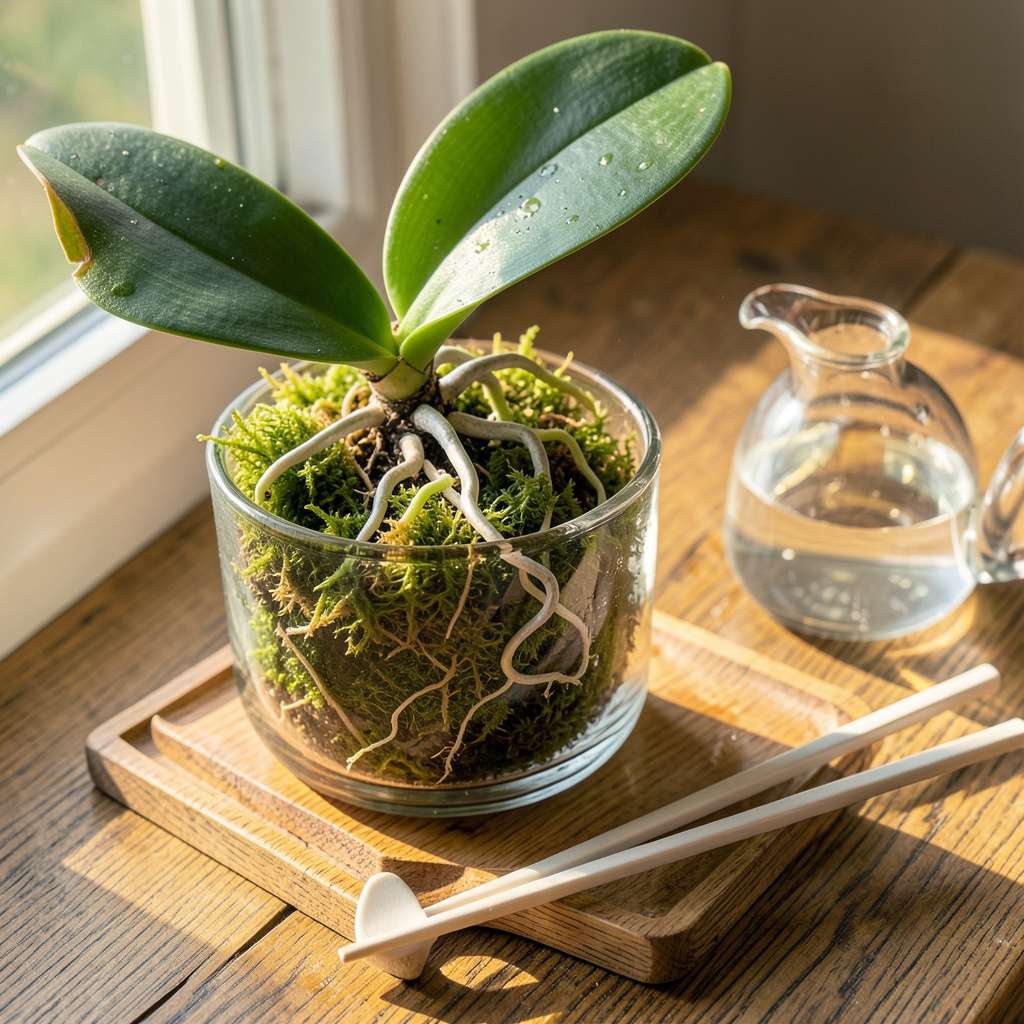
Sphagnum moss transforms orchid care from guesswork to predictable success. After years of trial and error with various growing media, we’ve found this method produces the healthiest root systems and most vibrant blooms. The key lies in understanding how moss interacts with water differently than bark or other traditional media.
Many growers struggle because sphagnum holds moisture longer while still requiring excellent airflow. Our team learned the hard way that standard watering routines don’t apply here. The technique we developed balances consistent moisture with critical oxygen access to roots, eliminating the rot problems that plague most beginners.
You’ll notice immediate differences in your plants: roots stay plump and silvery-green, new growth emerges faster, and blooms last 2-3 weeks longer than with other methods. The system works equally well for Phalaenopsis, Cattleya, and Dendrobium orchids when properly adjusted for each type’s specific needs.
What sets this approach apart is its adaptability across different growing environments. Whether you’re working with a sunny windowsill collection or a dedicated orchid growing area, the core principles remain effective. The method also accommodates various water qualities, from soft to moderately hard water sources.
📚 In This Guide
This method ensures perfect moisture balance—no guesswork, just healthy roots and spectacular blooms.
Before adding water, examine the sphagnum moss color and texture. Dry moss appears pale and crispy, while properly hydrated moss maintains a deep green hue and springy texture. Gently lift the plant from its pot to check the roots—healthy roots are silver-green when dry and turn vibrant green when hydrated.
I always perform this check in bright, indirect light where color differences are most apparent. If the moss feels damp or the pot has condensation on the sides, wait another 2-3 days before watering. Overwatering in sphagnum moss leads to root rot faster than in bark mixes because moss retains moisture longer.
Fill a basin with room-temperature water (never cold) to a depth that will submerge the pot by about 3/4 of its height. Place the orchid pot in the water and let it soak for 10-15 minutes. This allows the sphagnum moss to absorb moisture evenly without compacting, which happens with top-watering methods.
The moss should feel uniformly damp but not soggy when you remove the pot. Lift it out and let it drain completely—this usually takes 5-10 minutes. I place mine on a wire rack over a tray to ensure proper airflow around the drainage holes. Never let orchids sit in standing water, as this suffocates the roots.
After watering, weigh the pot in your hand to establish a mental baseline for proper hydration. A well-watered orchid in sphagnum moss will feel noticeably heavier than a dry one. Check the moss surface daily—it should remain slightly damp for 5-7 days in average home conditions before needing water again.
If your moss dries out in less than 4 days, your environment may be too dry. Consider placing the pot on a humidity tray or moving it to a room with 40-70% humidity. Conversely, if moss stays wet for more than 10 days, increase airflow around the plant or switch to a more open pot design.
Orchids in sphagnum moss thrive with consistent moisture cycles. I maintain a watering schedule based on the moss’s drying time rather than calendar days. Use a wooden skewer to test moisture deep in the pot—insert it near the edge, leave for 1 minute, then check for dampness. If it comes out barely moist, it’s time to water again.
Watch for new root growth as your ultimate indicator of proper watering. Healthy new roots emerge with bright green tips when hydration is ideal. Yellowing leaves or mushy roots signal overwatering, while wrinkled leaves indicate underwatering. Adjust your technique accordingly, remembering that sphagnum moss requires less frequent watering than bark mixes but more careful monitoring.
Mastering this technique comes down to understanding sphagnum moss’s unique properties and your orchid’s subtle signals.
Moisture Assessment: In Step 1, don’t rely solely on surface appearance—sphagnum moss can look dry on top while staying damp below. I always use the skewer test from Step 4 even before watering: insert it near the pot’s edge for that full 1 minute to check moisture at root level. This prevents premature watering that leads to root rot, which we’ve learned the hard way happens faster in moss than bark.
Soaking Technique: During Step 2’s 10-15 minute soak, use water that’s truly room temperature—never cold from the tap. Cold water shocks orchid roots and causes moss to absorb unevenly. I fill my basin and let it sit for 30 minutes first to equalize temperature. Also, ensure your pot is submerged to exactly 3/4 height—too deep and you’ll waterlog the crown, too shallow and the bottom roots stay dry.
Drainage Critical: The 5-10 minute drainage in Step 2 isn’t optional—it’s essential. After lifting from the soak, I tilt the pot at a 45-degree angle for the first 2 minutes to encourage complete water release, then set it upright on the rack. Any standing water in the saucer after 10 minutes means your drainage holes are clogged with moss fibers that need clearing.
Environmental Adjustments: The 5-7 day drying window in Step 3 assumes average home conditions (40-70% humidity). In our experience, south-facing windows can cut this to 3 days due to heat, while north-facing may extend it to 9 days. Move plants seasonally—closer to humidity sources in winter, with more airflow in summer—to maintain that ideal moisture cycle.
Water every 7–10 days, but check moisture first! Stick your finger 1 inch deep—if it feels dry, it’s time. Sphagnum moss retains moisture longer than bark, so overwatering is risky. Adjust based on humidity (drier air = more frequent watering) and pot size (smaller pots dry faster).
Tap water works if it’s low in minerals (check for white crust on moss/pot). For sensitive orchids, use rainwater, distilled, or filtered water to avoid salt buildup. Let tap water sit 24 hours to dissipate chlorine. Pro tip: Room-temperature water prevents root shock!
Root rot usually means too much water + poor airflow. Sphagnum moss stays wet longer, so ensure your pot has drainage holes and the moss isn’t compacted. If roots are mushy, trim affected areas, repot in fresh moss, and reduce watering frequency. Act fast—rot spreads quickly!
Sphagnum moss excels for young orchids or high humidity (retains moisture well), while bark suits mature plants or dry climates (dries faster). Moss also stabilizes seedlings. Try a 50/50 mix if unsure! Experiment to see what your orchid prefers.
Soak the pot in room-temperature water for 10–15 minutes, then let it drain completely. Mist the moss lightly daily until leaves perk up (usually 3–5 days). Avoid fertilizing until fully recovered—stressed roots burn easily! Patience is key; don’t overcompensate with extra water.
Mastering how to water orchids in sphagnum moss doesn’t have to be tricky! 🌿 By focusing on moisture balance, using the soak-and-dry method, and watching for your plant’s cues, you’ll set the stage for vibrant, long-lasting blooms. Remember: less is often more—overwatering is the fastest way to trouble.
Now that you’re equipped with the know-how, grab your moss, a timer, and a spray bottle to put these tips into action. Check your orchid’s roots weekly, adjust as needed, and enjoy the reward of a thriving, happy plant! For even more success, explore our guide on fertilizing orchids in sphagnum moss next. 💐
