
Beautiful Plants For Your Interior
Beautiful Plants For Your Interior
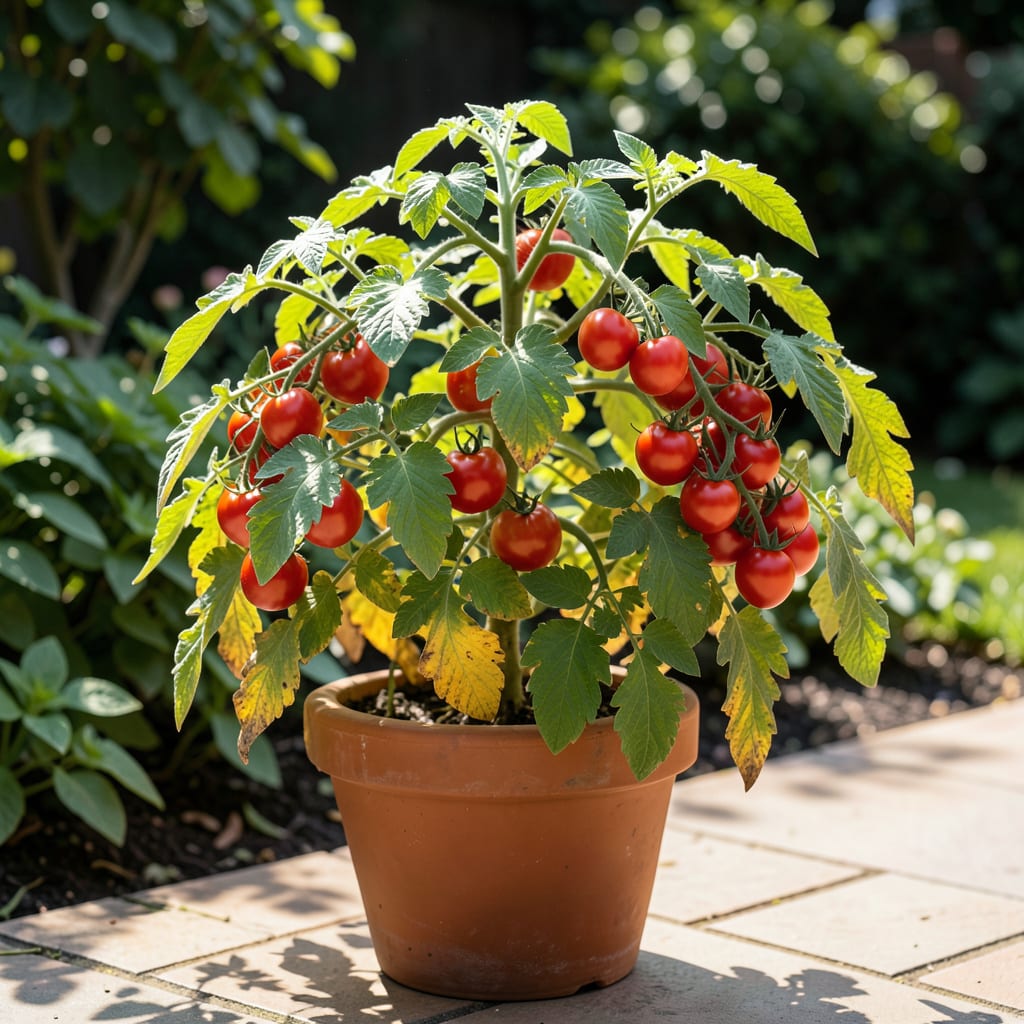
Those yellow bottom leaves on your tomato plants aren’t just unsightly—they’re a distress signal. I’ve seen this happen mid-season when plants look healthy up top but start dropping leaves from the ground up.
Usually it’s one of three culprits: too much water, not enough nutrients, or greedy pests sucking the life out of your plants. The good news? Each has a simple fix once you identify the real issue.
You’ll start seeing improvement within 3-5 days after correcting the problem. Caught early, your plants can recover completely and still produce a full harvest.
Works for container tomatoes, in-ground plants, and everything between. Here’s how to diagnose and fix it.
Yellowing of the bottom leaves on tomato plants is often a sign of stress or nutrient imbalance. Here are the most common causes, along with actionable insights to address them:
Excess water suffocates roots, reducing oxygen uptake and leading to chlorosis (yellowing). Tomato plants need consistent moisture but hate soggy soil. If the soil stays waterlogged, roots rot, and the plant can’t absorb nutrients like nitrogen or iron. Check drainage by sticking your finger 2 inches into the soil—if it’s damp, hold off on watering.
Nitrogen is critical for chlorophyll production. When deficient, older leaves (at the bottom) turn pale yellow first as the plant reallocates nitrogen to newer growth. A soil test can confirm this. Fix it with a balanced fertilizer (e.g., 10-10-10) or organic options like compost or fish emulsion.
Sap-sucking pests like aphids or whiteflies drain nutrients from leaves, causing yellowing and curling. Inspect the undersides of leaves for tiny insects or sticky residue (honeydew). Treat with insecticidal soap or neem oil to restore plant health.
Pathogens like early blight (Alternaria solani) or septoria leaf spot start as small brown spots that turn yellow. These thrive in humid, wet conditions. Remove infected leaves immediately and improve airflow. Copper-based fungicides can help prevent spread.
Extreme heat, cold, or sudden temperature swings can shock tomato plants, leading to yellowing. Tomatoes prefer 70–85°F days and 55–70°F nights. Use row covers for cold snaps or shade cloth for heatwaves to stabilize conditions.
Once you’ve identified the cause, these targeted fixes will help restore your tomato plant’s health—and keep those bottom leaves green.
Fix: Apply a balanced, water-soluble fertilizer (like 10-10-10) to replenish nitrogen, phosphorus, or potassium. For magnesium deficiency (yellowing between veins), use Epsom salt (1 tablespoon per gallon of water) as a foliar spray. Test soil first to avoid overfeeding.
Prevent: 💡 Start with compost-rich soil and side-dress with organic matter mid-season. Rotate crops yearly to prevent depletion.
Fix: Check soil moisture 2 inches deep—it should feel like a wrung-out sponge. If soggy, hold off watering and improve drainage with perlite or sand. For dry soil, water deeply at the base (1–2 inches per week) in the morning.
Prevent: ✨ Use drip irrigation to maintain consistent moisture. Mulch with straw to retain water and reduce evaporation.
Fix: Remove affected leaves immediately and dispose of them (not in compost). For early blight or Septoria, apply copper fungicide or a baking soda spray (1 tsp baking soda + 1 quart water + a drop of soap). Prune plants to improve airflow.
Prevent: 🎯 Space plants 2–3 feet apart, avoid overhead watering, and rotate crops. Solarize soil in fall to kill pathogens.
Fix: Blast aphids or whiteflies off with water, then apply neem oil or insecticidal soap. For spider mites, increase humidity with misting. Introduce beneficial insects like ladybugs.
Prevent: 🌡️ Inspect plants weekly for pests. Encourage natural predators by planting companion flowers like marigolds.
Fix: Shield plants from extreme heat with shade cloth (30–50% coverage). If cold nights are the issue, cover with row fabric. Transplant shock? Add a seaweed-based tonic to reduce stress.
Prevent: ✨ Harden off seedlings before transplanting. Choose heat-tolerant varieties for warm climates.
Not necessarily! Bottom leaves often yellow first as plants redirect energy to new growth. Address the issue quickly, and your plant can recover fully within 1-2 weeks.
Yes, prune them to improve airflow and prevent disease spread. Use clean shears and remove only the affected leaves, not healthy ones.
If most leaves are yellow, focus on correcting the root cause (water, nutrients, pests). With proper care, new growth will emerge in 7-10 days.
If caught early, your harvest remains unaffected. Severe cases may reduce yield, but healthy upper leaves will still produce fruit.
