
Beautiful Plants For Your Interior
Beautiful Plants For Your Interior
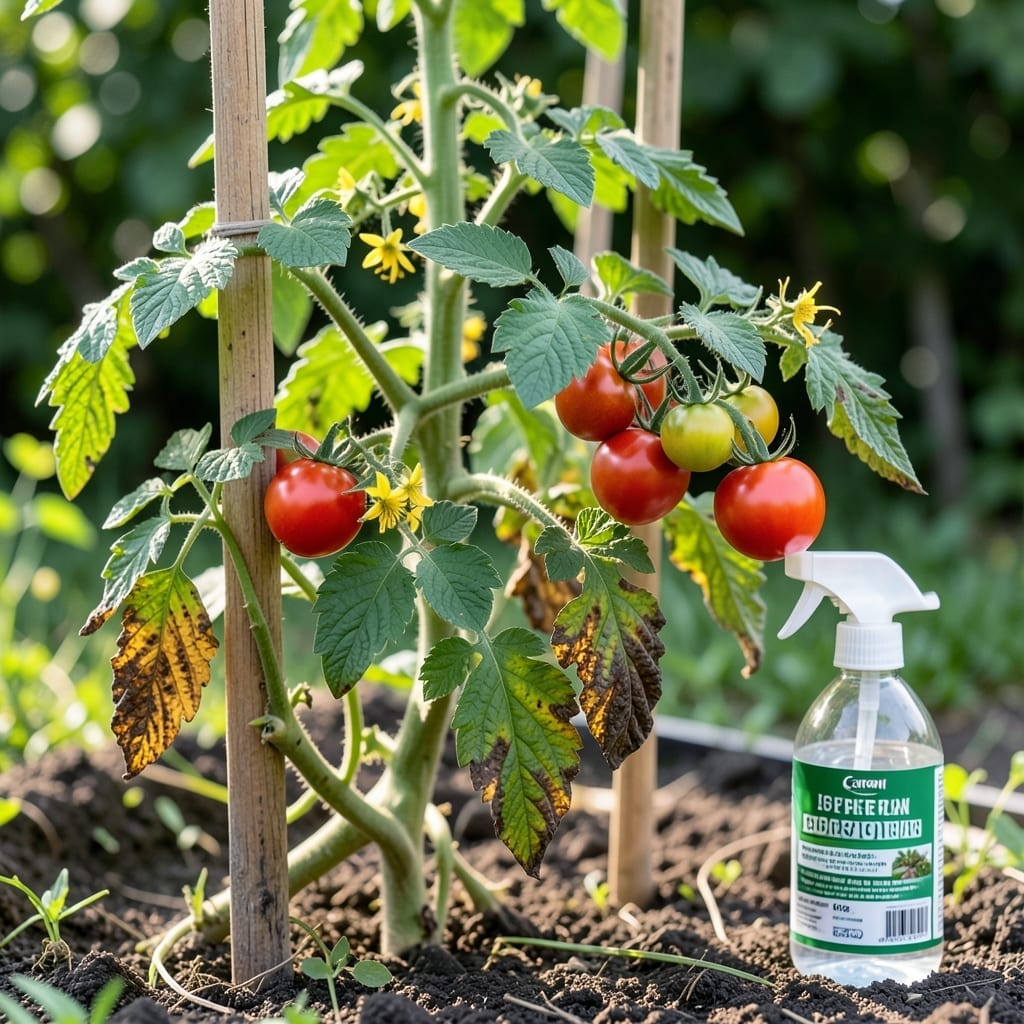
Tomato blight hits fast and hard. One morning your plants look fine, the next they’re covered in brown spots and wilting like they’ve given up entirely.
I lost an entire crop to this my first season until I learned the early warning signs—dark lesions on leaves, white mold on stems—and how to act before it spreads. The key is catching it early and using the right organic approach.
With consistent treatment, you can stop the damage and even save most of your plants. The difference between a failed harvest and a healthy one often comes down to 24 hours of quick action.
Works for early blight, late blight, and even powdery mildew. Here’s what to do right now.
Tomato blight is a frustrating issue, but understanding its root causes helps in prevention and treatment. Here are the primary reasons why it occurs:
Blight is primarily caused by fungal pathogens like Phytophthora infestans (late blight) and Alternaria solani (early blight). These fungi thrive in warm, wet conditions, spreading rapidly through spores carried by wind, water, or infected plant debris. Overhead watering and crowded plantings create the perfect environment for spores to germinate and infect leaves, stems, and fruit.
High humidity and lack of airflow contribute significantly to blight development. Dense foliage traps moisture, allowing fungal spores to settle and multiply. Planting tomatoes too closely or neglecting to prune lower leaves restricts airflow, increasing susceptibility. Rainy or overly humid seasons exacerbate the problem, making prevention even more critical.
Blight can linger in the soil or on contaminated gardening tools, infecting new plants. Using non-certified seedlings or reusing soil from a previous blight outbreak risks introducing the fungus. Additionally, crop rotation failures (planting tomatoes or related crops in the same spot year after year) allow pathogens to persist and reinfect.
Rapid temperature swings stress tomato plants, weakening their natural defenses. Cool, wet nights followed by warm days—common in spring and early summer—create ideal conditions for blight spores to activate. Stressed plants are less resilient, making them more vulnerable to infection.
Tackling tomato blight starts with identifying the type—early blight, late blight, or septoria leaf spot—and applying targeted fixes. Here’s how to address each issue and keep your plants thriving.
Spot brown concentric rings on lower leaves? Act fast:
💡 Prevention: Rotate crops yearly and avoid overhead watering to reduce spore spread.
If leaves show dark, greasy spots with white fungal growth underneath:
💡 Prevention: Plant blight-resistant varieties like ‘Mountain Merit’ or ‘Defiant’ and water at the base in the morning.
Small, circular gray spots with dark edges? Try this:
💡 Prevention: Avoid working with wet plants and disinfect cages/stakes between seasons.
Consistency is key—reapply treatments after rain and monitor plants weekly for early signs. Healthy soil (rich in compost) and balanced fertilization also boost plant resilience!
Act within 24 hours of noticing dark spots or white mold. Early intervention prevents rapid spread to other plants. Remove infected leaves immediately and begin treatment.
No, reuse risks reinfection. Solarize the soil by covering it with clear plastic for 4-6 weeks to kill spores. Alternatively, replace the top 6 inches of soil.
Yes, when applied consistently. Copper fungicide, neem oil, and baking soda sprays work well for early cases. Reapply after rain or every 7-10 days.
Always water at the base in the morning to allow foliage to dry. Avoid overhead watering, which spreads spores. Use drip irrigation for the best results.