
Beautiful Plants For Your Interior
Beautiful Plants For Your Interior
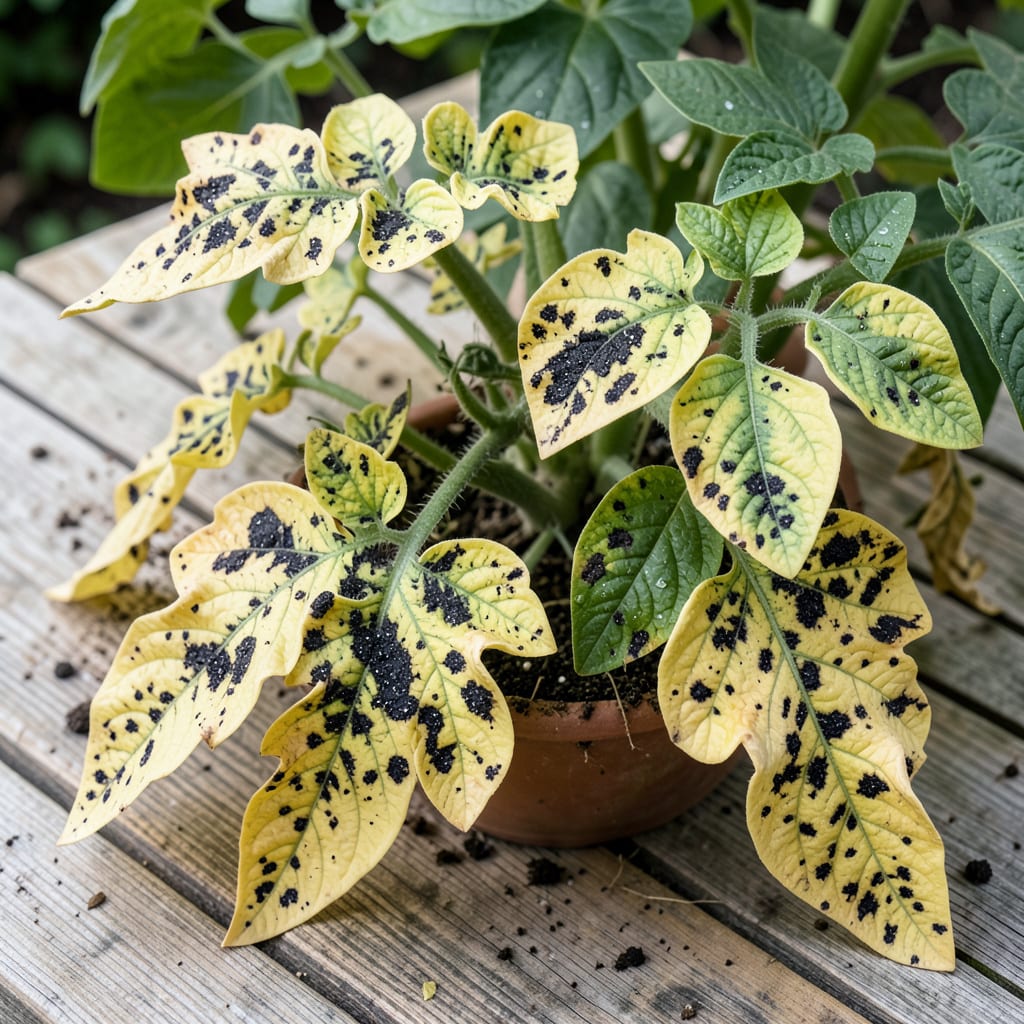
Yellow leaves with black spots on your tomatoes aren’t just unsightly—they’re a red flag. 🌱 I’ve lost entire crops to early blight before learning to spot the difference between fungal infections and nutrient shortages.
The pattern matters: concentric rings suggest fungus, while uniform yellowing often points to nitrogen deficiency. Black spots with yellow halos usually mean early blight, which spreads fast in wet conditions.
Copper fungicides and neem oil can stop the spread, but prevention is simpler. Remove affected leaves immediately, improve air circulation, and avoid wetting foliage when watering.
With quick action, you can save your plants and still get a full harvest. The key is catching it before it takes over.
When tomato plants develop yellow leaves with black spots, it’s often a sign of underlying stress or disease. Here are the most common causes:
Fungal pathogens like Alternaria solani (early blight) or Septoria lycopersici thrive in warm, humid conditions. They infect leaves, causing circular black spots with yellow halos. Spores spread via water splashes or wind, rapidly damaging foliage if left untreated.
Excess moisture suffocates roots, reducing oxygen uptake and nutrient absorption. This stress weakens the plant, making it susceptible to infections. Waterlogged soil also fosters fungal growth, accelerating leaf discoloration and spotting.
A lack of magnesium or potassium can cause yellowing between leaf veins (interveinal chlorosis). While deficiencies alone may not create black spots, they compromise plant health, inviting secondary infections that do.
Sap-sucking pests like aphids or whiteflies weaken plants and transmit viruses. Their feeding wounds can also serve as entry points for fungi, leading to the telltale yellow-and-black symptoms.
Here’s how to tackle yellow leaves with black spots on your tomato plants, cause by cause.
For early blight or septoria leaf spot, prune infected leaves immediately and discard them (not in compost). Apply a copper-based fungicide or a homemade mix of 1 tsp baking soda + 1 quart water + a drop of dish soap. Spray every 7–10 days or after rain. Prevention tip 💡: Improve airflow by spacing plants 18–24 inches apart and watering at the base to keep foliage dry.
If soggy soil is the culprit, stop watering until the top 1–2 inches of soil are dry. Ensure pots have drainage holes or amend garden beds with compost or sand to improve drainage. Prevention tip 🌡️: Use a moisture meter to water only when needed—tomatoes prefer 1–1.5 inches of water per week, including rainfall.
Yellowing with black spots often signals a magnesium or potassium shortage. Add Epsom salt (1 tbsp per gallon of water) for magnesium or a banana peel tea (soak peels in water for 48 hours) for potassium. Prevention tip ✨: Mix a balanced organic fertilizer (10-10-10) into the soil at planting and side-dress every 3–4 weeks.
Check leaf undersides for aphids or whiteflies. Blast them off with water or apply neem oil (1 tbsp per gallon of water + 1 tsp dish soap). Prevention tip 🎯: Encourage beneficial insects like ladybugs by planting marigolds or basil nearby.
Yes, fungal infections like early blight can spread to nearby tomatoes and other nightshades. Remove affected leaves immediately and avoid overhead watering to prevent spores from traveling.
A baking soda solution (1 tsp baking soda + 1 quart water + dish soap) works as a mild fungicide. Apply weekly for prevention or at first signs of spots.
With proper treatment, new growth should appear healthy within 2-3 weeks. Severely affected leaves won’t recover, but the rest of the plant can bounce back.
Remove only the most severely affected ones to reduce stress. If more than 30% of leaves are damaged, consider removing the entire plant to protect others.
