
Beautiful Plants For Your Interior
Beautiful Plants For Your Interior
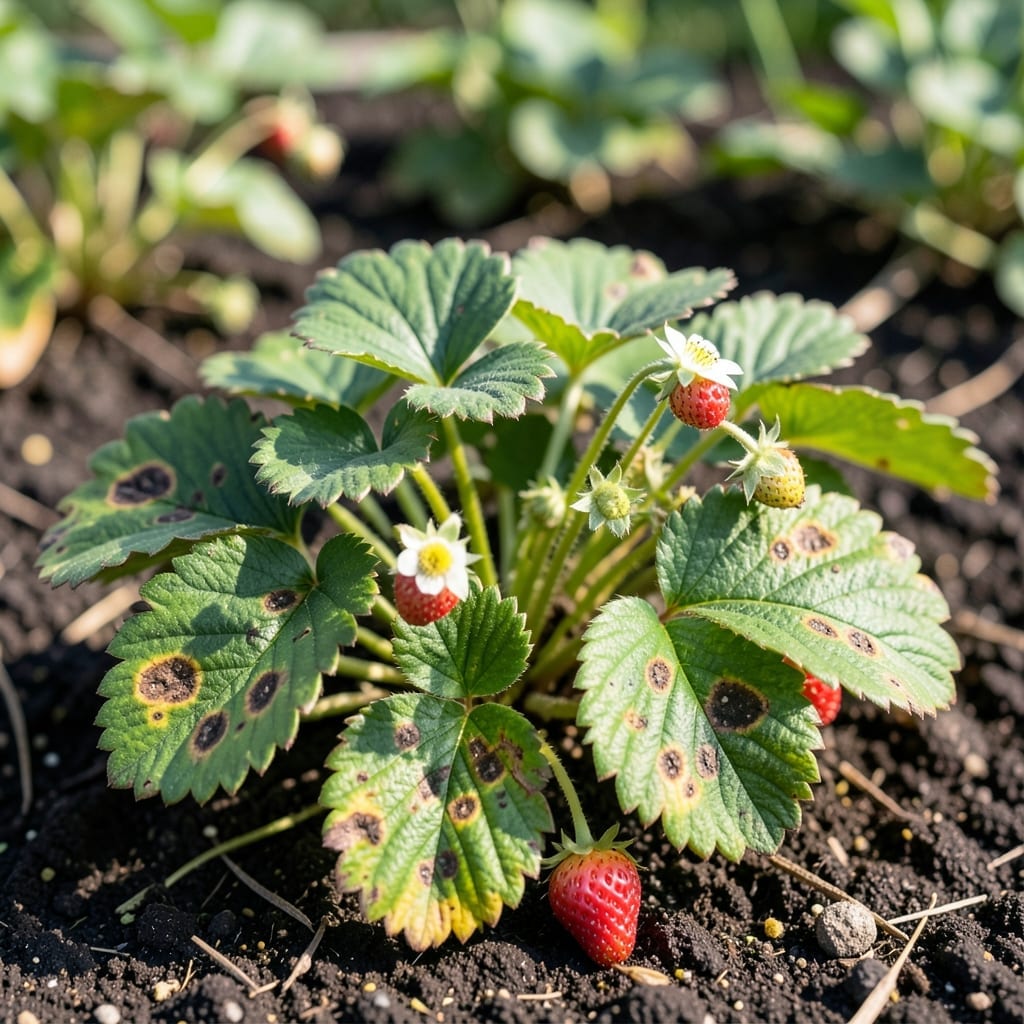
Spotted yellow leaves on your strawberry plants mean trouble. I’ve lost entire patches to leaf diseases before learning to catch them early.
The key is recognizing the patterns—brown spots, purple edges, or white powder—before they spread. Each disease has distinct signs, but they all thrive in wet, crowded conditions.
With the right approach, you can stop the damage fast. Proper airflow and morning watering alone prevent most issues, while resistant varieties add extra protection.
This guide helps you identify, treat, and prevent the most common strawberry leaf problems before they ruin your harvest.
Strawberry leaf diseases don’t appear out of nowhere—they’re often the result of specific environmental, biological, or cultural factors. Understanding these triggers helps you prevent outbreaks before they start. Here’s a breakdown of the most common causes:
Fungal and bacterial pathogens thrive in wet conditions. Overhead irrigation, prolonged rain, or poorly drained soil creates the perfect breeding ground for diseases like leaf spot and powdery mildew. Waterlogged leaves and soil reduce airflow, allowing spores to germinate and spread rapidly. To minimize risk, use drip irrigation and ensure beds have proper drainage.
Warm, humid weather (60–80°F) accelerates the growth of fungal pathogens such as Mycosphaerella fragariae (leaf spot) and Podosphaera aphanis (powdery mildew). Conversely, cool, wet springs favor bacterial diseases like angular leaf spot. Monitoring weather forecasts and adjusting care—such as increasing spacing for airflow—can mitigate these risks.
Diseases often spread through contaminated tools, soil, or even new plants. Using infected strawberry runners or failing to sanitize pruning shears between plants can introduce pathogens to healthy foliage. Always source certified disease-free plants and sterilize equipment with a 10% bleach solution or rubbing alcohol.
Overcrowded plants, excessive nitrogen fertilization, and ignoring crop rotation weaken strawberries’ natural defenses. Dense canopies trap moisture, while high nitrogen promotes lush, susceptible growth. Rotate strawberry beds every 3–4 years and remove old leaves to reduce pathogen buildup in the soil.
Insects like aphids and spider mites can transmit viral diseases (e.g., strawberry mild yellow edge virus) or create entry points for bacteria and fungi. Regularly scout for pests and use integrated pest management (IPM) strategies, such as introducing beneficial insects or applying neem oil, to keep populations in check.
Tackling strawberry leaf diseases starts with identifying the cause and applying the right fix. Here’s a practical guide to common issues and their solutions:
Remove infected leaves and space plants to boost circulation. Apply neem oil or a baking soda solution (1 tsp baking soda + 1 quart water + a drop of dish soap) weekly. Prevention tip: 💡 Avoid overhead watering to keep foliage dry.
Blast leaves with water to dislodge mites, or use insecticidal soap every 3-5 days. For severe cases, introduce beneficial insects like ladybugs. Prevention tip: 🌡️ Keep plants well-hydrated—mites thrive in dry conditions.
Prune affected leaves and destroy them (don’t compost). Apply copper fungicide as directed. Prevention tip: ✨ Rotate crops yearly to reduce fungal buildup in soil.
Remove moldy fruit and leaves immediately. Thin plant canopies and water at the base. Prevention tip: 🎯 Use mulch to prevent soil splashing onto leaves.
For all diseases, sanitize tools between uses and avoid working with wet plants to prevent spread. Early action is key—inspect leaves weekly for spots, discoloration, or pests!
Check for small brown spots, white powdery coating, or yellowing edges. These often appear on older leaves first and can spread quickly if untreated.
Yes, excess moisture creates ideal conditions for fungal growth. Always water at the base in the morning to allow foliage to dry.
Examine leaves at least once a week during growing season. Early detection makes treatment much easier and more effective.
Some varieties like ‘Chandler’ or ‘Camarosa’ show better resistance. Ask your local nursery for recommendations suited to your climate.