
Beautiful Plants For Your Interior
Beautiful Plants For Your Interior
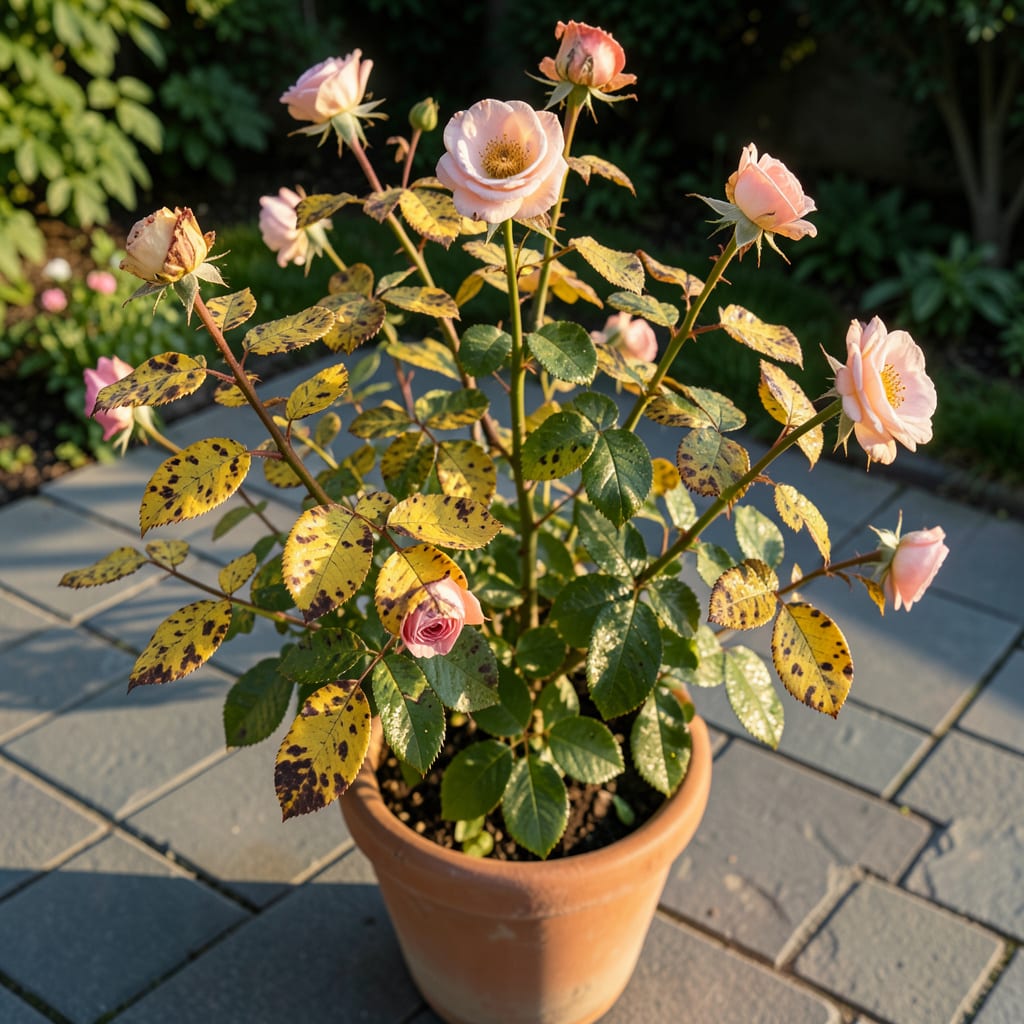
Yellow leaves with brown spots on your roses aren’t just unsightly—they’re a distress signal. I’ve seen this pattern enough to know it’s usually fungal, but nutrient issues or pests can mimic the same symptoms.
Early detection saves plants. Left unchecked, those spots spread fast, weakening the bush and killing blooms before they open. The good news: most cases respond to simple fixes like better airflow, clean pruning, or a natural fungicide.
You’ll see improvement within 7-10 days of treatment if you catch it early. The key is identifying the root cause—black spot, rust, or something else entirely—before applying solutions.
Prevention is easier than cure. A few habit changes now mean healthier roses with fewer problems next season.
Unhealthy leaves on your roses often signal underlying stress. Here’s a breakdown of the most common causes, with actionable insights.
Diplocarpon rosae (black spot) and Phragmidium spp. (rust) thrive in wet, humid conditions. These fungi disrupt chlorophyll production, leading to yellowing leaves with brown or black spots. Left unchecked, they weaken the plant by reducing photosynthesis.
Excess moisture suffocates roots, preventing oxygen uptake. This triggers root rot (Phytophthora spp.), which manifests as yellow leaves with brown, water-soaked spots. Compacted soil or clay-heavy beds worsen the issue.
Magnesium deficiency causes interveinal chlorosis (yellowing between veins) with brown necrotic spots. Iron deficiency (common in alkaline soils) also yellows leaves, while nitrogen deficiency leads to uniform pale yellowing with brown edges.
Sap-sucking pests like spider mites and aphids drain nutrients, causing stippling (tiny yellow or brown dots) that merges into larger discolored patches. Their honeydew also promotes sooty mold, darkening the foliage further.
Intense sunlight or heatwaves can scorch leaves, creating brown, crispy spots surrounded by yellow halos. This is common in newly transplanted roses or varieties unaccustomed to full sun.
Addressing yellow leaves with brown spots on your rose bush starts with pinpointing the cause. Below are targeted fixes for the most common issues, paired with prevention tips to keep your roses thriving.
Fix: Remove and destroy infected leaves immediately to stop the spread. Apply a baking soda spray (1 tsp baking soda + 1 quart water + a few drops of dish soap) or neem oil every 7–10 days. For severe cases, use a copper-based fungicide.
Prevent: Water at the base of the plant (not overhead) to keep foliage dry. Space bushes for airflow, and clean up fallen leaves regularly.
Fix: Blast pests off with a strong stream of water. Introduce beneficial insects like ladybugs, or apply insecticidal soap or horticultural oil weekly until gone.
Prevent: Inspect leaves weekly for early signs. Encourage biodiversity in your garden to deter pests naturally.
Fix: Let the soil dry out slightly between waterings. If the soil is soggy, improve drainage by amending with compost or sand. Use raised beds if drainage is chronically poor.
Prevent: Water deeply but less frequently (1–2 times per week, depending on climate). Use mulch to retain moisture without waterlogging.
Fix: Apply a balanced rose fertilizer (10-10-10 or 5-10-5) or target deficiencies with Epsom salt (magnesium) or chelated iron. Yellow leaves with green veins often signal iron deficiency.
Prevent: Test soil annually and adjust amendments as needed. Feed roses every 4–6 weeks during growing season.
Fix: Shield roses from harsh afternoon sun with shade cloth or relocate potted roses. Increase watering temporarily during heatwaves.
Prevent: Plant roses in locations with morning sun and afternoon shade in hot climates. Acclimate new plants gradually to direct sunlight.
💡 Pro Tip: Always sterilize pruning tools with rubbing alcohol between cuts to avoid spreading disease!
Often yes. Yellow leaves with brown spots usually indicate black spot or rust, which are treatable fungal diseases. Left untreated, they can weaken your rose bush significantly, but early action can save it.
Prune and destroy infected leaves immediately to prevent the spread. Always sterilize your pruners with rubbing alcohol between cuts to avoid contaminating healthy parts.
Yes. Too much water leads to root rot, which can manifest as yellowing leaves with brown, water-soaked spots. Reduce watering and improve drainage to see improvement in 7-10 days.
Start with a baking soda spray (1 tsp baking soda + 1 quart water + dish soap) every 7-10 days. For severe cases, switch to a copper-based fungicide for quicker results.
