
Beautiful Plants For Your Interior
Beautiful Plants For Your Interior
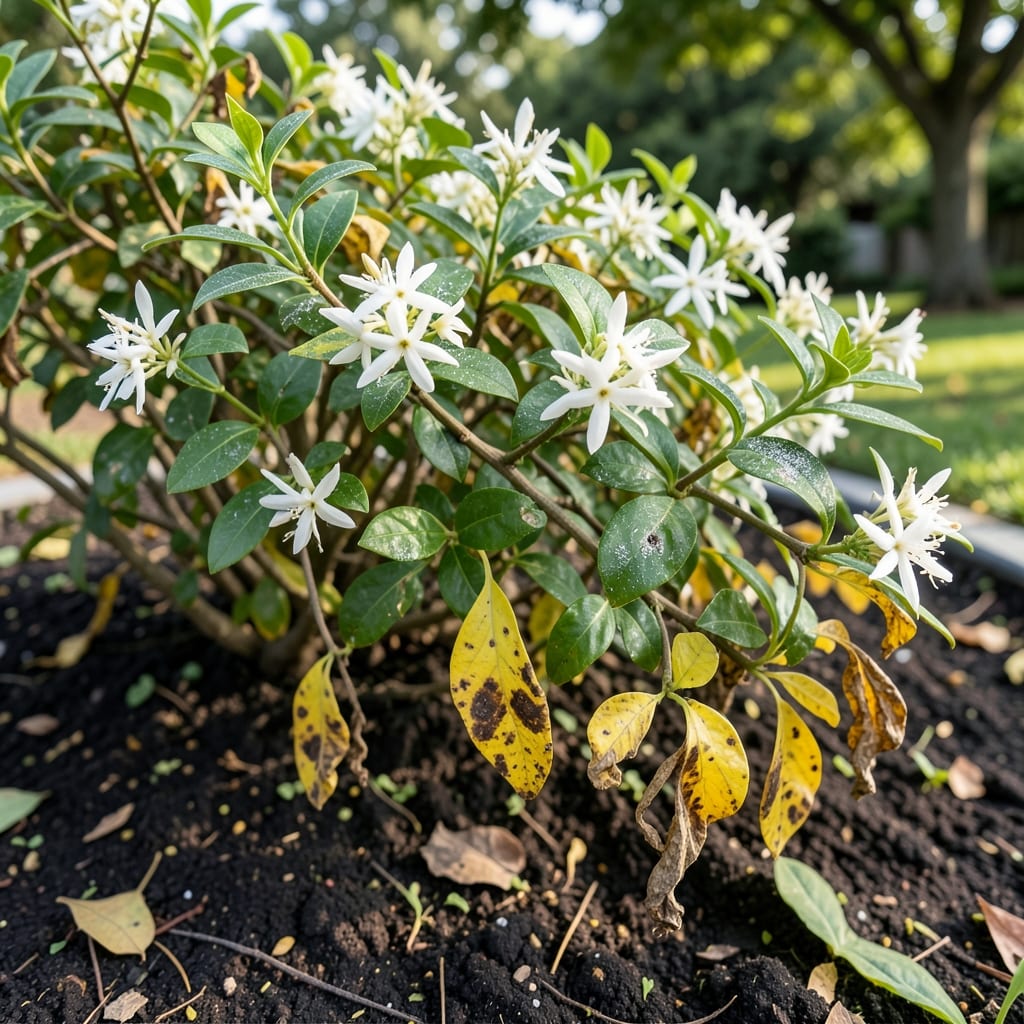
My star jasmine looked perfect until those brown spots appeared overnight. Turns out, most issues show up as yellowing leaves or blackened stems before the whole plant suffers.
Catching problems early saves your vine. I’ve learned to check for powdery mildew, root rot, and leaf spot—the usual suspects. Organic fixes work if you act fast, and prevention is simpler than you’d think.
📚 In This Guide
Here’s how I diagnose and treat common star jasmine issues without harsh chemicals.
Start by checking both the upper and lower surfaces of the leaves for discoloration, spots, or unusual textures. Yellowing between leaf veins often signals iron deficiency, while brown spots with yellow halos typically indicate fungal infections like leaf spot.
I look for webbing or sticky residue as signs of pests, which can mimic disease symptoms. Black sooty mold often appears as a dark coating on leaves and stems, usually following aphid infestations. Note the pattern—are symptoms isolated to older leaves, new growth, or the entire plant?
Examine stems for cankers, cracking, or oozing sap which may indicate bacterial blight or stem rot. These appear as sunken, dark areas on the bark. wilting combined with stem discoloration often points to root rot, especially if the soil stays soggy.
Check the plant’s base for mushrooms or foul odors, which confirm root issues. I also look for stunted growth or dieback in specific branches. Compare affected areas with healthy sections of the plant to spot differences in color, texture, or growth rate.
For fungal issues, I spray with a 1 tablespoon baking soda per gallon of water solution, adding a drop of dish soap as a spreader. Apply in the early morning and repeat every 7-10 days until symptoms disappear. Prune away heavily infected leaves and stems, sterilizing tools between cuts with rubbing alcohol.
For bacterial problems, remove all affected plant parts immediately and avoid overhead watering. Copper-based organic fungicides work well—apply according to package instructions during dry periods. For nutrient deficiencies, a foliar spray of chelated iron or compost tea often corrects the issue within 2-3 weeks.
Space plants for good air circulation—at least 3-4 feet apart for mature star jasmine. Water at the base in the morning so foliage dries quickly. I mulch with 2-3 inches of organic material to prevent soil splashing onto leaves, which spreads disease.
Avoid working with plants when they’re wet, as this spreads pathogens. Clean up all fallen leaves and debris around the plant, as these can harbor disease organisms. Rotate your treatment methods to prevent resistance, and always remove severely infected plants to protect your garden.
Small details make a big difference when diagnosing and treating plant issues.
Diagnosis Tip: In Step 1, pay special attention to the pattern of leaf discoloration. Yellowing between veins (interveinal chlorosis) is a classic sign of iron deficiency, while brown spots with yellow halos almost always mean fungal infection. This distinction saves you from applying the wrong treatment.
Treatment Timing: For the baking soda spray in Step 3, that 7-10 day repetition schedule is critical. Fungal spores can survive between applications, so consistency beats intensity. I set calendar reminders to stay on track.
Prevention Strategy: The 3-4 feet spacing mentioned in Step 4 isn’t just about aesthetics—it’s your first line of defense against fungal spread. Star jasmine’s dense growth habit creates perfect conditions for disease when plants are too close. If space is limited, prune more aggressively to improve airflow.
Tool Maintenance: When pruning infected material as described in Step 3, that rubbing alcohol sterilization between cuts prevents you from accidentally spreading pathogens to healthy parts of the plant. I keep a small spray bottle of alcohol right in my gardening toolkit for this purpose.
Look for yellowing leaves, dark spots, or powdery mildew. Root rot often causes wilting and blackened stems, while leaf blight appears as brown patches. Early detection helps!
Neem oil or baking soda sprays work well for fungal issues. For root rot, improve drainage and trim affected roots. Always remove and destroy heavily infected plant parts.
Yes! With prompt treatment, proper care (watering, sunlight), and good airflow, star jasmine can bounce back. Severe cases may require pruning or replacement.
Check weekly during warm, humid weather when diseases thrive. Early spring and fall are critical times for prevention and control.