
Beautiful Plants For Your Interior
Beautiful Plants For Your Interior
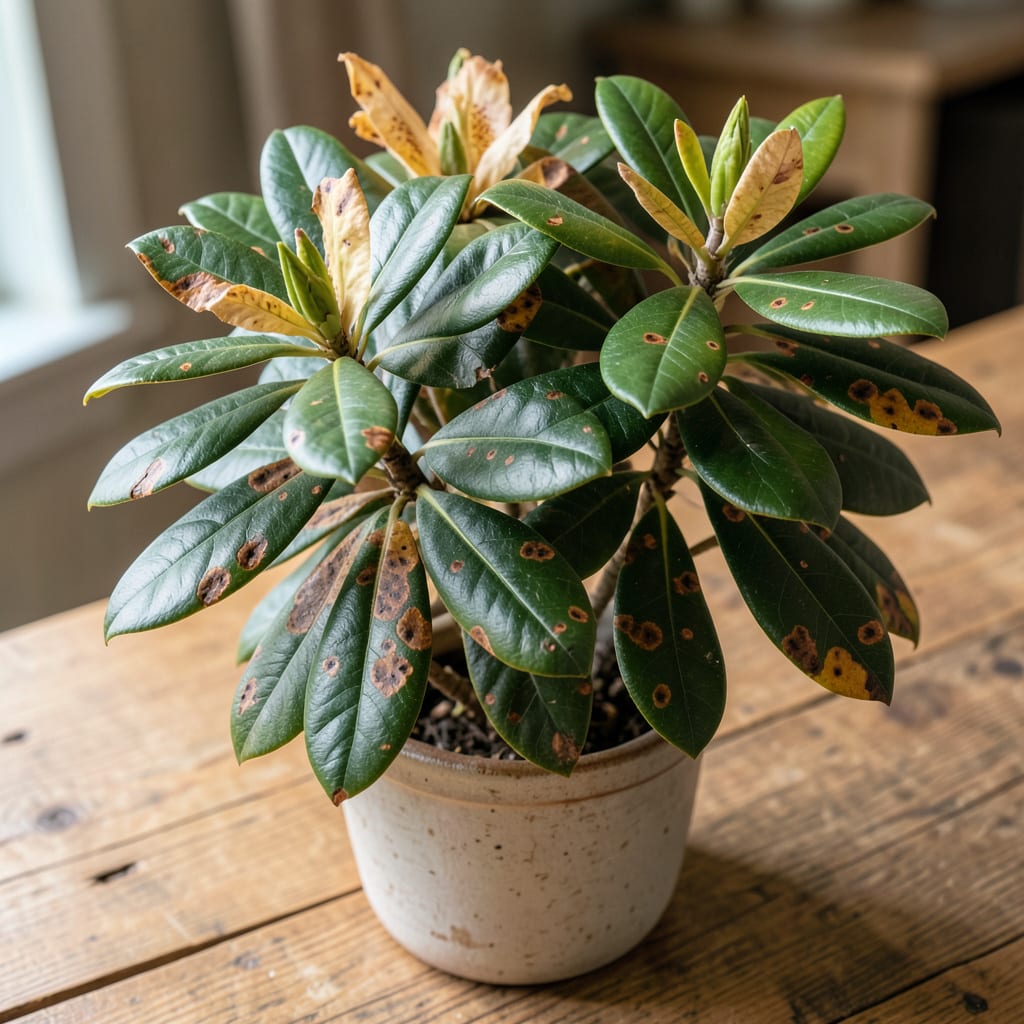
Brown spots ruining your rhododendron’s glossy leaves? I’ve been there—watching those dark patches spread is frustrating, but the solution is often simpler than you think.
Most cases come down to fungal issues like leaf spot or anthracnose, usually triggered by too much moisture or poor air circulation. The good news? You can treat it without harsh chemicals.
I’ve saved countless rhodies with basic organic fixes: removing infected leaves, improving airflow, and applying a baking soda spray or neem oil. It stops the spread fast.
Prevention is even easier—water at the base, space plants properly, and keep the area clean. Your rhododendron can bounce back looking vibrant and healthy again.
Brown patches on your rhododendron’s leaves are often a sign of underlying stress or infection. Here’s why it happens:
The most common culprit is Phytophthora or Pestalotia fungi, which thrive in overly moist conditions. These pathogens attack weakened leaves, causing irregular brown spots with yellow halos. Poor air circulation and wet foliage (from overhead watering or rain) accelerate their spread.
Both overwatering and underwatering can lead to brown patches. Overwatering suffocates roots, reducing nutrient uptake, while drought stress causes leaf scorch. Rhododendrons need consistently moist—but not soggy—soil with good drainage.
Extreme heat, cold snaps, or sudden temperature swings can damage leaves, turning them brown. Winter burn (from frozen roots or wind exposure) often creates dry, crispy patches. Sunburn may also occur if plants are exposed to intense, direct sunlight without acclimation.
A lack of magnesium or iron can cause interveinal chlorosis (yellowing between veins) that progresses to brown necrosis. Acidic soil (pH 4.5–5.5) is critical for rhododendrons to absorb these nutrients.
Pro tip: 💡 Test your soil before amending—excess lime or fertilizer can worsen imbalances.
Addressing brown patches on rhododendron leaves starts with identifying the cause and applying targeted solutions. Below are practical fixes for the most common issues, along with prevention tips to keep your plants thriving.
If the patches are irregular with yellow halos, a fungicide is your best bet.
Soggy soil leads to root rot, which causes brown, wilting leaves.
Dry, crispy brown edges often signal too much direct sun or heat.
Yellowing leaves with brown tips may indicate iron or magnesium deficiency.
Act quickly at the first sign of trouble, and your rhododendron will reward you with lush, vibrant foliage!
Yes, sun scorch often causes dry, crispy brown edges on leaves. Move your plant to dappled shade or use a shade cloth during peak afternoon hours.
Fungal spots are usually irregular with yellow halos. Check for wet foliage or poor air circulation—common triggers for Phytophthora or Pestalotia fungi.
Remove heavily infected leaves immediately to prevent spread. Use clean shears and dispose of debris away from the plant.
Water at the base when the top 1 inch of soil is dry. Avoid overhead watering to keep leaves dry and prevent fungal growth.
