
Beautiful Plants For Your Interior
Beautiful Plants For Your Interior
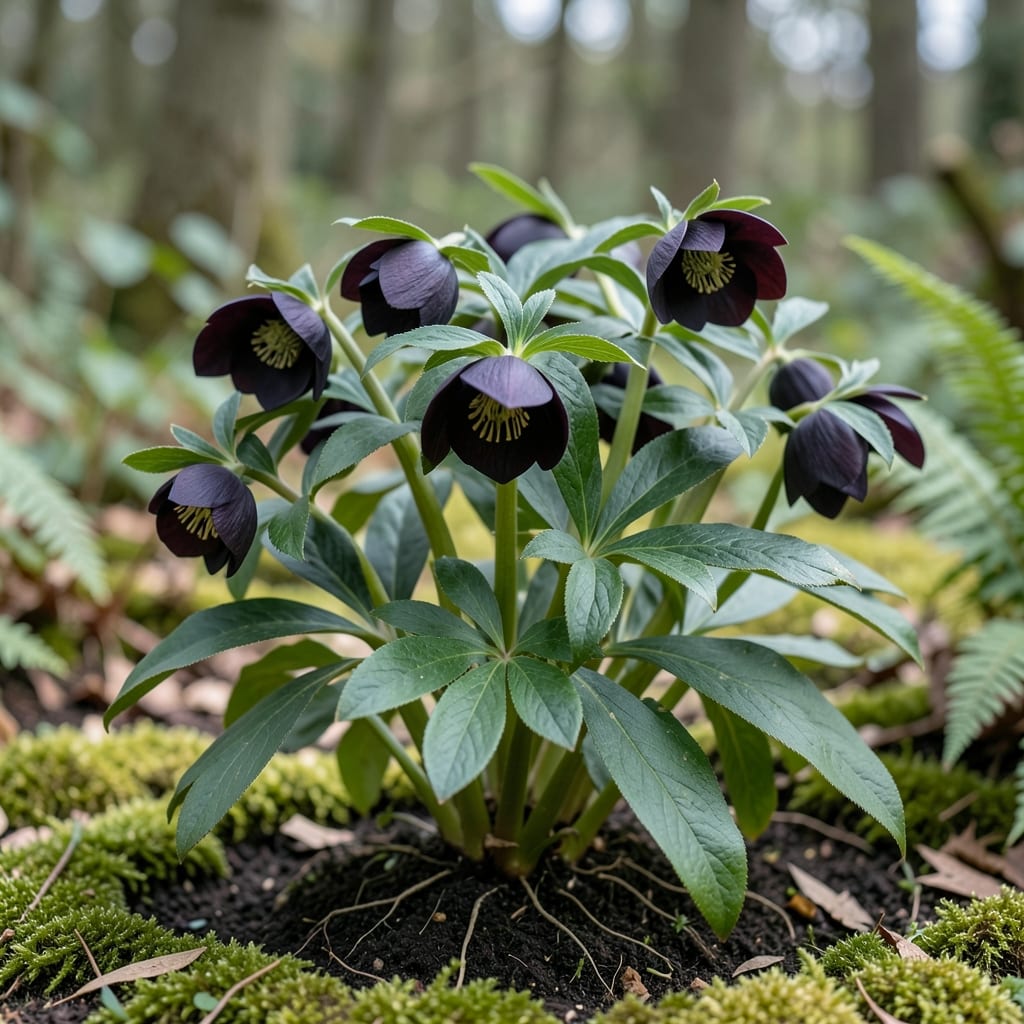
Black hellebore brings eerie elegance to winter gardens. I first planted these shadowy bloomers five years ago, and they’ve thrived through snow, frost, and even the occasional drought.
Their deep, nodding flowers appear in late winter, often while snow still dusts the ground. Just be sure to admire from a distance—every part of this plant is highly toxic.
📚 In This Guide
Small details make the difference between struggling plants and thriving ones.
Location Wisdom: In Step 1, when testing drainage with that 1-foot deep hole, don’t rush the process. If water sits longer than 3 hours, consider amending with compost to improve drainage. Rich, loamy soil isn’t just a suggestion—it’s what gives you those dramatic, dark blooms.
Planting Depth Matters: When you get to Step 3, resist the urge to bury the crown deep. I learned the hard way that planting it just above soil level prevents rot while still giving roots the moisture they need. Press gently to eliminate air pockets—this helps roots establish faster.
Watering Insight: For that initial deep watering in Step 3, the 1-2 gallons per plant might seem like a lot, but it’s crucial. Check that top 6 inches of soil feels evenly moist afterward. Once established, you can ease up, but that first drink sets the foundation for healthy growth.
Spacing Strategy: The 18-24 inch spacing in Step 2 isn’t arbitrary. Crowding leads to poor air circulation, which invites fungal problems. I mark my spots with stakes first—it’s easier than trying to eyeball distances while planting.
Yes, all parts of the black hellebore (Helleborus niger) are toxic if ingested, causing nausea, vomiting, or worse. Keep it away from children and pets, and wear gloves when handling.
This hardy perennial typically blooms in late winter to early spring, often as early as January in mild climates. Its flowers can last through March, adding color to dormant gardens.
Consider pet-friendly plants like African violets, spider plants, or Boston ferns. These offer beauty without the toxicity risks associated with hellebores.
Lack of blooms may stem from insufficient light, poor drainage, or immature plants. Ensure partial shade, well-draining soil, and patience—hellebores often take 2-3 years to establish.