
Beautiful Plants For Your Interior
Beautiful Plants For Your Interior
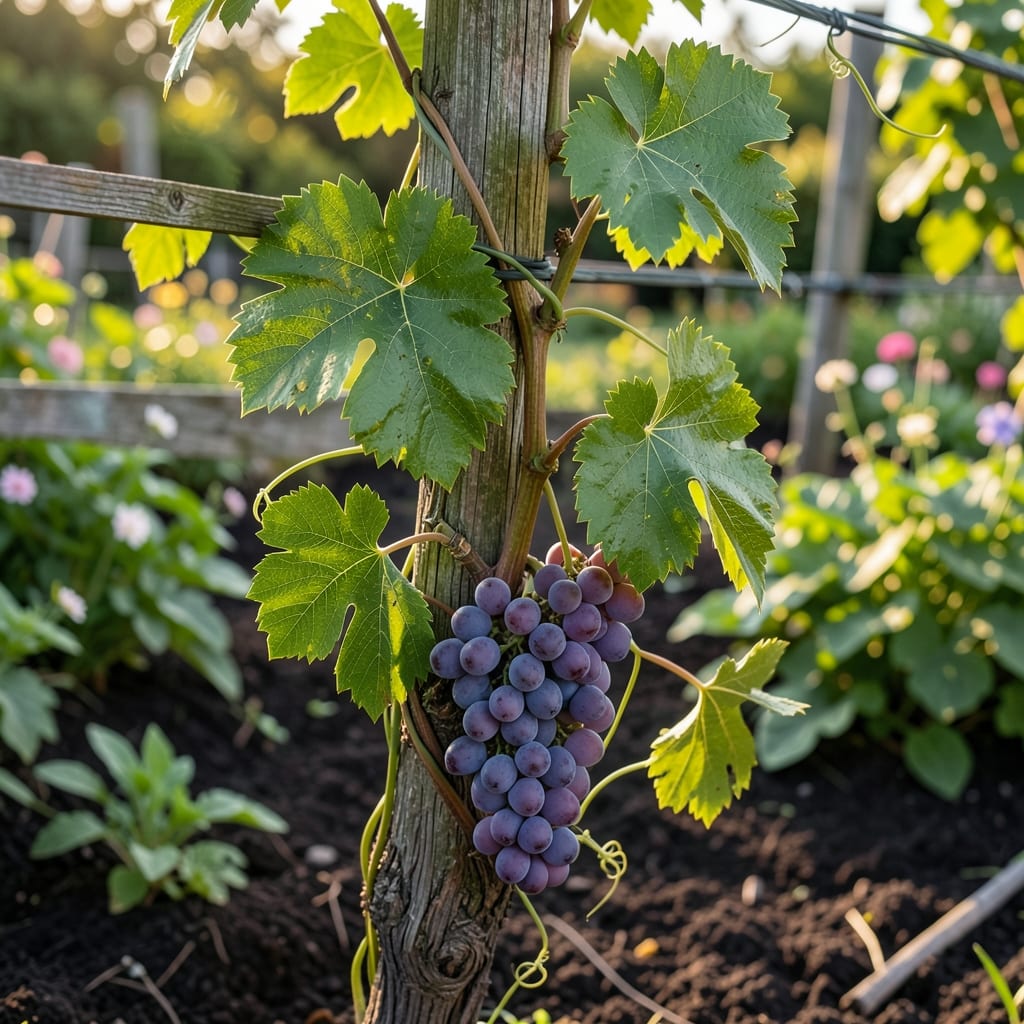
Summer is when grape vines truly come alive. I’ve learned that consistent watering and vigilant pest checks keep leaves vibrant and productive.
Pruning at the right time prevents overgrowth while allowing sunlight to reach every leaf. A little attention now means a healthy harvest and fewer issues later.
📚 In This Guide
Here’s my field-tested approach to keeping your vines lush and healthy through the hottest months.
Check soil moisture at the base of your vines every 2-3 days during summer heat. Grape plants need consistent moisture but cannot tolerate waterlogged roots. I press my finger 2 inches deep into the soil—if it feels dry at that depth, it’s time to water.
Use a slow, deep watering method that delivers moisture directly to the root zone. A drip irrigation system works perfectly, but a soaker hose on low pressure for 30-45 minutes achieves the same result. Avoid wetting the foliage, as this invites fungal diseases that thrive in summer humidity.
Begin protective sprays before you see any signs of trouble. I use a copper-based fungicide every 10-14 days during the growing season, especially after rain or overhead irrigation. These treatments create a protective barrier that prevents spores from taking hold on the leaf surface.
Apply in the early morning when temperatures are below 85°F to prevent leaf burn. Cover both the upper and lower surfaces of the leaves thoroughly—this is where powdery mildew and downy mildew typically establish themselves. Always follow the product’s mixing instructions precisely.
Remove any leaves or canes that create dense shading within the vine’s canopy. I make these cuts on dry, sunny mornings when the plant is least stressed. Focus on removing older leaves at the base first, as these contribute less to photosynthesis and are more susceptible to disease.
Space remaining canes so sunlight can reach the center of the vine. This not only deters fungal growth but also improves fruit quality. Never remove more than 20-30% of the foliage at once, as this can shock the plant during summer heat.
Apply a balanced 10-10-10 fertilizer at the base of each vine, keeping it 6-12 inches away from the trunk to prevent root burn. I do this in early summer, then again 4-6 weeks later if the vines show signs of nutrient deficiency, such as yellowing leaves or stunted growth.
Water deeply immediately after applying granular fertilizer to help it reach the root zone. Avoid high-nitrogen fertilizers late in the season, as they can promote excessive leafy growth at the expense of fruit production. The goal is steady, controlled growth that the vine can maintain through summer stress.
Walk your vineyard or garden rows at least once weekly, examining both sides of leaves for any discoloration, spots, or unusual textures. I carry a small magnifying glass to catch early signs of mites or fungal spores before they become visible to the naked eye.
Pay special attention to the lower leaves and the center of the canopy where air circulation is poorest. Catching issues like powdery mildew or spider mites at this stage means you can often resolve them with a single targeted treatment rather than a season-long battle.
Here’s how to refine your approach and avoid the most common pitfalls when caring for vines during summer.
Moisture Monitoring: That 2-3 day soil check in Step 1 isn’t just a suggestion—it’s critical. Grapevines are surprisingly sensitive to both drought and overwatering. Press your finger those full 2 inches deep; surface dryness can be misleading, especially with mulched soil. A slow, deep watering for 30-45 minutes ensures moisture reaches the root zone without pooling.
Fungicide Timing: In Step 2, applying copper-based fungicide every 10-14 days is your best defense, but the early morning window is non-negotiable. Temperatures above 85°F can scorch leaves, rendering the treatment useless or even harmful. Covering both leaf surfaces is equally important—spores don’t discriminate between top and bottom.
Pruning Discipline: Step 3’s caution about removing no more than 20-30% of foliage at once exists for a reason. Over-pruning stresses the vine, reducing its ability to photosynthesize and recover. Focus on the oldest, least productive leaves first, and always prune on those dry, sunny mornings when the plant is least vulnerable. Between us, I learned this the hard way after shocking a vine into early dormancy.
Fertilizer Placement: The 6-12 inch buffer from the trunk in Step 4 isn’t arbitrary. Granular fertilizer too close can burn roots, while placing it too far out misses the active root zone. Watering immediately after application helps dissolve the granules and carry nutrients downward, but avoid late-season nitrogen—it’s a common mistake that sacrifices fruit quality for leafy growth.
The best time is late spring to early summer, when leaves are tender and bright green. Avoid older, tough leaves—young shoots are ideal for dishes like dolmas.
Ensure good air circulation, avoid overhead watering, and apply sulfur-based fungicides preventatively. Remove infected leaves promptly to stop the spread.
Yes! Try Swiss chard, cabbage, or collard greens as substitutes for wrapping. They lack grape leaves’ unique flavor but work in a pinch.
Yellowing may signal nutrient deficiencies (like nitrogen), overwatering, or heat stress. Check soil moisture and fertility, and adjust care as needed.
Rinse, pat dry, and refrigerate in a sealed bag for up to 5 days. For longer storage, blanch and freeze them in portions.