
Beautiful Plants For Your Interior
Beautiful Plants For Your Interior
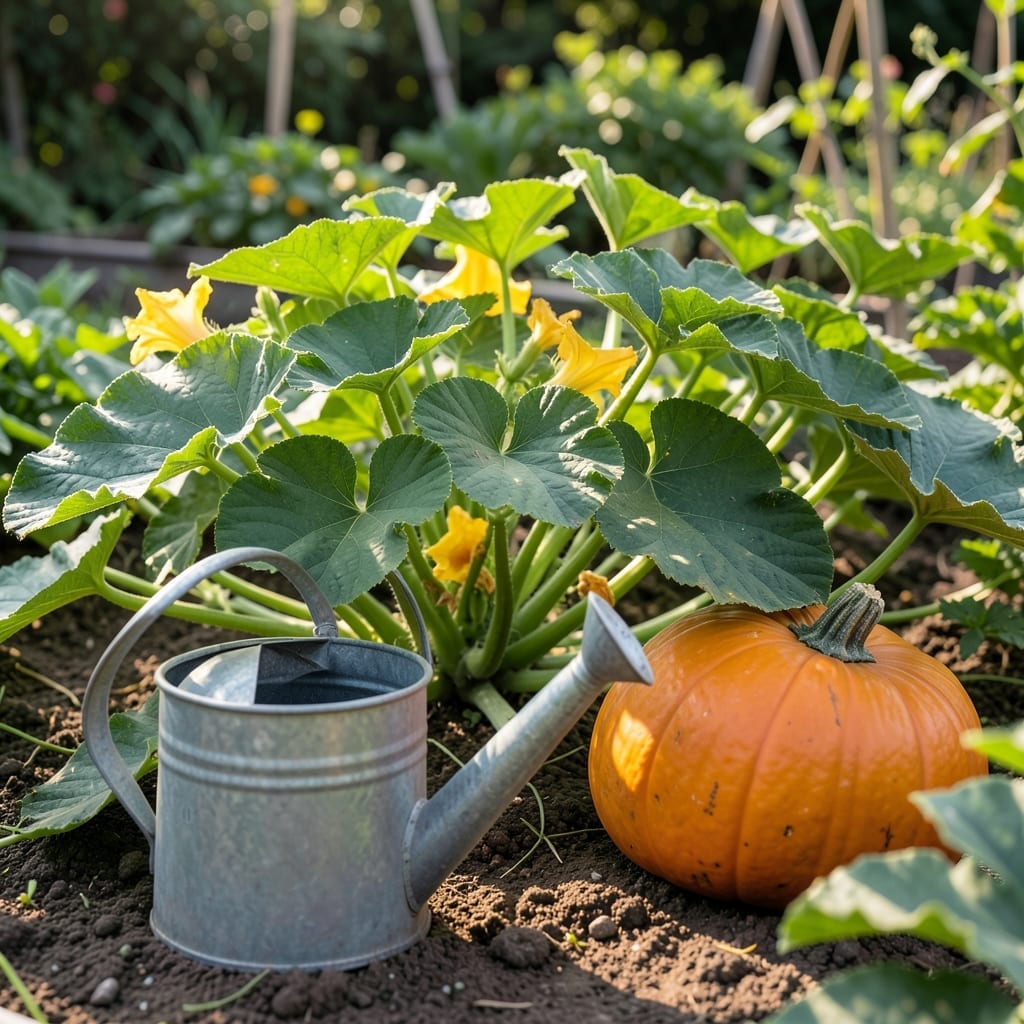
I remember the first time I grew 🎃 Pumpkin plants and nearly drowned them with kindness. Too much water can be just as damaging as too little, and finding that sweet spot is the key to healthy vines.
These thirsty plants do need consistent moisture, especially during fruit development, but they hate soggy roots. The trick is learning to read what your plants are telling you.
I’ll walk you through the signs of both over and under-watering, so you can adjust before it’s too late. Your future pumpkin patch will thank you.
Discover how to keep your 🎃 Pumpkin plants perfectly hydrated without the guesswork. Let’s get started.
Pumpkin plants are thirsty growers, but they don’t need a daily flood. I’ve found that 1-2 inches of water per week is the sweet spot for most soil types, especially during fruit development. The key is deep, consistent moisture at the roots.
In hot, dry spells, I bump this up to 3-4 inches weekly, but always check the soil first. Stick your finger 2 inches deep—if it’s dry, it’s time to water. Overwatering leads to root rot and weak vines, so balance is critical. 🌱
| Requirement | Specification |
|---|---|
| Weekly Water | 1-2 inches |
| Summer Boost | 3-4 inches |
| Soil Check Depth | 2 inches |
| Best Time to Water | Early morning |
During early growth, pumpkins need less water—about 1 inch per week. But once flowers appear, I increase it to 1.5-2 inches to support fruit formation. The vines will tell you if they’re stressed—wilting in heat is normal, but permanent wilt means thirst.
I always water at soil level, never the leaves. Wet foliage invites powdery mildew and other fungal diseases. A drip irrigation system works best, but a soaker hose is a great budget-friendly alternative.
For sandy soil, water more frequently but in smaller amounts. Clay soil holds moisture longer, so I water less often but deeply. Adding organic mulch like straw helps retain moisture and keeps roots cool.
Signs of underwatering include dry, crispy leaves and stunted growth. Overwatering shows as yellowing leaves and mushy stems. I adjust my schedule based on rainfall and temperature—pumpkins hate soggy feet!
In container gardens, pumpkins need daily checks. Pots dry out faster, so I ensure the soil stays evenly moist but not waterlogged. A 10-gallon container per plant is the minimum I recommend.
Consistency is your best tool. I set a weekly watering routine and adjust as needed. Pumpkins reward steady care with bigger, sweeter fruits. Remember, deep watering encourages strong root systems, which means healthier plants.
Finally, always water in the early morning. This gives the plant time to absorb moisture before the heat of the day. Evening watering can promote disease, so I avoid it unless absolutely necessary. 🌿
I’ve found that pumpkin plants have changing water needs as they grow. Early on, seedlings need consistent moisture to establish roots, while mature vines demand more during fruit development. Timing is everything for healthy growth.
The key is adjusting your approach for each growth stage. From sprouting to harvest, your watering routine should evolve to match the plant’s demands. This prevents both underwatering and overwatering issues.
During the vine growth phase, I recommend using a soaker hose to deliver water directly to the roots. This keeps the leaves dry and reduces the risk of fungal diseases while encouraging strong root systems.
When flowers appear, I pay extra attention to soil moisture. Pumpkins are thirsty plants at this stage, and inconsistent watering can lead to poor fruit set. A mulch layer helps retain moisture between waterings.
As pumpkins form and grow, I increase water to about 2 inches per week. I always water in the early morning to allow for proper absorption before the heat of the day. This schedule ensures my vines stay productive.
Remember, drainage is just as important as water volume. Pumpkins hate “wet feet”, so I always ensure my garden beds have good drainage to prevent root rot. 💧