
Beautiful Plants For Your Interior
Beautiful Plants For Your Interior
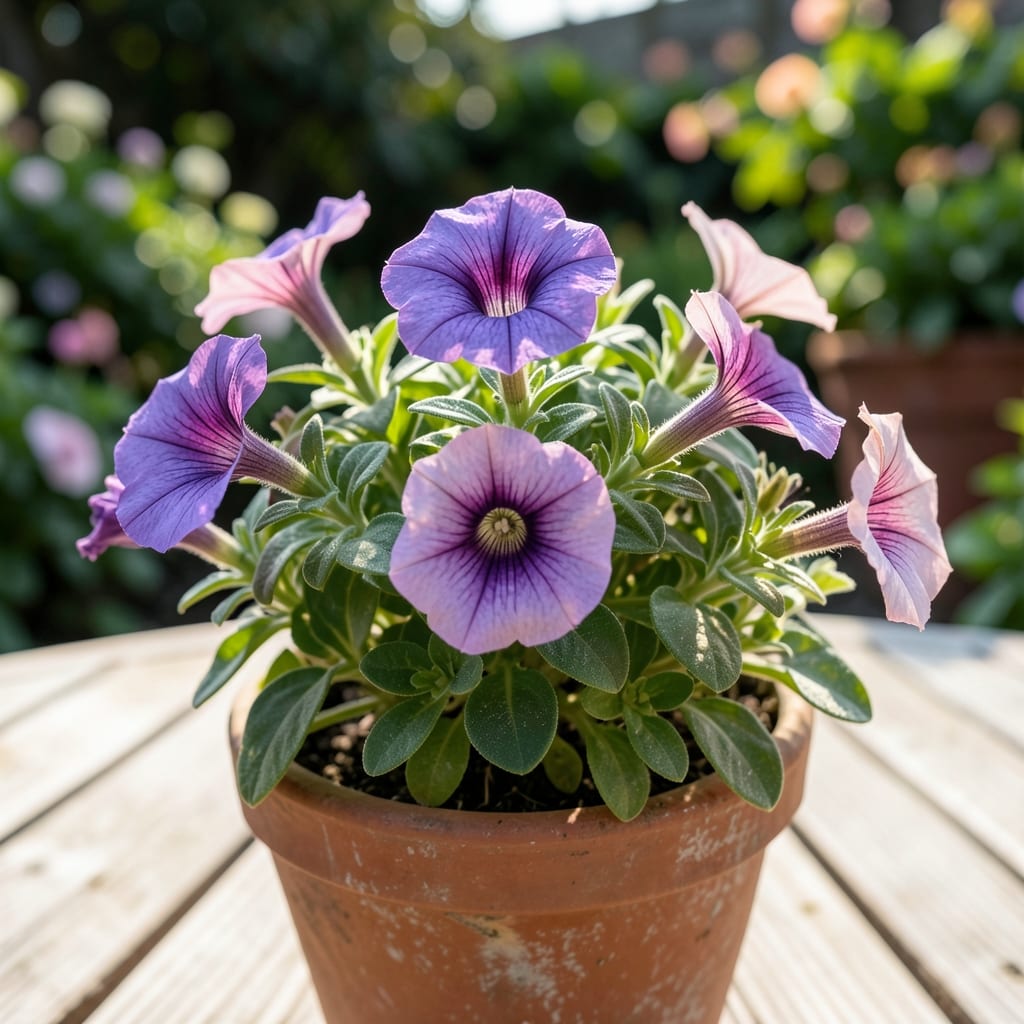
Ray Shadow petunias bring deep purple blooms with black centers to any garden. I’ve grown these for dramatic contrast in borders and containers, and they never disappoint with their bold, velvety flowers.
They thrive in full sun with well-draining soil and regular watering. You’ll get waves of color from spring to frost with minimal effort, and they’re surprisingly resilient against pests. A game-changer for high-impact, low-maintenance gardens.
📚 In This Guide
Here’s the method I’ve perfected for achieving that stunning, high-contrast look in your garden.
Choose a site with full sun exposure—at least 6-8 hours of direct sunlight daily. Petunias thrive in bright light, and the dramatic shadow effect of the Ray variety is most pronounced in well-lit areas. Avoid shady spots, as this will mute the color contrast and reduce flowering.
Ensure the location also has well-draining soil with a neutral to slightly acidic pH (6.0-7.0). If your soil is heavy clay or too alkaline, amend it with compost or a soil conditioner to improve texture and fertility.
Loosen the soil to a depth of 12-15 inches and mix in a 2-3 inch layer of organic compost. This improves drainage and provides essential nutrients. Petunias are heavy feeders, so enriching the soil at planting ensures vigorous growth and abundant blooms.
Space the plants 12-18 inches apart to allow for proper air circulation, which prevents fungal diseases. Dig a hole slightly larger than the root ball, place the plant in, and backfill with soil. Press gently to remove air pockets, then water thoroughly to settle the soil around the roots.
Water deeply at the base of the plant, ensuring the soil stays consistently moist but not soggy. Petunias are drought-tolerant once established but perform best with regular hydration. A good rule of thumb is to water when the top inch of soil feels dry to the touch.
Fertilize every 2-3 weeks with a balanced, water-soluble fertilizer (e.g., 10-10-10) to encourage continuous blooming. For an extra boost, use a high-phosphorus formula to promote vibrant flower production. Avoid over-fertilizing, as this can lead to excessive foliage at the expense of blooms.
Deadhead spent blooms regularly by pinching them off at the base of the flower stem. This encourages the plant to redirect energy into producing new flowers, extending the blooming period. Use sharp pruning shears or your fingers for this task.
For a bushier, more compact plant, trim back leggy stems by one-third every 4-6 weeks. This promotes branching and ensures a fuller, more vibrant display. Pruning also helps maintain the dramatic shadow effect by keeping the foliage dense and healthy.
Keep an eye out for common pests like aphids, spider mites, and whiteflies, which are attracted to petunias. If you notice small, discolored, or curled leaves, inspect the undersides for pests. Treat infestations with insecticidal soap or neem oil, applying in the early morning or late evening to avoid harming beneficial pollinators.
Watch for signs of fungal diseases such as powdery mildew, which appears as a white, powdery coating on leaves. To prevent this, ensure good air circulation and avoid overhead watering. If disease appears, treat with a fungicide and remove affected foliage to prevent spread.
Small details make the difference between a good display and a breathtaking one.
Sunlight Priority: The 6-8 hours of full sun exposure in Step 1 isn’t just a suggestion—it’s critical for that dramatic shadow effect. I learned this the hard way when my first planting in partial shade produced muted, underwhelming blooms. If your garden doesn’t have a spot with that much sun, consider container planting on a sunny patio.
Soil Preparation Insight: When you’re loosening soil to 12-15 inches in Step 2, don’t rush this part. Petunias are greedy feeders, and that deep preparation with the 2-3 inch compost layer creates the fertile foundation they need. I’ve found that skimp on this and you’ll spend all season trying to compensate with extra fertilizer.
Watering Wisdom: That “top inch dry” rule in Step 3 is your best guide. Petunias hate soggy roots but will wilt dramatically if too dry—almost like they’re punishing you for neglect. Water deeply at the base rather than shallow overhead sprinkling to prevent fungal issues while encouraging strong root development.
Pruning Timing: The 4-6 week pruning schedule in Step 4 keeps that shadow effect sharp. Between us, I set calendar reminders because it’s easy to forget until the plants look leggy. That one-third trim might seem drastic, but it’s the secret to maintaining that dense, vibrant foliage that makes the Ray variety’s pattern pop.
Plant in well-draining soil with full sun (6+ hours daily). Space seeds or seedlings 12-18 inches apart. Water gently after planting to avoid disturbing the soil.
Start indoors 8-10 weeks before the last frost, or sow directly after frost danger passes. They thrive in warm weather and bloom best from late spring to fall.
Try ‘Black Velvet’ petunias or ‘Midnight Oil’ sweet potato vine for similar dark foliage. For contrast, pair with bright flowers like marigolds or white alyssum.
Yellowing leaves often signal overwatering or poor drainage. Check soil moisture and ensure pots have drainage holes. Adjust watering to keep soil lightly moist, not soggy.
Yes! Use a balanced, water-soluble fertilizer every 2-3 weeks during the growing season. This encourages vibrant foliage and abundant blooms.