
Beautiful Plants For Your Interior
Beautiful Plants For Your Interior
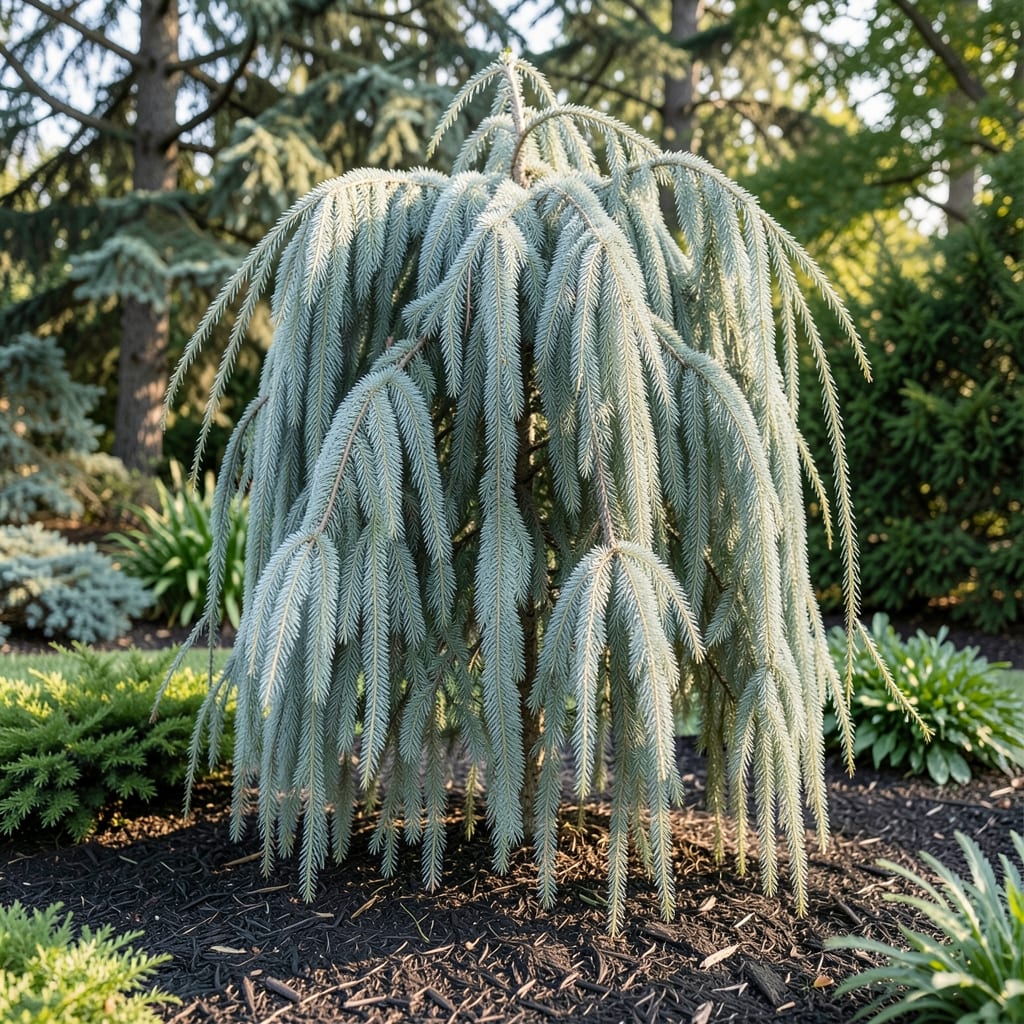
This tree stops visitors in their tracks. Weeping white spruce drapes its branches like a living waterfall, adding dramatic elegance to any landscape without demanding constant attention.
I planted mine in full sun with well-draining soil, and it thrived with minimal care. The key is giving it space to cascade—don’t cram it next to a fence. Within 3-5 years, you’ll have a stunning focal point that needs almost no pruning.
📚 In This Guide
This elegant conifer thrives with careful placement and consistent attention to its unique needs.
Choose a site with full sun to partial shade—this tree tolerates some afternoon shade, especially in hotter climates. The weeping form needs space to cascade, so allow at least 10-15 feet of clearance from structures or other plants. Avoid low-lying areas where cold air or water might pool, as this species prefers well-drained conditions.
Test the soil drainage by digging a 12-inch-deep hole and filling it with water. If it drains within 2-3 hours, the location is suitable. Weeping white spruce thrives in slightly acidic to neutral soil with a pH between 6.0 and 7.5.
Dig a hole that is twice as wide as the root ball but no deeper. This encourages outward root growth, which is critical for stability as the tree matures. Rough up the sides of the hole to prevent the roots from circling, which can girdle the trunk over time.
Amend the native soil with compost or well-rotted organic matter to improve fertility and drainage. Mix it thoroughly with the removed soil—this tree resents heavy clay but also dislikes overly sandy conditions. The goal is a loose, friable texture that retains moisture without becoming waterlogged.
Carefully remove the tree from its container, gently teasing out any circling roots with your fingers. Position it in the hole so the top of the root ball sits 1-2 inches above the surrounding soil level to allow for settling. Backfill with the amended soil, tampering lightly as you go to eliminate air pockets.
Create a 3-inch-high watering ring around the perimeter of the hole to help direct moisture to the roots. Water deeply immediately after planting, using 10-15 gallons to fully saturate the root zone. Add a 2-3 inch layer of mulch, such as shredded bark, to retain moisture and suppress weeds, but keep it 6 inches away from the trunk to prevent rot.
Water the tree 2-3 times per week for the first 3-4 months, ensuring the soil stays evenly moist but not soggy. Use a moisture meter or check by inserting your finger 2-3 inches into the soil—if it feels dry, it’s time to water. Reduce frequency once established, but continue deep watering during dry spells.
Fertilize lightly in early spring with a balanced, slow-release product formulated for evergreens. Apply according to package instructions, but avoid over-fertilizing, which can lead to excessive, weak growth. Prune only to remove dead or diseased branches, as this tree’s natural form is its greatest asset.
Watch for signs of stress, such as yellowing needles or stunted growth, which often indicate improper watering or poor soil conditions. Weeping white spruce is generally pest-resistant, but keep an eye out for spider mites or aphids, especially during dry periods. A strong blast of water can dislodge these pests before they become a serious issue.
In late fall, apply a 2-4 inch layer of mulch to insulate the roots from winter temperature fluctuations. Avoid using plastic or synthetic wraps around the tree, as these can trap moisture and promote fungal growth. With proper care, your weeping white spruce will develop its signature cascading branches, adding year-round elegance to your landscape.
Even experienced gardeners can overlook small details that make a big difference with this tree.
Site Selection: The 10-15 feet clearance mentioned in Step 1 isn’t just for aesthetics—it prevents the cascading branches from being damaged by nearby structures or other plants. I learned this the hard way when a client’s spruce had to be relocated after just two seasons.
Drainage Test: That 2-3 hour drainage test in Step 1 is critical. If water sits longer, consider amending the soil with additional organic matter or choosing a different location. This tree absolutely will not tolerate wet feet.
Planting Depth: The instruction to position the root ball 1-2 inches above soil level in Step 3 accounts for natural settling. Planting too deep is the most common mistake I see, and it inevitably leads to trunk rot within a few years.
Excessive drooping can result from overwatering, poor drainage, or root rot. Ensure the tree is planted in well-draining soil and receives moderate moisture. If the issue persists, check for fungal diseases or pests.
The ideal time to plant is in early spring or fall, when temperatures are mild. This allows the tree to establish roots before extreme heat or cold sets in.
Yes! Consider the weeping Norway spruce or pendula varieties of other conifers like weeping blue atlas cedar. These offer a similar cascading effect with different textures or colors.
First, assess watering habits—adjust if the soil is too wet or dry. Prune dead branches and apply a balanced fertilizer. If pests or disease are present, treat with appropriate fungicides or insecticides.