
Beautiful Plants For Your Interior
Beautiful Plants For Your Interior
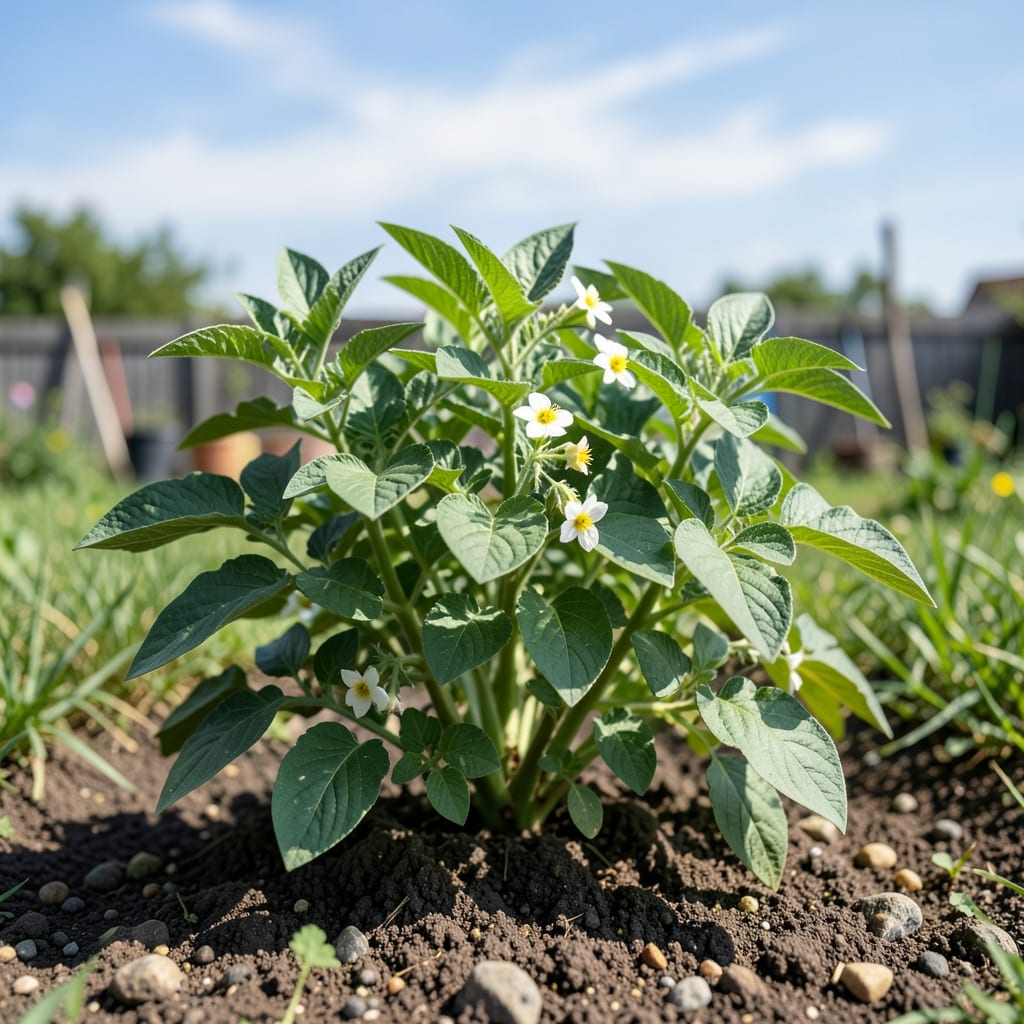
Those green leaves on your russet potatoes can turn problematic fast. I learned this the hard way after noticing yellowing edges and curled tips on mine last season.
Turns out, the issue often starts with water stress or early blight. Catching it early means the difference between saving your crop and losing it. Here’s how to spot the warning signs before it spreads.
📚 In This Guide
Protect your garden and family with these straightforward safety practices.
Russet potatoes produce aboveground foliage that contains solanine, a natural toxin. I always check for deep green leaves with a slightly fuzzy texture and 5-7 lobed leaflets arranged in pairs along a central stem. This is your first visual confirmation you’re dealing with potato plants rather than lookalike weeds.
The stems often have a slight purple tint near the base, especially in full sun. Don’t confuse these with tomato leaves—they’re similar but potato foliage tends to be more angular and less fragrant when crushed. When in doubt, wait for the distinctive white, pink, or purple flowers that appear as plants mature.
Solanine can absorb through skin and cause irritation, so I put on long sleeves and nitrile gloves before touching any potato foliage. This isn’t about being overly cautious—it’s about preventing the itchy rash that can develop after repeated contact.
A simple dust mask helps too, as handling dry leaves can release particles into the air. I’ve learned the hard way that even brief exposure while weeding can lead to 2-3 days of uncomfortable skin redness. The gear takes 30 seconds to put on and saves you from regret later.
Never compost potato foliage. I collect leaves in a sealed plastic bag and dispose of them with household trash. Solanine breaks down slowly, and composting can concentrate it to dangerous levels. If you have a large patch, use a sharp hoe to cut foliage at ground level rather than pulling by hand.
For small gardens, I cut leaves with clean pruners and drop them directly into the bag to minimize contact. After handling, wash tools with soapy water to remove any residue. This prevents accidental transfer to other plants or surfaces where children or pets might come into contact.
Solanine poisoning is rare but serious. I watch for gastrointestinal distress like nausea or vomiting within 2-6 hours of potential exposure. In pets, look for lethargy or loss of appetite if they’ve been in the garden.
If you suspect ingestion, call poison control immediately. I keep the number (800) 222-1222 saved in my phone. For skin exposure, wash the area thoroughly with cool water and mild soap and apply hydrocortisone cream if a rash appears. Most reactions resolve within 24-48 hours.
I plant russet potatoes in a dedicated section of the garden, away from high-traffic areas. A 2-foot barrier of mulch or low fencing keeps pets and small children from brushing against the foliage. This simple separation gives peace of mind without much effort.
Harvest potatoes before foliage yellows and dies back naturally, usually after 90-120 days depending on variety. Once the plant starts to senesce, toxin levels in tubers can increase. I mark planting dates on my calendar to track this timeline accurately.
Small oversights can lead to big problems when handling toxic foliage.
Identification Insight: In Step 1, don’t rush the process—wait for those distinctive white, pink, or purple flowers if you’re unsure. I’ve found that potato foliage often has that slight purple tint at the stem base that tomato plants lack, which is a key differentiator.
Safety First: That 30 seconds to put on long sleeves and nitrile gloves in Step 2 is worth it. I learned this after developing a rash that lasted the full 2-3 days. The dust mask might feel unnecessary, but it prevents inhaling particles when handling dry leaves.
Disposal Caution: Never underestimate the importance of that sealed plastic bag in Step 3. Solanine doesn’t break down quickly, and composting can create a dangerous concentration. I always double-bag leaves from large patches to be extra safe.
Monitoring Timeline: If you suspect exposure, remember that gastrointestinal symptoms can take up to 6 hours to appear. That 24-48 hour window for skin reactions means you shouldn’t panic if a rash develops immediately—it’s usually not serious if properly treated.
No, russet potato leaves contain solanine and chaconine, toxic alkaloids that can cause nausea, vomiting, or worse if ingested. Always avoid eating any part of the potato plant except the tubers.
Look for wilting, yellowing, or dark spots, which may indicate blight or pest damage, increasing toxin levels. Healthy leaves are still unsafe to eat, but damaged ones can be even riskier.
Contact your vet immediately. Symptoms like vomiting, diarrhea, or lethargy may appear. Early intervention can prevent serious complications.
Yes, but avoid composting leaves from diseased plants, as pathogens may survive. Healthy leaves break down safely, adding nutrients to your compost pile.
Try spinach, kale, or Swiss chard for similar texture and nutrients. These greens are non-toxic and widely used in recipes.