
Beautiful Plants For Your Interior
Beautiful Plants For Your Interior
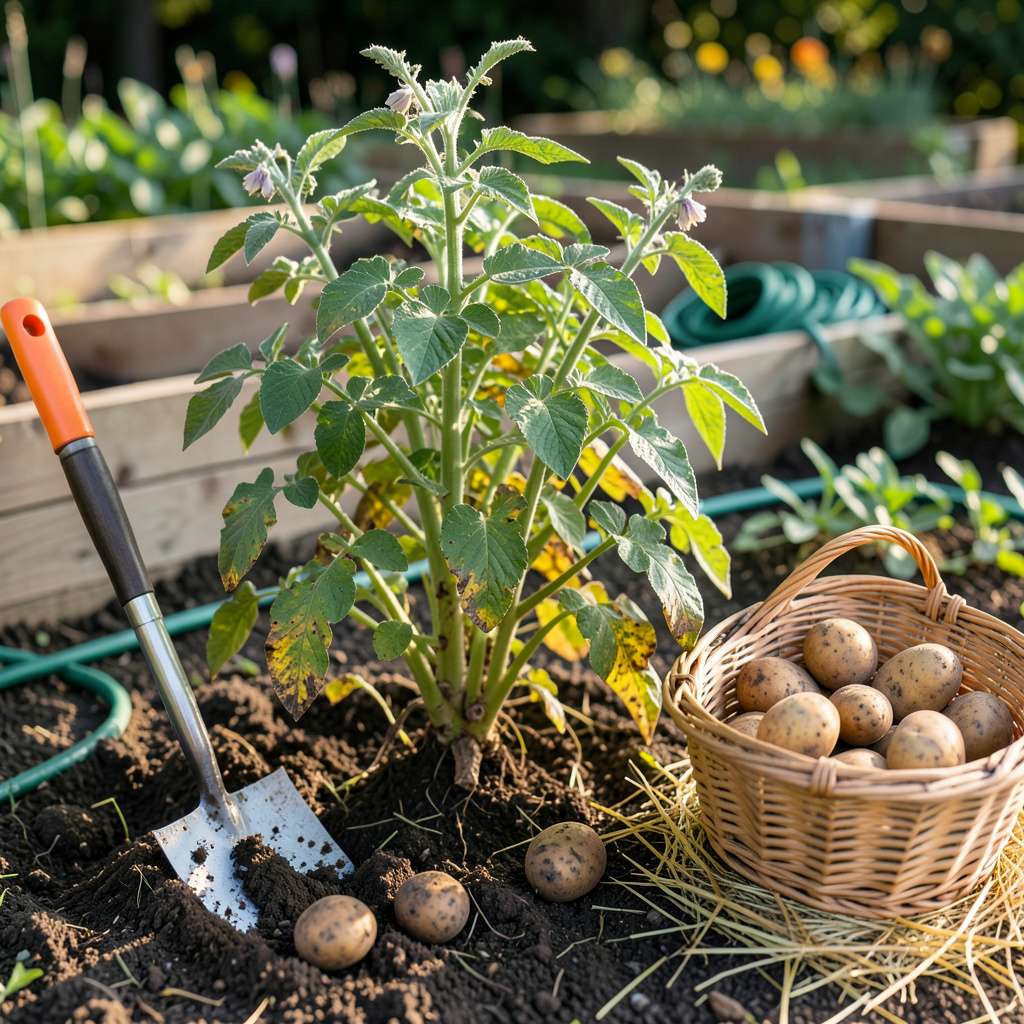
Potato plants are ready to harvest when the foliage turns yellow and begins to die back, with stems wilting and flowers (if present) fading. Mature tubers develop thick skins that resist scratching when gently rubbed with a finger.
This natural decline signals the plant is redirecting energy from leaves to tubers, completing its growth cycle. 🌱 I’ve noticed that early varieties like Yukon Gold may show these signs in as little as 60-70 days, while russets often need 90-120 days to fully mature. The skin test is particularly telling—immature potatoes have paper-thin skins that peel away easily, while harvest-ready ones feel firm and resilient.
💡 In This Article
The yellowing of potato leaves isn’t just a color change—it’s a biological signal that chlorophyll is breaking down as the plant prepares for dormancy. This process, called senescence, occurs when the plant completes its growth cycle and begins redirecting nutrients from foliage to tubers.
The leaves gradually transition from vibrant green to pale yellow, then brown, as photosynthesis slows and energy reserves are depleted. 🌿
As the foliage fades, you’ll notice stems becoming increasingly limp and collapsing. This happens because the plant is actively withdrawing moisture and nutrients from above-ground parts to nourish the developing tubers below. The stems lose their rigidity as cell walls break down—a process accelerated by cooler temperatures.
Early varieties like Red Norland may show this wilting within 70-80 days, while late-season varieties like Kennebec can take 110-130 days to reach this stage.
The skin test reveals the most about tuber maturity. Immature potatoes have skins so thin they’ll peel away with gentle rubbing, while mature ones develop a protective layer called suberin—a waxy substance that makes the skin tougher and more resistant to damage.
This thickening process is the plant’s way of preparing tubers for storage, reducing moisture loss during dormancy. A mature potato skin should feel slightly leathery when rubbed between your fingers.
Flower development offers additional clues, though not all varieties bloom. When present, flowers typically appear about 6-8 weeks after planting, then fade as the plant shifts energy to tuber production.
The time between flowering and harvest varies: new potatoes can be harvested immediately after blooming, while storage potatoes need 2-3 more weeks for skins to mature. The complete dieback of flowers and stems signals the final stage of maturity.
Environmental factors can accelerate or delay these visual cues. Cool nights below 50°F often speed up senescence, while warm weather may prolong green foliage. I’ve found that consistent moisture levels during tuber formation (the last 4-6 weeks of growth) produce the most uniform skin development.
Sudden drought stress can cause premature yellowing without proper tuber maturation, so monitor soil moisture carefully during this critical period.
For precise timing, consider these variety-specific benchmarks:
The “test dig” method helps verify readiness without disturbing the entire plant. Gently excavate around the plant’s edge to examine tuber size and skin condition. Mature potatoes should measure at least 2-3 inches in diameter with firm flesh that doesn’t dent easily when pressed.
This hands-on check is particularly useful when growing conditions have been inconsistent, ensuring you harvest at peak quality rather than relying solely on foliage appearance. ✨
Early varieties like Yukon Gold typically show signs in 60-70 days, while late-season types like Russets may take 90-120 days. The timeline depends on your climate and growing conditions—cooler regions often extend the growing period by 1-2 weeks.
Yes, for “new potatoes” (young, tender tubers), you can gently harvest a few when plants first flower, usually 6-8 weeks after planting. However, for storage potatoes, wait until foliage fully dies back to ensure thick skins develop for better keeping quality.
Use the “test dig” method: carefully excavate around the plant’s edge to examine tuber size and skin condition. Mature potatoes should measure at least 2-3 inches in diameter with firm flesh that doesn’t dent easily when pressed. This prevents premature harvesting while verifying readiness.
Some varieties (like Russets) rarely flower, but this doesn’t impact harvest timing. Focus on foliage changes instead: when leaves yellow and stems wilt, tubers are maturing. The skin test (rubbing gently to check thickness) becomes even more important with non-flowering varieties.
Cool, wet conditions can delay maturity by 1-2 weeks, while hot, dry spells may accelerate dieback. Monitor soil temperatures—ideal harvest conditions are when soils are between 50-65°F. Adjust your harvest window based on local weather patterns rather than strict calendar dates.
