
Beautiful Plants For Your Interior
Beautiful Plants For Your Interior
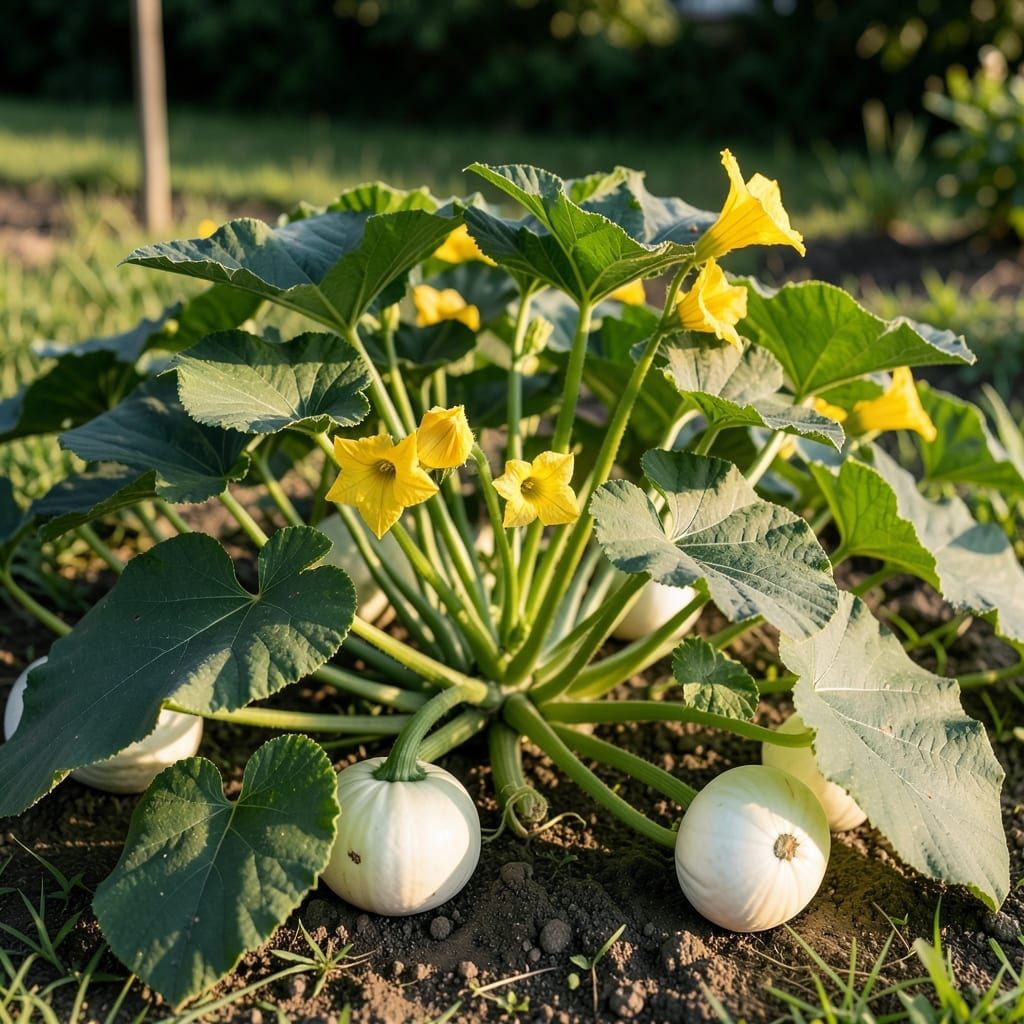
These pale orbs brighten any garden patch with their unique look and mild flavor. I’ve grown round white squash for years, and they consistently produce healthy vines even in less-than-perfect conditions.
With the right soil prep and consistent watering, you’ll harvest smooth, uniform fruits that store well. The plants thrive in full sun and reward minimal effort with impressive yields.
📚 In This Guide
Here’s the method I rely on to grow these plants with consistent, vigorous results.
Choose a location with full sun exposure—these plants require at least 6-8 hours of direct sunlight daily for optimal growth. I always test the soil first. If it doesn’t drain well after a heavy rain, amending with compost or creating raised beds is non-negotiable.
The soil pH should be between 6.0 and 7.5. You can adjust with lime or sulfur if needed, but I’ve found most garden soils fall within this range naturally. Work the soil to a depth of 12-18 inches, removing any rocks or debris that could impede root development.
If direct sowing, plant seeds 1 inch deep and 2-3 feet apart in rows spaced 4-5 feet apart. This spacing ensures adequate air circulation, which is critical for preventing fungal diseases. I always plant a few extra seeds per hole and thin to the strongest seedling once first true leaves appear.
For transplants, dig holes slightly larger than the root ball and set plants at the same depth they were growing in their containers. Water thoroughly after planting to settle the soil and eliminate air pockets. Avoid handling the stems too much—these plants are sensitive to transplant shock.
These plants have deep root systems, so water deeply but infrequently. Aim for 1-2 inches of water per week, either from rainfall or irrigation. I use a drip irrigation system to keep foliage dry, which reduces the risk of powdery mildew.
Check soil moisture by sticking your finger 2-3 inches into the soil. If it feels dry at that depth, it’s time to water. Mulching with straw or shredded leaves helps retain moisture and keeps soil temperatures stable, which these plants appreciate.
Once the plants start vining, I apply a balanced fertilizer, such as 10-10-10, at a rate of 1 pound per 100 square feet. Avoid over-fertilizing with nitrogen, as this can lead to excessive leafy growth at the expense of fruit production.
Watch for the first signs of flowering, which typically occurs 45-55 days after planting. The plants produce both male and female flowers, and pollination is essential for fruit set. If bees are scarce, I use a small paintbrush to transfer pollen manually—it’s a simple but effective technique.
These squash are ready to harvest when the rind is hard and cannot be punctured easily with a fingernail. I check the plants every 2-3 days during peak production, as the fruits can grow rapidly. Use a sharp knife or pruning shears to cut the stem, leaving 1-2 inches attached to the fruit.
Harvesting regularly encourages the plant to continue producing. If you leave mature fruits on the vine too long, the plant may stop setting new ones. Store harvested squash in a cool, dry place—they’ll keep for several weeks under the right conditions.
These insights will help you avoid pitfalls and grow thriving squash plants.
Sunlight Priority: The 6-8 hours of daily direct sunlight mentioned in Step 1 isn’t just a suggestion—it’s essential for vigorous growth and high yields. I’ve seen plants struggle with fewer than 6 hours, producing sparse foliage and small fruits. If your garden has partial shade, consider container growing to move plants to sunnier spots.
Soil Preparation Insight: Working the soil to 12-18 inches deep as described in Step 1 allows roots to penetrate easily. Confession: I skipped this step once and ended up with stunted plants that couldn’t access nutrients. Don’t make my mistake—take the time to prepare your soil properly.
Watering Wisdom: The 1-2 inches per week guideline in Step 3 works best when delivered in one or two deep watering sessions rather than daily light sprinkles. This encourages deep root growth. I check soil moisture at that 2-3 inch depth religiously—it’s the most reliable indicator of when to water.
Pollination Pro Tip: That 45-55 day flowering window in Step 4 is when your attention matters most. If you notice flowers but no fruit forming, hand-pollination with a paintbrush can dramatically improve your harvest. I’ve rescued entire crops this way during bee-scarcity periods.
White spots are often caused by powdery mildew, a fungal disease. Ensure good air circulation, avoid overhead watering, and apply fungicide if needed. Early treatment prevents spread!
Yes, if the blemishes are superficial (like minor scars or discoloration). Avoid eating squash with soft, moldy, or rotten spots, as these indicate spoilage or disease.
Use row covers early in the season, remove plant debris after harvest, and inspect vines regularly for entry holes. Wrap stems with foil to deter egg-laying.
Try growing zucchini or yellow squash—similar care requirements but often more resistant to pests. Both thrive in comparable conditions.
Wilting can signal under/overwatering, disease (like bacterial wilt), or pest damage. Check soil moisture, inspect roots, and remove affected plants to prevent spread.