
Beautiful Plants For Your Interior
Beautiful Plants For Your Interior
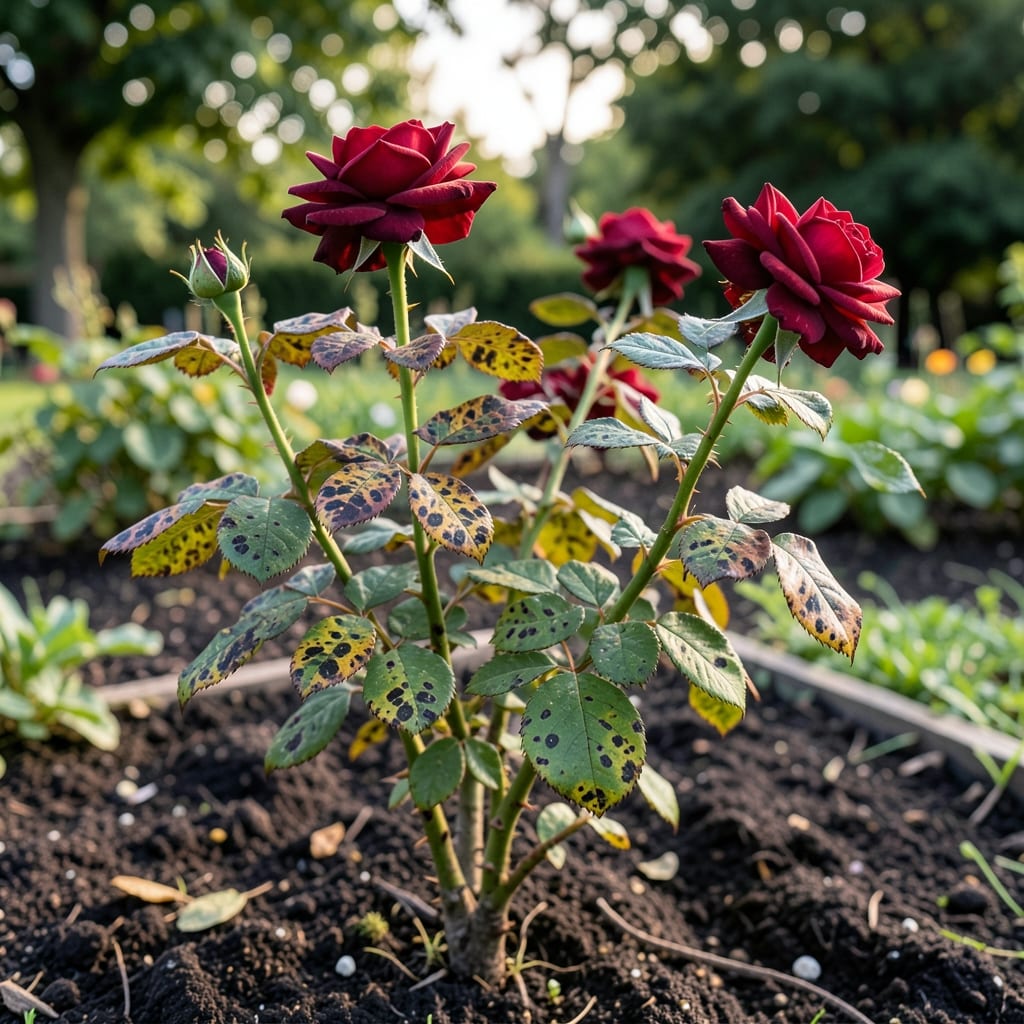
Black spots on your roses mean trouble’s brewing. I’ve lost entire bushes to blight by ignoring the first warning signs—dark patches, yellowing leaves, and stems that look like they’ve been singed.
The disease spreads fast in wet conditions, but catching it early saves your plants. A simple copper spray at the first sign stops the spread, while removing infected leaves prevents it from taking hold.
With the right approach, your roses can recover and even thrive again. I’ve brought bushes back from near-death with consistent treatment and better airflow around the plants.
Works for all rose varieties, from climbers to shrubs. Here’s how to spot it and stop it before it’s too late.
Rose blight isn’t just bad luck—it’s usually the result of specific environmental or cultural conditions. Understanding the root causes helps you prevent and manage outbreaks effectively. Here’s what’s likely to blame:
Most rose blight cases stem from Diplocarpon rosae (black spot) or Phragmidium spp. (rust), fungi that multiply in moist, still air. Overhead watering, poor drainage, or crowded plantings create the perfect breeding ground. These pathogens spread via spores, which can survive winter in leaf debris and infect new growth in spring.
Fungi love temperatures between 65–80°F (18–27°C) paired with relative humidity above 90%. Prolonged leaf wetness (from rain, dew, or irrigation) accelerates spore germination. Roses in shaded, poorly ventilated areas are especially vulnerable.
Dense foliage or overcrowded rose beds trap moisture and restrict airflow, allowing fungi to take hold. Pruning for an open canopy and spacing plants 3–4 feet apart reduces this risk significantly.
Fallen leaves, pruned canes, or contaminated soil harbor spores year-round. Failing to remove and destroy (not compost) infected debris invites recurring infections. Sanitize pruning tools with rubbing alcohol between cuts to avoid spreading pathogens.
Wetting the foliage—especially in the evening—extends the time leaves stay damp, giving fungi a head start. Always water at the base of the plant in the early morning to allow quick drying.
Tackling rose bush blight starts with identifying the cause and applying the right fix. Below are targeted solutions for common issues, along with prevention tips to keep your roses thriving.
Fix: Remove infected leaves and stems immediately to stop the spread. Apply a copper-based fungicide or neem oil every 7–10 days until the problem clears. For severe cases, use a systemic fungicide like Bayer Garden Fungicide.
Prevention: 💡 Water at the base of the plant (not the leaves) to reduce moisture. Space bushes for airflow, and prune regularly to improve circulation.
Fix: Blast pests off with a strong stream of water or apply insecticidal soap or horticultural oil. For stubborn infestations, use a systemic insecticide like Imidacloprid.
Prevention: 🎯 Encourage natural predators (ladybugs, lacewings) by planting companion flowers like marigolds. Inspect leaves weekly for early signs.
Fix: Prune affected areas below the damage using sterilized shears (dip in rubbing alcohol between cuts). Disinfect the plant with a bactericide like Kocide 3000.
Prevention: ✨ Avoid overhead watering and sanitize tools between uses. Remove fallen debris, as bacteria can overwinter in plant matter.
Fix: Test soil pH (roses prefer 6.0–6.5). Amend with balanced fertilizer (10-10-10) or organic compost. For iron deficiency (yellowing between veins), apply chelated iron.
Prevention: 🌡️ Feed roses every 4–6 weeks during growing season. Mulch with compost to retain nutrients.
Consistency is key—monitor your roses weekly and act at the first sign of trouble!
Look for dark spots, yellowing leaves, or cankers on stems. Black spot causes circular black patches with feathery edges, while rust appears as orange pustules. Act fast if you see these signs.
Apply fungicides or sprays in the early morning so leaves dry quickly. Avoid evening applications, as prolonged moisture encourages fungal growth. Consistency every 7-10 days works best.
Yes, but prune all infected parts immediately. Use sterilized tools and treat with a systemic fungicide. Improve airflow and avoid overhead watering to prevent recurrence.
Fungal spores can travel via wind or water. Remove infected debris and avoid composting it. Keep roses spaced 3-4 feet apart to reduce risk.