
Beautiful Plants For Your Interior
Beautiful Plants For Your Interior
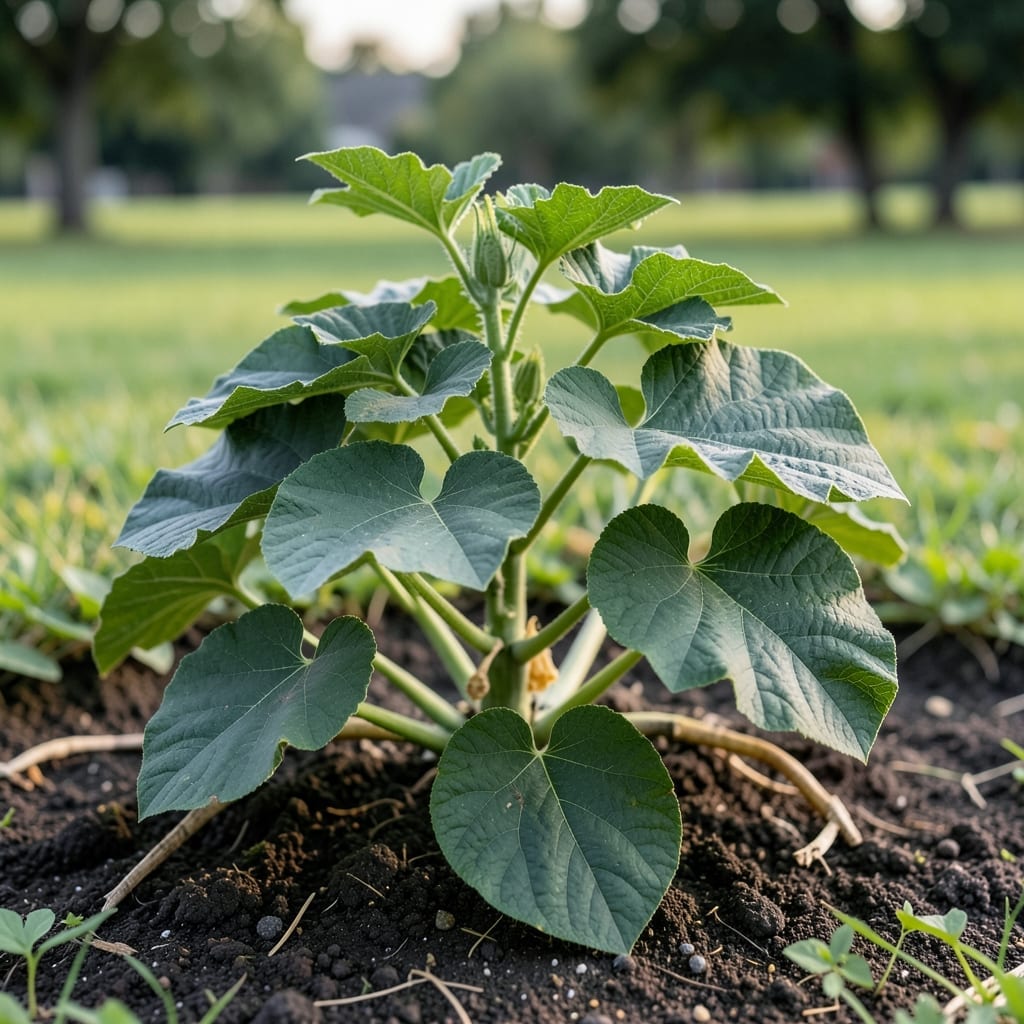
Those first two leaves on your pumpkin seedlings aren’t the real deal. True leaves appear after the initial cotyledons, and they’re your first sign of a healthy plant ready to grow.
I’ve learned to watch for their darker green color and jagged edges—completely different from the smooth seed leaves. This is when your pumpkin really starts to take off, but it’s also when it needs the most attention.
📚 In This Guide
Here’s how to recognize the difference between cotyledons and true leaves on your young pumpkin plants.
The first leaves you’ll see on pumpkin seedlings are cotyledons—these round, smooth leaves emerge from the seed and provide initial nourishment. They appear in pairs and look identical, with a simple, untextured surface. I always check for these first because they’re your confirmation that germination was successful.
True leaves, however, develop after the cotyledons and look distinctly different. They’re larger, have jagged edges, and display that classic pumpkin leaf shape with deep lobes. You’ll notice them growing from the center of the plant between the cotyledons, usually appearing 7-14 days after germination.
Take a close look at the edges of each leaf. Cotyledons have smooth, unbroken margins, while true leaves exhibit a rough, serrated appearance. The texture is another giveaway—true leaves feel slightly coarse to the touch, whereas cotyledons are smooth like paper.
Color also helps distinguish them. Cotyledons are typically a lighter, more yellowish green, while true leaves develop a deeper, richer green color. When you see this color change happening, you know your seedling is transitioning to its next growth phase.
True leaves emerge in an alternating pattern along the stem, never directly opposite each other like cotyledons do. This alternating arrangement is called alternate leaf arrangement and is a key characteristic of pumpkin plants. You’ll see new true leaves appearing every few days as the plant grows.
Timing matters too. In ideal conditions with 6-8 hours of sunlight and 70-85°F temperatures, you should see the first true leaves appear 10-14 days after planting. If your seedlings are slower to develop true leaves, they might need more warmth or light.
Another way to confirm true leaves is by the plant’s overall development. By the time true leaves appear, your pumpkin seedling should be about 3-4 inches tall with a sturdy stem. The stem will also start to develop a slightly rough texture and may begin to vine outward.
At this stage, the plant will start to require more nutrients. I begin fertilizing with a balanced, water-soluble fertilizer once the first 3-4 true leaves have fully developed. This gives the plant the boost it needs for strong vine growth and future pumpkin production.
These small details make identifying true leaves much easier for beginners.
Color Clues: Cotyledons start with that pale yellow-green hue, while true leaves develop a noticeably richer green. I’ve found that this color shift happens right around the 7-14 day mark after germination, so don’t be alarmed if your seedlings look a bit pale at first.
Texture Check: Run your fingers gently over the leaves. True leaves feel slightly rough, almost like fine sandpaper, while cotyledons are smooth as paper. This texture difference is one of the most reliable indicators, especially in the early stages.
Growth Pattern: Remember that true leaves emerge in an alternating pattern along the stem, never directly across from each other like cotyledons. In ideal conditions with 6-8 hours of sunlight and 70-85°F, this alternating pattern becomes obvious as the plant grows taller.
Height Confirmation: By the time true leaves appear, your seedling should be about 3-4 inches tall with a sturdy stem. If your plants are shorter, they might not have reached the true leaf stage yet, even if new leaves are forming.
True leaves appear after the initial seed leaves (cotyledons) and look like mini pumpkin leaves—deeply lobed with a rough texture. They’re typically darker green and more defined than the smooth, heart-shaped seed leaves.
True leaves typically appear 7–14 days after germination, once the seedling has 2–4 sets of leaves. Factors like temperature, soil quality, and sunlight can affect timing.
Slow growth may result from poor light, cold soil, or nutrient deficiencies. Ensure seedlings get 6–8 hours of sunlight daily and use well-draining, fertile soil. Overwatering can also stunt development.
It’s best to wait until at least 2–3 true leaves form, as seedlings are more resilient then. Transplanting too early can shock the plant and hinder growth.
Cotyledons (seed leaves) are the first leaves that appear—they’re simple and smooth. True leaves follow, resembling mature pumpkin foliage with lobes and a textured surface, and they perform photosynthesis.