
Beautiful Plants For Your Interior
Beautiful Plants For Your Interior
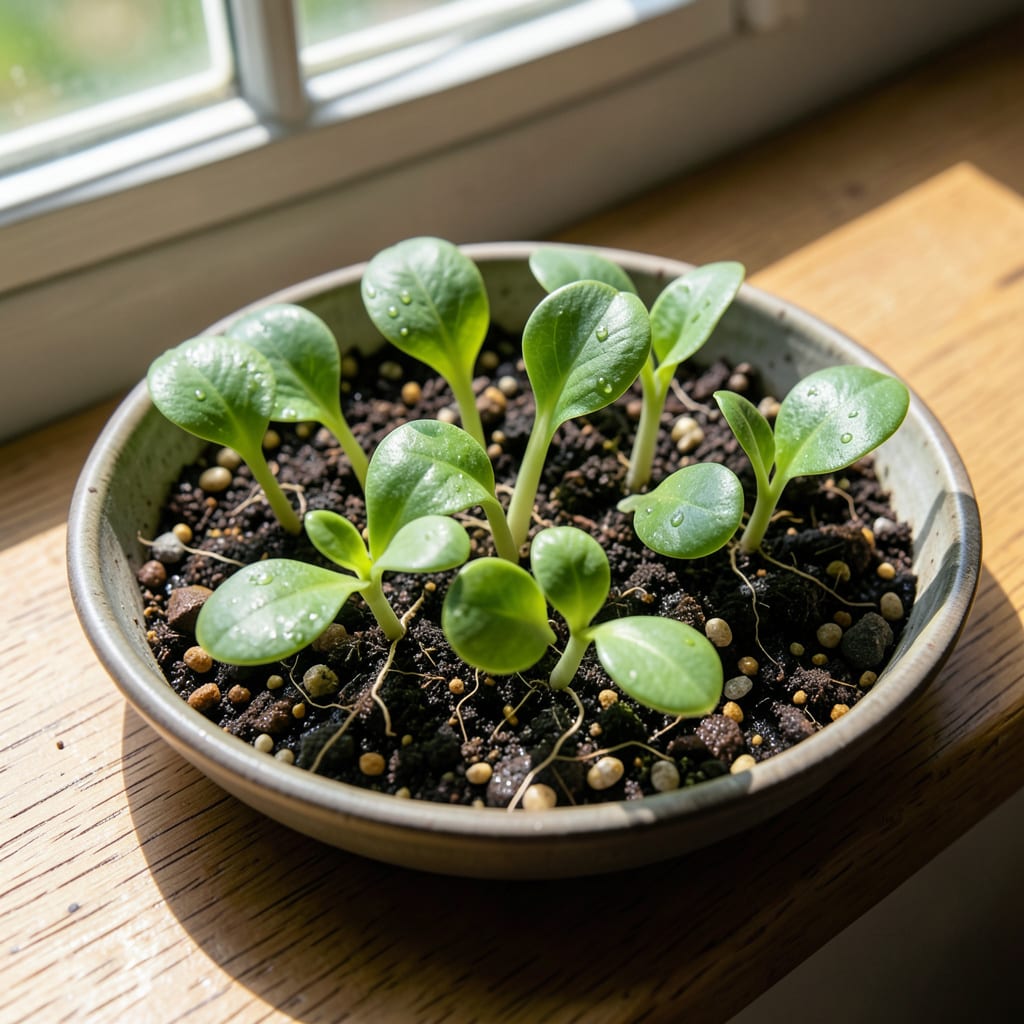
Those first tiny leaves on your seedlings are your garden’s first promise of life. I’ve learned the hard way that these cotyledons—not true leaves yet—are the most critical stage for setting up strong, healthy growth down the line.
Get the light and water right here, and you’ll avoid the leggy, weak seedlings that flop over before they even get started. This is where champions are made—or lost.
📚 In This Guide
Here’s how I recognize and nurture those crucial early leaves to ensure strong, healthy growth.
The first leaves you see are actually cotyledons, not true leaves. These are the rounded, seed-shaped leaves that emerge directly from the seed. They’re usually thicker and a bit paler than the leaves that follow.
True leaves appear after the cotyledons and look more like the mature plant’s foliage. They typically have a more defined shape and texture. I watch for this transition carefully—it’s the first real sign your seedlings are establishing themselves.
Healthy first leaves should be a vibrant green color, firm to the touch, and free from spots or discoloration. If they appear yellow or pale, the seedlings likely need more light or nutrients.
I check the undersides too—pests often start there. The leaves should be perky, not drooping or wilted. This is the moment that matters: catching problems early gives you time to correct them before they affect the whole plant.
Once true leaves appear, I move seedlings to bright, indirect light if they’re not already there. A south-facing window works well, but I supplement with grow lights in early spring when daylight is limited.
Keep lights 2-4 inches above the seedlings and adjust as they grow. Leggy seedlings with stretched stems between leaves signal insufficient light. You’ll see the difference within 24-48 hours of adjusting the light source.
At the true leaf stage, I start fertilizing with a diluted liquid fertilizer—about half the recommended strength. This gives the seedlings a nutrient boost without overwhelming their delicate systems.
Apply the fertilizer to moist soil only, never to dry roots. I water first, then fertilize the next day to prevent burning. You’ll notice a growth spurt within a week if the plants are responding well.
This is when I pay closest attention. If leaves start curling, it might indicate too much water or not enough humidity. Brown tips often mean the air is too dry or salts are building up from fertilizers.
I keep a spray bottle handy to mist leaves occasionally, especially in dry indoor environments. The goal is consistent moisture without waterlogging. Healthy seedlings at this stage will have steady, upward growth and leaves that unfurl properly.
Small adjustments at this stage make a huge difference in seedling success.
The Light Distance Factor: Position your grow lights exactly 2-4 inches above seedlings as mentioned in Step 3. I learned this the hard way after stretching several batches. Any higher and they’ll grow leggy; any lower risks burning tender leaves. Adjust daily as they grow taller.
Fertilizer Timing: In Step 4, the half-strength fertilizer application is crucial. I water first, wait until the next day, then fertilize moist soil only. This prevents root burn while giving seedlings the gentle nutrient boost they need at the true leaf stage.
Health Check Shortcut: For Step 2, check leaf undersides with a flashlight. Pests and early disease signs often appear there first. Catching issues within 24-48 hours means you can correct problems before they spread to the whole plant.
Most seedlings sprout their first leaves (cotyledons) within 5–14 days after germination, depending on the plant species, temperature, and moisture levels. True leaves usually follow 1–3 weeks later.
Cotyledons are the initial “seed leaves” that provide nutrients from the seed. True leaves appear later, resembling the plant’s mature foliage and enabling photosynthesis for sustained growth.
Yellowing or wilting may indicate overwatering, poor drainage, or nutrient deficiencies. Check soil moisture and ensure proper light exposure. Adjust care to prevent further stress.
Avoid heavy fertilizing at this stage. Use a diluted, balanced liquid fertilizer (½ strength) only after true leaves emerge to prevent burning delicate roots.
It’s best to wait until seedlings have at least 2–3 sets of true leaves and a sturdy stem. Early transplanting can shock them, but if roots outgrow containers, handle gently.
