
Beautiful Plants For Your Interior
Beautiful Plants For Your Interior
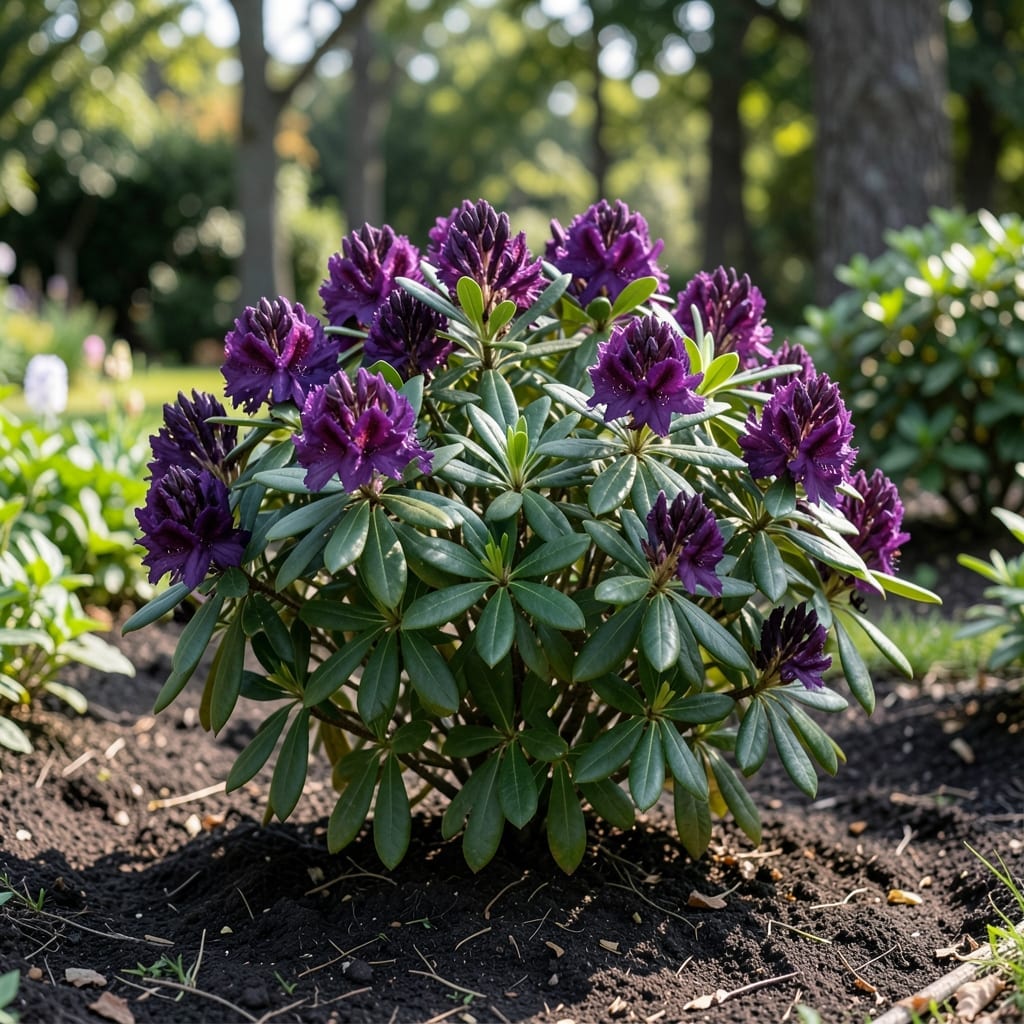
Dark, velvety blooms that stop visitors in their tracks. Black Widow rhododendrons bring that rare deep purple-black color to gardens, creating drama where most plants fade into the background.
They thrive in partial shade with acidic, well-draining soil. I’ve found they need consistent moisture but hate soggy roots. Proper planting and minimal pruning keep them looking stunning year after year.
📚 In This Guide
This method ensures your dramatic dark blooms thrive with minimal fuss and maximum impact.
Choose a site with partial shade—morning sun with afternoon protection is perfect. Black Widow rhododendrons flourish in well-draining, acidic soil (pH 4.5-6.0). Avoid low-lying areas where water pools, as soggy roots will rot the plant quickly.
Test your soil with a kit before planting. If the pH is too high, amend with elemental sulfur or pine bark fines to lower it. The location should also have shelter from strong winds, which can damage the large, leathery leaves.
Dig a hole that is twice as wide as the root ball but no deeper. Rhododendrons have shallow root systems, so planting too deep suffocates the crown. Loosen the soil around the edges of the hole to encourage root spread into the surrounding earth.
If your soil is heavy clay, mix in 50% organic matter like peat moss or compost to improve drainage. I always rough up the sides of the hole with a shovel—smooth, glazed edges repel roots and stunt growth.
Gently remove the rhododendron from its container and tease apart any circling roots. Place the plant in the hole so the top of the root ball sits 1-2 inches above the surrounding soil level—it will settle over time. Backfill with the native soil mix, tamping lightly to remove air pockets.
Water thoroughly after planting to settle the soil and eliminate gaps. Don’t fertilize at planting time—wait until early spring of the following year. Mulch with 2-3 inches of pine bark to retain moisture and suppress weeds, but keep it 3 inches away from the trunk to prevent rot.
Keep the soil consistently moist but not waterlogged for the first year. Water deeply 2-3 times per week during dry spells, applying 1-2 gallons per plant each time. Use a soaker hose or drip irrigation to direct water to the roots and avoid wetting the foliage, which can invite fungal diseases.
Check soil moisture by sticking your finger 2 inches deep—if it feels dry, it’s time to water. Black Widows are drought-sensitive, especially in their first season, so don’t let the soil dry out completely. Morning watering is ideal to allow foliage to dry before evening.
After the first year, reduce watering to once a week unless conditions are extremely dry. Apply a balanced, acid-forming fertilizer (like one formulated for azaleas) in early spring, following package instructions. Avoid late-season feeding, which can promote tender growth vulnerable to winter damage.
Prune only to shape or remove dead wood, doing so immediately after flowering. Black Widow blooms on old wood, so late pruning cuts off next year’s buds. Watch for pests like lace bugs or spider mites, and treat promptly with horticultural oil if detected.
These insights will help you avoid common pitfalls and ensure your plants thrive from day one.
Soil Preparation: Don’t skip the soil pH test in Step 1. Black Widows require that 4.5-6.0 pH range to absorb nutrients properly. If your soil is alkaline, amending with elemental sulfur or pine bark fines is non-negotiable—this single step prevents yellowing leaves and stunted growth.
Planting Depth: In Step 3, resist the urge to bury the root ball deeply. The 1-2 inches above soil level guideline exists because rhododendrons have shallow roots. Planting too deep suffocates the crown, and you’ll notice decline within weeks. Trust me, I’ve lost plants to this mistake.
Watering Precision: The 2-3 times per week schedule in Step 4 is critical during the first year. Use your finger to check moisture 2 inches deep—this isn’t just advice, it’s how you prevent both root rot and drought stress. Morning watering is ideal, as evening moisture on leaves invites fungal issues.
Mulching Technique: That 2-3 inches of pine bark mulch in Step 3 does more than retain moisture. It also maintains soil acidity as it breaks down. But here’s what nobody tells you—keep it 3 inches away from the trunk, or you’ll create a perfect environment for stem rot.
Yes, like most rhododendrons, the Black Widow contains grayanotoxins, which are toxic to pets (especially dogs and cats). Keep it out of reach and contact a vet if ingestion occurs.
This variety typically blooms in mid to late spring, producing its dramatic dark purple flowers. Exact timing depends on your climate and local growing conditions.
Consider non-toxic options like black petunias, Queen of Night tulips, or black mondo grass for a similar dark aesthetic without the risk to pets or children.
Yellowing leaves often indicate overwatering, poor drainage, or nutrient deficiencies (like iron). Check soil moisture and pH levels (ideal: 4.5–5.5) for healthy growth.
It prefers partial shade, especially in hotter climates. Full sun can scorch its leaves, but it may tolerate morning sun with consistent moisture and mulching.