
Beautiful Plants For Your Interior
Beautiful Plants For Your Interior
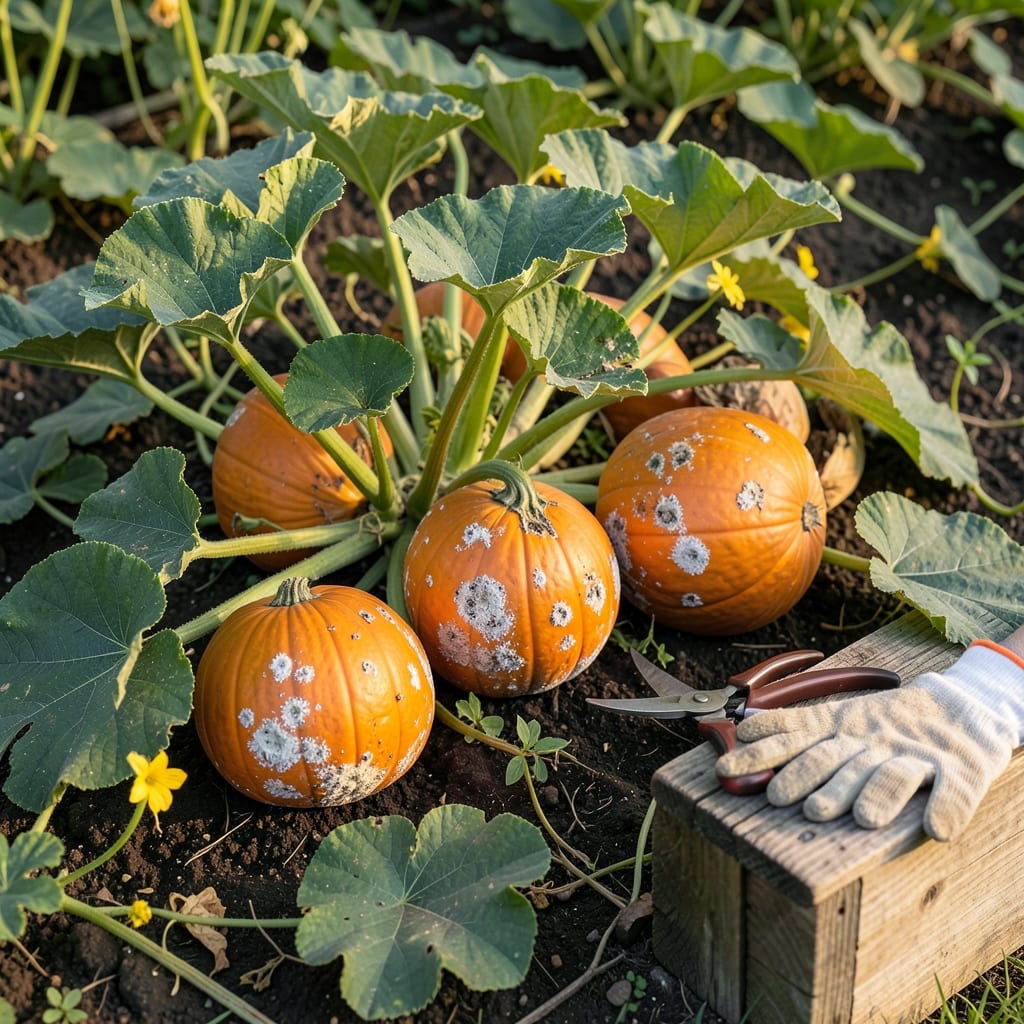
Nothing ruins pumpkin season faster than white mold creeping across your vines.
I lost an entire patch to this last fall until I learned the simple fixes. Good airflow, proper spacing, and morning watering make all the difference. Healthy plants start with prevention, not panic.
Caught early, a baking soda spray or copper fungicide stops spread without chemicals. The key is acting before spots multiply.
Works for field pumpkins, patio containers, or stored harvests. Here’s how to keep them thriving.
Pumpkin mold is a frustrating issue that can derail your harvest, but understanding its root causes helps you prevent it. Here’s why it happens:
Mold thrives in damp conditions. Overwatering, poor drainage, or prolonged rain can create a perfect breeding ground for fungal spores like Powdery Mildew or Downy Mildew. Pumpkin leaves and stems retain moisture, especially in shaded or crowded areas, accelerating mold growth.
Warm, humid environments (above 60% humidity) encourage mold spores to germinate. Poor air circulation in dense plantings traps moisture, making it easier for spores to settle and spread. This is especially common in greenhouses or tightly spaced garden beds.
Crowded pumpkin vines limit airflow, which slows evaporation and keeps foliage wet longer. Without proper spacing (at least 3–5 feet between plants), humidity builds up, inviting fungal infections.
Mold spores can linger in soil or on gardening tools from previous infections. Using unsterilized tools or planting in contaminated soil reintroduces the problem. Crop rotation and sanitizing tools with a 10% bleach solution can break this cycle.
Addressing these factors—controlling moisture, improving airflow, and sanitizing tools—can significantly reduce mold risks in your pumpkin patch.
Dealing with pumpkin mold doesn’t have to mean the end of your harvest. Here’s how to tackle common causes and restore your plants to health, along with tips to keep mold at bay.
If excess moisture is the culprit, adjust your watering schedule to allow the soil to dry slightly between sessions. Water at the base of the plant, not the leaves, to reduce humidity. Ensure your garden beds or containers have proper drainage. Prevention tip: 💡 Use drip irrigation to keep foliage dry and improve airflow.
For powdery mildew or downy mildew, remove infected leaves immediately and dispose of them away from your garden. Apply a homemade spray of 1 teaspoon baking soda, 1 quart of water, and a few drops of dish soap to the remaining foliage. Prevention tip: ✨ Space plants at least 3 feet apart to reduce humidity buildup.
Weak plants are more susceptible to mold. Amend your soil with compost or well-rotted manure to improve its structure and nutrient content. Avoid over-fertilizing with nitrogen, which can promote leafy growth at the expense of plant health. Prevention tip: 🎯 Rotate crops yearly to prevent soil-borne diseases from taking hold.
Pumpkins need full sun (6-8 hours daily) to thrive. If your plants are in a shady spot, consider relocating them or trimming nearby foliage to allow more light. Thin out dense vines to improve air circulation. Prevention tip: 🌞 Plant pumpkins in a sunny area from the start to minimize mold risks.
With these fixes and a little vigilance, your pumpkins can bounce back and stay mold-free! 🌟
Look for white powdery spots on leaves or fuzzy gray growth underneath. Yellowing leaves or stunted growth often follow.
Yes, if caught early. Remove affected leaves, improve airflow, and apply a baking soda spray. Discard severely infected fruit.
Space vines 3-5 feet apart for air circulation. Crowding traps moisture and spreads spores faster.
Always water in the morning. This lets foliage dry during the day, reducing overnight moisture that mold loves.