
Beautiful Plants For Your Interior
Beautiful Plants For Your Interior
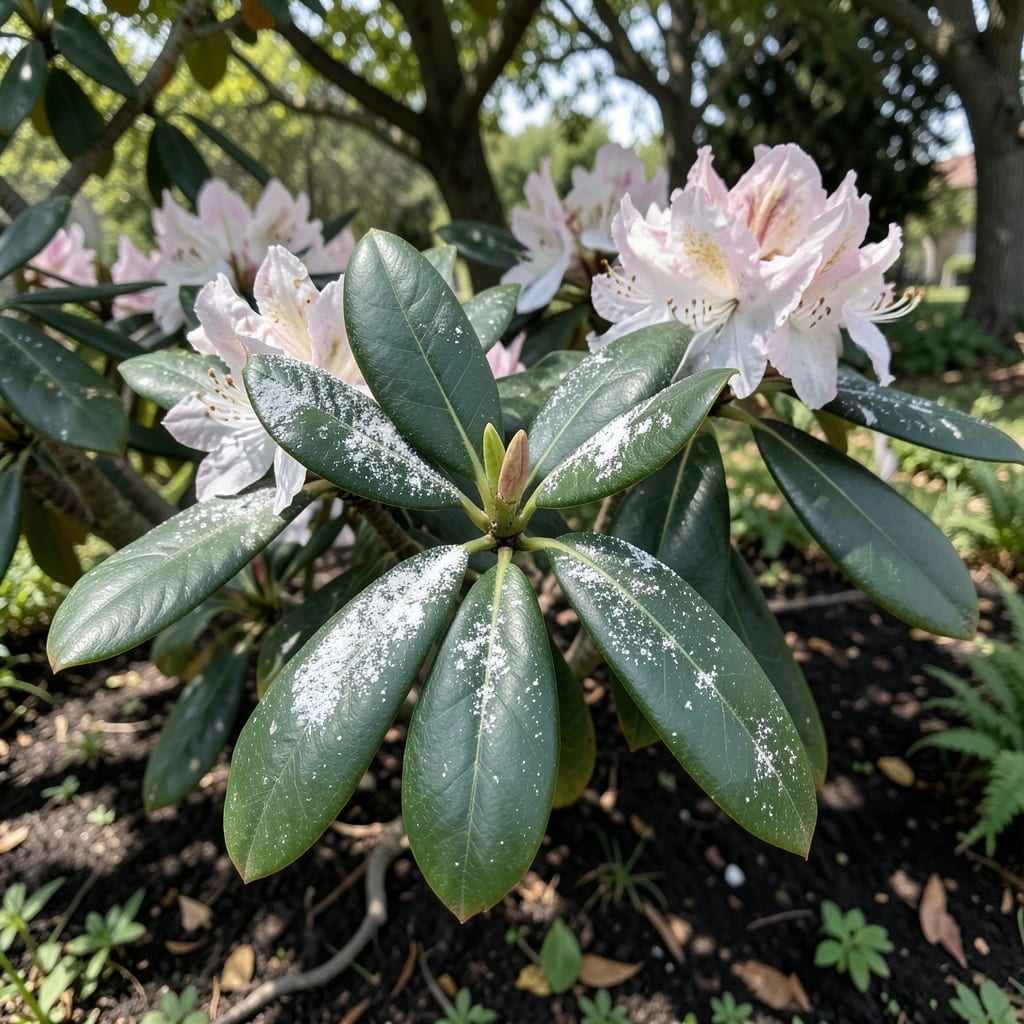
White spots on your rhododendron leaves mean trouble. I first noticed powdery mildew on mine last spring, and it spreads faster than you’d expect. Catching it early saves your plants from serious damage.
The issue often starts with poor airflow or too much shade. My rhododendrons were packed too close together, creating the perfect damp environment for the fungus to thrive. Proper spacing and pruning can prevent most outbreaks.
Natural solutions work surprisingly well. A simple baking soda spray or neem oil application can stop the spread without harsh chemicals. I’ve had great results with these methods.
Regular checks during humid weather help you stay ahead. With the right approach, your rhododendrons can stay healthy and mildew-free all season long.
Powdery mildew on rhododendrons thrives under specific environmental conditions and plant stressors. Here’s why it happens:
This fungal disease Erysiphe spp. flourishes in 60–80% humidity combined with stagnant air. Dense foliage or crowded plantings trap moisture, creating the perfect breeding ground. Rhododendrons in shaded, poorly ventilated areas are especially vulnerable.
The fungus spores germinate when daytime temperatures hit 70–80°F (21–27°C) but cool to 50–60°F (10–15°C) at night. This temperature swing, common in spring and fall, accelerates spore production and infection spread.
Wetting the leaves—especially in the evening—extends the period of leaf wetness, giving spores more time to infect. Rhododendrons watered from above (rather than at the base) are at higher risk, as moisture lingers on the waxy foliage.
Weak or stressed rhododendrons (due to drought, nutrient deficiencies, or root damage) lack the vigor to fend off infections. Over-fertilization (especially with high nitrogen) can also promote lush, susceptible growth.
Some rhododendron varieties, like ‘Catawbiense Grandiflorum’ or ‘Purple Splendour’, are genetically more prone to powdery mildew. If you’ve had recurring issues, the cultivar itself might be the culprit.
Tackling powdery mildew on your rhododendrons starts with quick action and consistent care. Here’s how to address each cause and prevent future flare-ups.
Fix: Thin out dense foliage by pruning overcrowded branches to improve airflow. Space plants at least 3–4 feet apart to reduce humidity buildup. Trim affected leaves and dispose of them in sealed bags to avoid spreading spores.
Fix: Switch to drip irrigation or water at the base of the plant early in the day. This gives leaves time to dry before cooler evening temperatures set in. Avoid wetting the foliage, especially in humid weather.
💡 Prevention Tip: Mulch around the base with organic material to retain soil moisture and minimize splash-back onto leaves.
Fix: Reduce humidity by watering in the morning and ensuring good drainage. If your garden is prone to dampness, consider a small fan or strategic planting in sunnier, breezier spots.
💡 Prevention Tip: Choose mildew-resistant rhododendron varieties like ‘PJM’ or ‘Caroline’ for high-humidity climates.
Fix: Relocate potted rhododendrons to sunnier areas or prune nearby trees to allow more light. Aim for at least 4–6 hours of sunlight daily, preferably morning sun, which helps dry dew quickly.
Fix: Apply a natural fungicide like neem oil, sulfur, or baking soda solution (1 tsp baking soda + 1 quart water + a few drops of dish soap) every 7–10 days until the mildew clears. Always test on a small area first.
✨ Pro Tip: Remove and destroy heavily infected leaves immediately to stop the spread.
Consistency is key—combine these fixes with regular monitoring to keep your rhododendrons thriving and mildew-free!
Look for white, powdery spots on leaves, often starting on the upper surface. These patches can spread quickly and may turn yellow or brown if untreated. Early signs include slight leaf curling or distortion.
Yes, powdery mildew spores can travel through air and water. Keep infected plants isolated and avoid overhead watering to prevent spreading. Prune affected areas immediately to contain it.
A baking soda solution (1 tsp per quart of water + dish soap) works well as a spray. Apply every 7–10 days until the issue resolves. Neem oil is another effective, natural option.
With prompt treatment and improved care, most plants recover completely. Severe cases may cause leaf drop, but new growth typically emerges healthy. Focus on prevention to avoid recurrence.