
Beautiful Plants For Your Interior
Beautiful Plants For Your Interior
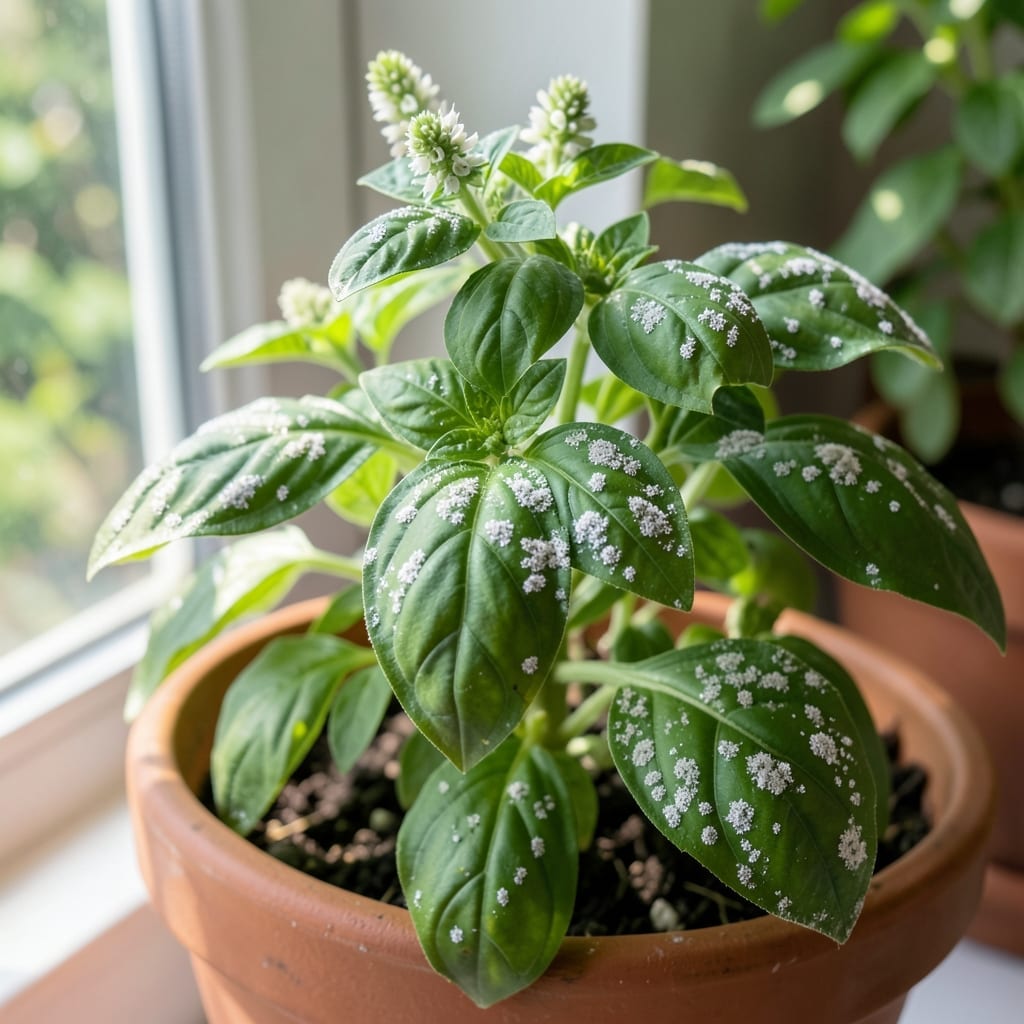
White dust on basil leaves means trouble. I’ve lost entire batches to powdery mildew before learning how to stop it early.
This fungus spreads fast in humid conditions, turning healthy plants into sad, stunted ones. The key is catching it when you first see those powdery spots—usually on older leaves.
Good airflow, morning watering, and quick action with organic sprays can save your crop. I now check my plants daily during warm, damp spells.
Prevention beats treatment every time. With the right habits, your basil stays lush and productive all season.
Powdery mildew on basil thrives under specific environmental conditions. Below are the primary factors that trigger its growth:
This fungus Erysiphe spp. flourishes in relative humidity above 70%, especially when combined with warm temperatures (68–86°F). Unlike other fungi, it doesn’t require free water on leaves—just moisture in the air. Poor air circulation traps humidity around plants, creating ideal breeding grounds.
Basil leaves in dense canopies block airflow, allowing spores to settle and germinate. Crowding also reduces sunlight penetration, which weakens plants and increases susceptibility. Space basil plants 12–18 inches apart to improve ventilation.
Wetting foliage during irrigation provides moisture for spores to adhere and infect. Watering at dusk or night extends leaf wetness, accelerating fungal growth. Use drip irrigation or soaker hoses to keep leaves dry.
Excess nitrogen promotes lush, soft growth that’s more vulnerable to infection. Conversely, low phosphorus or potassium weakens plant defenses. Conduct a soil test and adjust fertilizer ratios (e.g., 5-10-10) to strengthen basil’s resistance.
Powdery mildew on basil can be frustrating, but these targeted fixes will help you restore your plant’s health quickly.
Stagnant air traps moisture, creating the perfect breeding ground for powdery mildew. Space out your basil plants so air flows freely between them. If growing indoors, use a small fan on low to keep air moving. For outdoor plants, prune nearby foliage to reduce crowding.
Prevention tip: 💡 Avoid planting basil in dense clusters or shaded, still corners of the garden.
Wet leaves are a funnel for fungal spores. Water at the base of the plant early in the day so foliage stays dry. Use drip irrigation or a soaker hose for even, targeted moisture. If humidity is high, water less frequently and ensure the soil drains well.
Prevention tip: 🌡️ Use a moisture meter to avoid overwatering—basil prefers slightly dry soil over soggy roots.
At the first sign of white powdery spots, prune infected leaves and discard them (do not compost). Spray the remaining plant with a mix of 1 teaspoon baking soda + 1 quart water + a few drops of dish soap. Apply weekly until the mildew clears.
Prevention tip: ✨ Rotate treatments with neem oil or sulfur-based fungicides to prevent resistance.
A stressed basil plant is more vulnerable. Fertilize lightly with a balanced organic fertilizer to strengthen its defenses. Avoid high-nitrogen feeds, which can promote lush but weak growth.
Prevention tip: 🎯 Keep your basil in full sun (6+ hours daily) to enhance its natural resistance.
Under ideal conditions, it can cover a basil plant in 3-5 days. Warm, humid weather accelerates growth, so check plants daily during outbreaks.
Wash leaves thoroughly and use only if spots are minor. Severe cases may affect flavor and safety. When in doubt, remove infected leaves.
The fungus overwinters in plant debris. Remove all infected material and rotate crops to prevent recurrence.
Always water in the early morning. This gives leaves time to dry before evening humidity rises, reducing infection risk.