
Beautiful Plants For Your Interior
Beautiful Plants For Your Interior
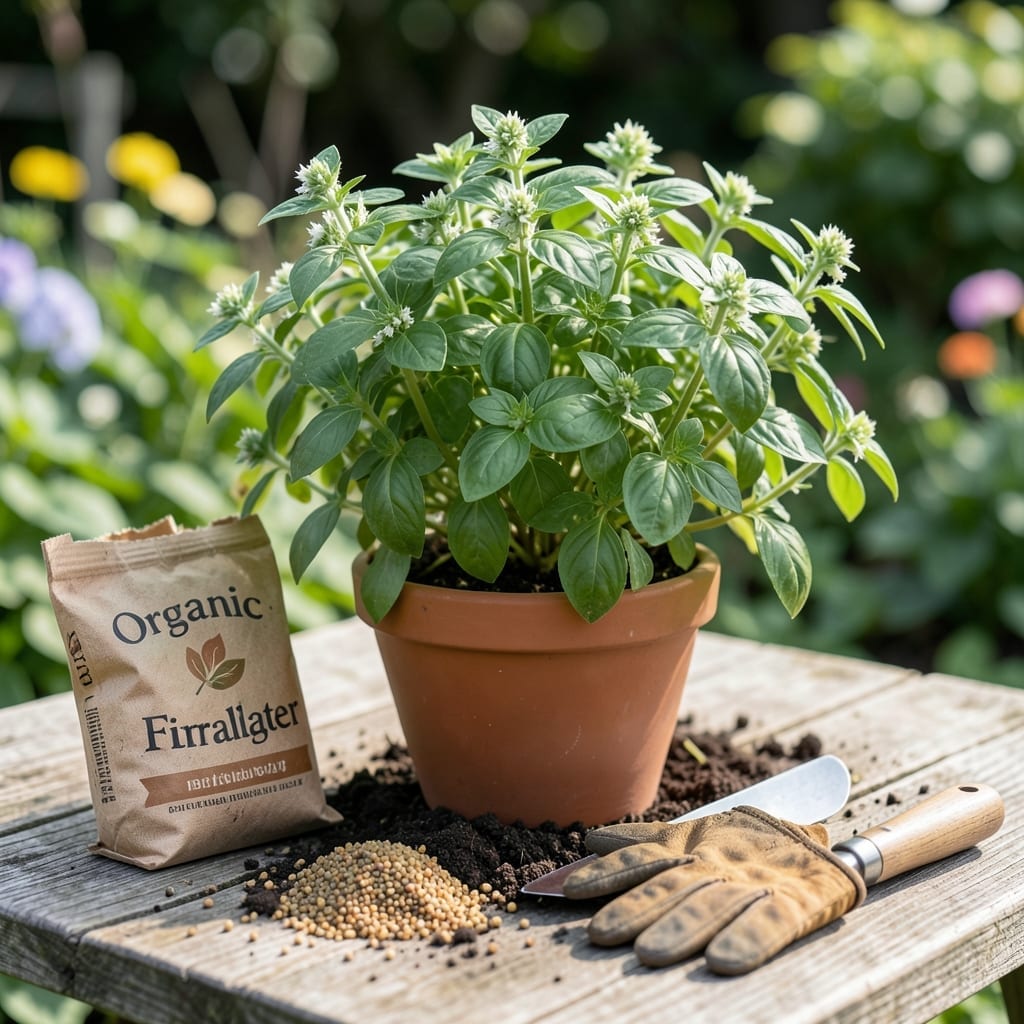
There’s nothing quite like the aroma of fresh 🌿 Basil filling your kitchen, but getting that lush growth requires more than just sunlight and water. The right nutrients make all the difference.
I’ve learned that synthetic options often do more harm than good, stripping away the plant’s natural essence. That’s why I turned to natural solutions that work with the plant, not against it.
What I discovered changed my approach to growing Basil forever. These methods preserve that signature flavor while promoting robust, healthy growth.
Discover how to give your Basil the organic boost it craves, without compromising on taste or quality. Your garden will thank you.
Choosing the right organic fertilizer can make a huge difference in your basil’s growth and flavor intensity. I’ve tested numerous options in my garden.
Organic options like compost and worm castings provide slow-release nutrients that basil loves, while liquid feeds offer quick boosts during peak growth periods.
| Fertilizer Type | Key Nutrients | Best For | Application Frequency |
|---|---|---|---|
| Compost | Balanced NPK | Soil health | Every 4-6 weeks |
| Worm Castings | Rich in nitrogen | Leafy growth | Monthly |
| Fish Emulsion | High nitrogen, potassium | Quick growth boost | Every 2-3 weeks |
| Seaweed Extract | Trace minerals | Stress resistance | Bi-weekly |
| Bone Meal | High phosphorus | Root development | At planting |
Compost is my go-to for long-term soil health. It improves soil structure while providing balanced nutrients that basil absorbs gradually.
Worm castings are another excellent choice, especially for container-grown basil. They’re packed with beneficial microbes that help prevent disease.
For immediate results, I recommend fish emulsion or seaweed extract. These liquid fertilizers deliver nutrients quickly, perfect for reviving struggling plants.
Bone meal is ideal when planting basil seedlings. Its high phosphorus content encourages strong root development, which is crucial for healthy growth.
Remember, basil prefers a balanced NPK ratio. I aim for 5-10-10 or similar. Too much nitrogen can lead to leafy growth at the expense of flavor.
Always water your basil before and after applying fertilizer. This helps prevent root burn and ensures even distribution of nutrients.
In my experience, rotating between different organic fertilizers gives the best results. This approach provides a broader spectrum of nutrients for optimal basil health and vibrant flavor 🌿
Applying organic fertilizer to basil plants requires careful timing. I always start feeding when my plants have 4-6 true leaves, ensuring they’re strong enough to handle the nutrients.
For best results, use liquid feeds like fish emulsion or seaweed extract every 2-3 weeks during the growing season. Foliar sprays can also boost growth quickly.
I’ve found that top-dressing with worm castings works wonders for container-grown basil. It improves soil structure while providing gentle, consistent nutrition.
During peak summer, I switch to weekly liquid feeds but reduce the concentration. Basil is sensitive to salt buildup, so flushing the soil monthly helps prevent issues.
Remember, less is more with basil. Overfeeding can lead to weak stems and diminished flavor. Stick to a balanced approach for lush, aromatic growth 🌿
Finally, always observe your plants. If leaves turn yellow or brown, it might be a sign of nutrient burn. Adjust your feeding schedule accordingly.