
Beautiful Plants For Your Interior
Beautiful Plants For Your Interior
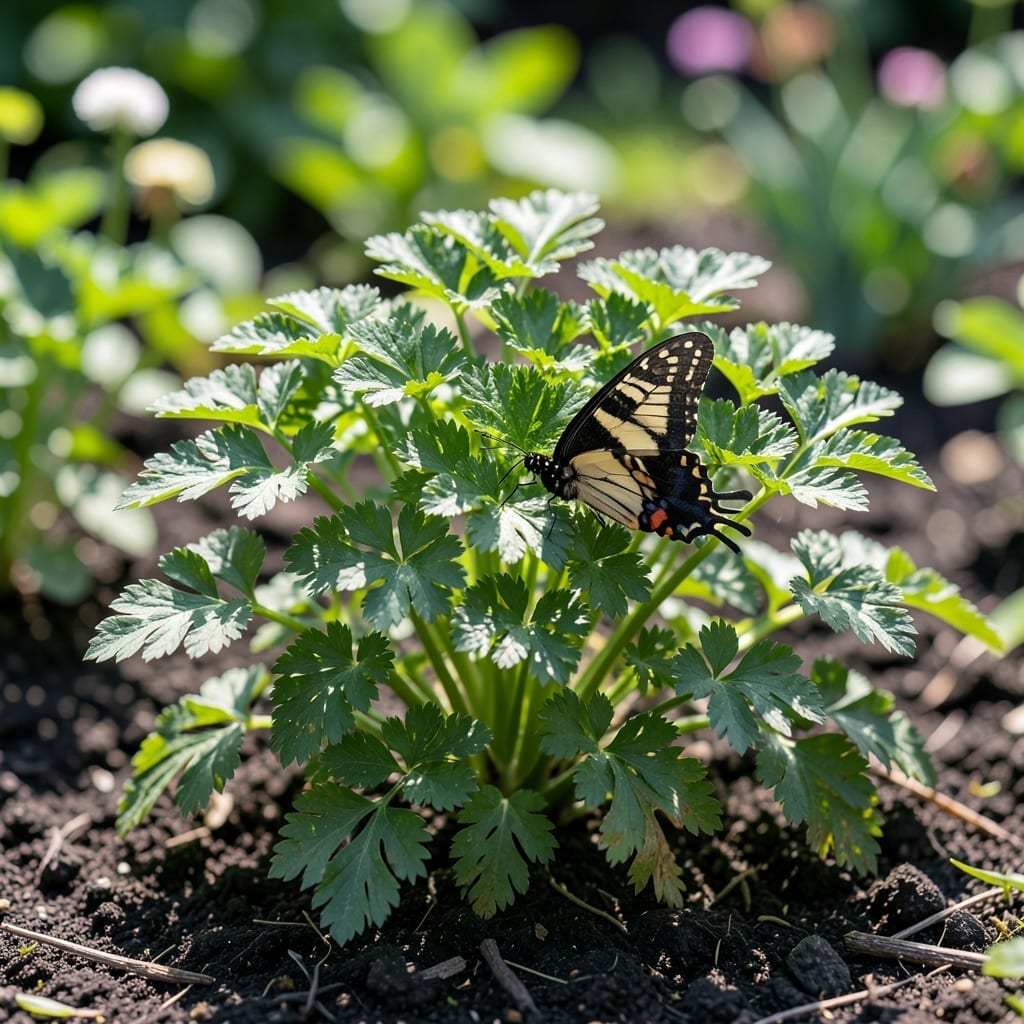
Papilio polyxenes, the black swallowtail, is a striking butterfly with dark wings adorned with yellow spots and blue hindwing markings. Its life cycle includes egg, larva, pupa, and adult stages, thriving in gardens with host plants like parsley and dill.
I love how these butterflies transform from tiny eggs on carrot family plants into magnificent fliers. Their caterpillars, called parsley worms, display a clever defense mechanism: when threatened, they extend bright orange osmeterium to scare off predators. This adaptation helps them survive long enough to become adult butterflies. 🔥
Gardeners can spot their presence by the distinctive black and yellow striped caterpillars munching on dill, fennel, or Queen Anne’s lace. The adults then emerge to pollinate flowers while showcasing their stunning wing patterns. ✨
💡 In This Article
The journey begins with tiny, round 1-2mm eggs laid on host plants, typically in the carrot family. These eggs change from bright yellow to dark brown as they mature over 3-5 days, signaling the embryo’s development inside. 🔥
Once hatched, the larvae (caterpillars) go through 5 instars over 10-30 days, molting each time to grow larger. Early instars appear bird-dropping-like for camouflage, while later stages develop vivid black and yellow stripes with defensive osmeterium. ✨
The pupal stage, or chrysalis, lasts 9-18 days depending on temperature. During this transformation, the caterpillar’s body reorganizes completely inside a brown or green chrysalis that blends with its surroundings. This is where the magic of metamorphosis happens. 💫
Emerging adults have soft, crumpled wings that expand and harden over 1-2 hours. Their distinctive coloration—deep black with yellow spots and iridescent blue hindwing markings—develops fully as they dry their wings in sunlight. 🌟
Each stage is temperature-dependent, with warmer conditions accelerating development. In ideal 75-85°F weather, the entire cycle from egg to adult can complete in as little as 30 days, though cooler climates may extend this to 45-60 days. ⚡
What’s fascinating is how each phase has evolved specific adaptations: eggs resist desiccation, larvae deter predators, pupae camouflage perfectly, and adults develop strong flight muscles for migration and feeding. This intricate process ensures survival across diverse environments.
They feed exclusively on plants in the carrot family. Dill, parsley, and fennel are favorites. They’ll also munch on Queen Anne’s lace and wild carrot.
A healthy chrysalis stays firm and brown or green. If it turns dark, shriveled, or transparent, the butterfly likely didn’t survive. Avoid disturbing it during the 9-18 day transformation.
Those are osmeterium, a defense mechanism. When threatened, they emit a foul smell to deter predators. It’s a clever survival trick!
Yes, but provide fresh host plants daily and a mesh enclosure for airflow. Keep humidity moderate and avoid direct sunlight. Release adults outdoors after 1-2 hours of wing drying.