
Beautiful Plants For Your Interior
Beautiful Plants For Your Interior
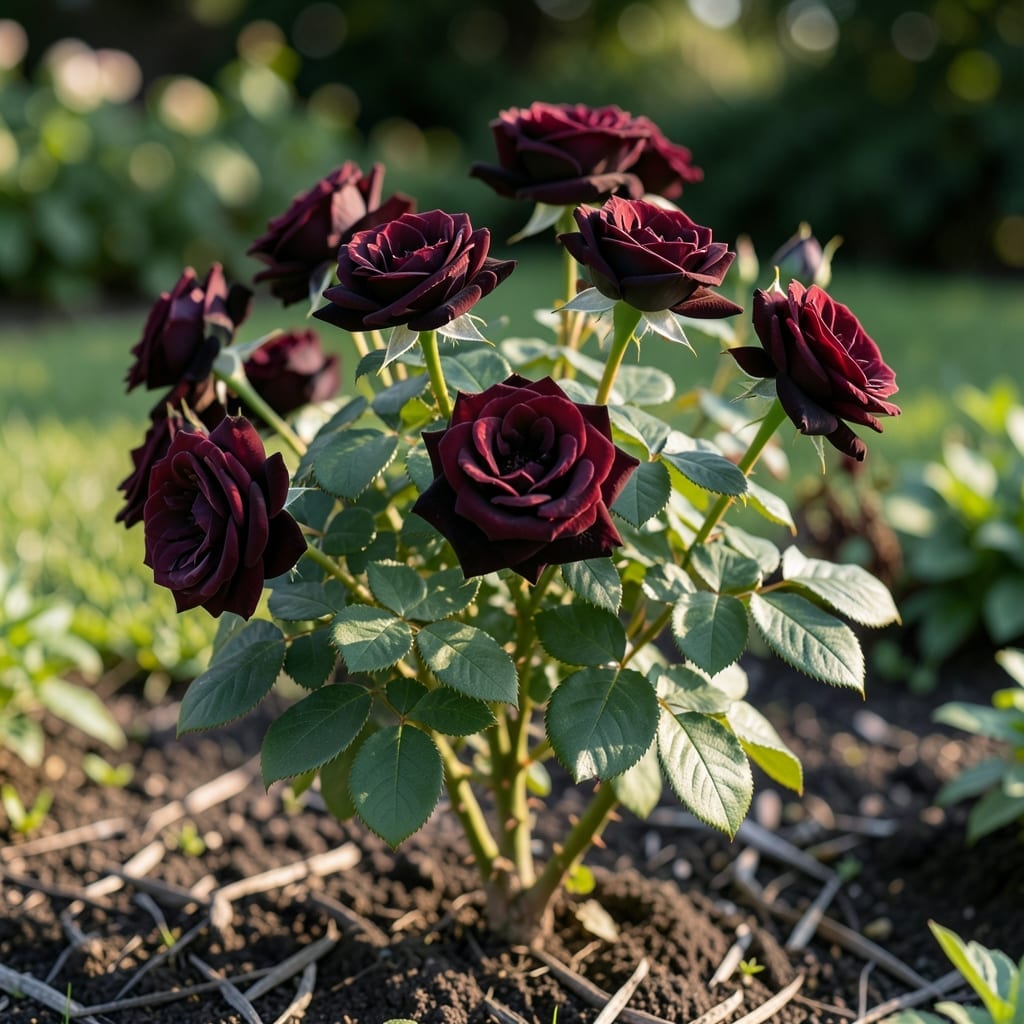
True black roses don’t exist in nature. What appear black are deep reddish-purple or maroon varieties like ‘Black Baccara’ or ‘Black Prince,’ created through selective breeding, not genetic mutation.
These striking blooms owe their dark appearance to extremely high concentrations of anthocyanins, pigments that intensify under specific pH conditions in the petals. I’ve found that breeders focus on deepening red and purple tones rather than achieving true black. The result is a dramatic, almost gothic flower that still maintains the classic rose structure and fragrance. 🌟
Gardeners often choose these varieties for their unique aesthetic and conversation-starting appeal in arrangements. ✨
💡 In This Article
The near-black appearance stems from an extreme concentration of anthocyanins, the same pigments that create red, purple, and blue hues in plants. These water-soluble compounds intensify in acidic environments, typically pH 3-4 in rose petals, producing deeper, richer colors. 🔥
Breeders select for varieties with the highest anthocyanin density, often crossing deep red and purple roses to push the color spectrum toward black. The ‘Black Baccara’ cultivar, for instance, achieves its velvet-like appearance through generations of selective breeding that maximize pigment production in the outer petal layers.
Light also plays a role in color intensity. Darker roses often develop their deepest hues in cooler temperatures (60-70°F) with bright, indirect sunlight. This environment slows petal growth, allowing pigments to concentrate rather than dilute as the flower expands. ✨
What appears black to our eyes is actually an optical illusion. The extremely dark red or purple petals absorb nearly all light wavelengths, reflecting so little that our brains interpret the color as black. This effect is similar to how a very dark navy blue can look black in dim lighting.
The petal surface contributes too. Many dark roses have a matte or velvety texture that scatters light differently than glossy petals, enhancing the perception of blackness. Breeders also select for flowers with multiple layers of petals, which creates depth and shadows that intensify the dark appearance. 💫
They appear black due to extremely high anthocyanin concentrations in their petals. These deep reddish-purple pigments absorb most light, creating an optical illusion of blackness to our eyes.
‘Black Baccara’ and ‘Black Prince’ are the most well-known. Both feature velvety, deep maroon petals that appear nearly black, especially in certain lighting conditions.
Currently no. While genetic engineering could theoretically produce true black, no commercially available roses exist. The darkest varieties still rely on natural pigment concentration through selective breeding.
They need the same care as other roses but benefit from cooler temperatures (60-70°F) to intensify color. Well-draining soil with a pH of 6.0-6.5 helps maximize their deep hues.