
Beautiful Plants For Your Interior
Beautiful Plants For Your Interior
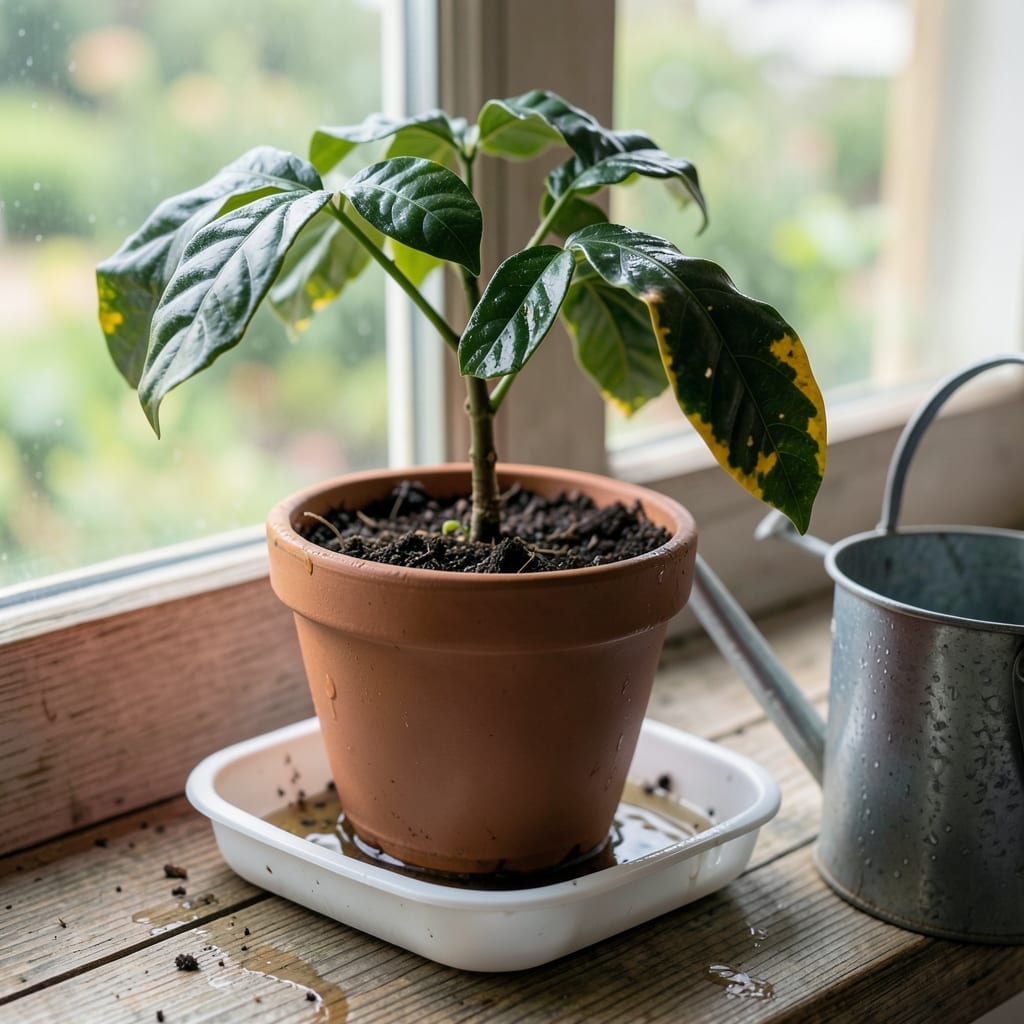
Yellow leaves and soggy soil spelled trouble for my coffee plant last spring. I learned the hard way that too much love in the form of water can be just as deadly as neglect.
Here’s the thing—coffee plants hate wet feet. The roots suffocate, leaves turn yellow, and before you know it, you’re watching a slow decline. I rescued mine by adjusting my watering schedule and improving drainage.
You’ll see new growth within 2-3 weeks once the roots recover. The leaves regain their deep green color, and the plant starts producing those beautiful, glossy foliage we all love.
Works for any indoor coffee plant, regardless of size or age. Let’s save that plant before it’s too late.
Overwatering a coffee plant is rarely intentional, but it often stems from a few common missteps. Here’s why it happens:
Coffee plants thrive in well-draining soil. When pots lack drainage holes or the soil retains too much moisture (e.g., dense clay mixes), water accumulates around the roots. This suffocates the root system, preventing oxygen uptake and leading to root rot—a primary cause of wilting and yellowing leaves.
Many plant owners stick to a rigid watering routine (e.g., “every Monday”) without checking soil moisture. Coffee plants prefer the top inch of soil to dry out between waterings. Overwatering on a fixed schedule ignores the plant’s actual needs, especially in cooler or humid conditions where evaporation slows.
Oversized pots hold excessive moisture, increasing the risk of waterlogging. Coffee plants in large containers may struggle to absorb all the water before the next irrigation, stressing the roots. Opt for pots just 1–2 inches wider than the root ball to balance growth and drainage.
High humidity or low light reduces a plant’s water consumption. If your coffee plant sits in a dim, muggy room, it’ll need less frequent watering. Ignoring these conditions and watering as usual can drown the roots, even if the soil surface looks dry.
Drooping leaves can indicate both underwatering and overwatering. Many mistake the latter for thirst, prompting more water. Always check the soil: if it’s damp below the surface, hold off on watering. A moisture meter or the “finger test” (inserting a finger 1–2 inches deep) can prevent guesswork.
Here’s how to nurse your coffee plant back to health, step by step. Address the issue quickly to prevent long-term damage.
If the leaves are turning yellow, your plant is likely drowning. Stop watering immediately and let the soil dry out completely. Check the top 1-2 inches of soil with your finger—if it feels damp, wait a few more days. Once dry, resume watering only when the soil is dry again. Use a well-draining potting mix to prevent future issues.
Prevention tip: 💡 Stick to a schedule—watering every 7-10 days is usually enough for coffee plants in moderate conditions.
Wilting can signal root rot from poor drainage. Repot your plant in fresh, well-draining soil and a pot with drainage holes. Trim any black, mushy roots with sterilized scissors to remove rot. Water lightly after repotting and place the plant in bright, indirect light to aid recovery.
Prevention tip: ✨ Always use pots with drainage holes and avoid saucers that trap water underneath.
White mold or fungus on the soil or leaves means excess moisture is lingering. Move your plant to a spot with better airflow and indirect sunlight. Remove any affected leaves and the top layer of soil if moldy. Consider a small fan to improve circulation, but avoid direct drafts.
Prevention tip: 🌡️ Keep humidity levels in check—coffee plants thrive in 40-60% humidity, not swamp-like conditions.
Overwatering can wash away nutrients, leading to slow growth. Fertilize sparingly with a balanced, water-soluble fertilizer (diluted to half strength) once the plant shows signs of recovery. Avoid fertilizing soggy soil, as it can burn the roots.
Prevention tip: 🎯 Feed your coffee plant only during the growing season (spring and summer), and pause fertilizing in fall and winter.
Water only when the top 1-2 inches of soil are dry. Typically, this means every 7-10 days in moderate conditions, but always check the soil first. Overwatering is the most common mistake.
Yellowing leaves, wilting, and soggy soil are classic signs. You may also notice mold on the soil surface or black, mushy roots if you check the root ball. Act quickly to prevent permanent damage.
Yes! Trim the affected roots with sterilized scissors, repot in fresh, well-draining soil, and water lightly. Place it in bright, indirect light to help it recover faster.
Drooping can mean both underwatering and overwatering. If the soil is damp below the surface, it’s likely overwatered. Always use the finger test to check moisture 1-2 inches down.