
Beautiful Plants For Your Interior
Beautiful Plants For Your Interior
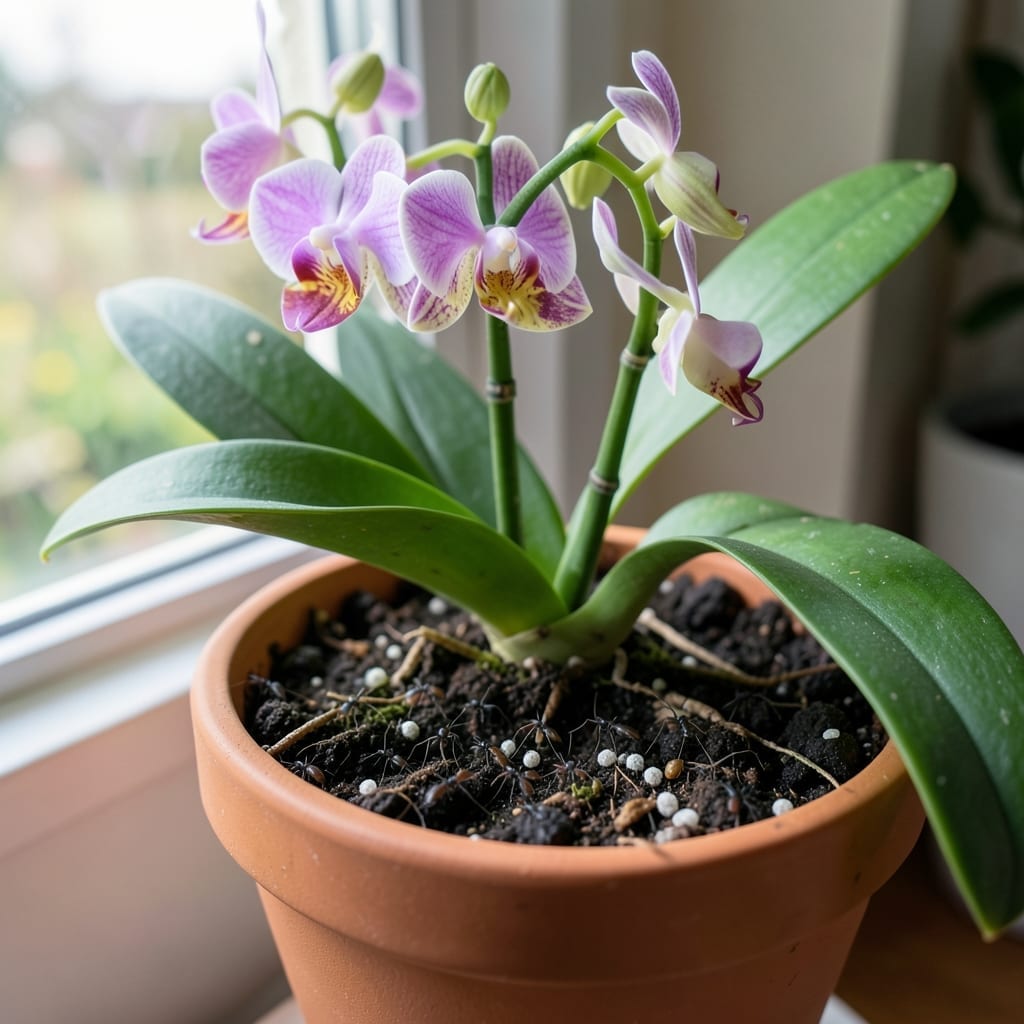
Tiny invaders in your orchid’s soil can wreck months of care overnight. I’ve lost three prized plants to hidden pests before learning to spot the early signs—wilted leaves, sticky residue, or fine webbing at the base.
The culprits are usually scales, mealybugs, or fungus gnats, all thriving in moist, organic-rich potting mixes. They multiply fast, but a sharp eye and quick action can save your orchid before the infestation spreads.
You’ll regain control with simple, safe methods that protect both plant and roots. No harsh chemicals, just targeted treatments that work without risking future blooms.
Works for phalaenopsis, dendrobiums, or any orchid growing in bark or sphagnum. Here’s how to stop them cold.
Orchid pests in soil don’t appear out of thin air—they’re drawn in by specific conditions. Understanding these causes helps you prevent infestations before they start. Below are the most common reasons pests take root in your orchid’s soil.
Stagnant water in poorly draining soil creates a breeding ground for fungus gnats, root mealybugs, and nematodes. Orchids thrive in aerated, fast-draining media, but compacted or waterlogged substrates suffocate roots and invite pests. Overwatering also promotes fungal growth, which attracts soil-dwelling larvae.
Decaying leaves, bark, or old roots in the pot provide food and shelter for pests like springtails, thrips, and scale crawlers. Orchid mixes high in organic matter (e.g., sphagnum moss) break down over time, releasing nutrients that lure decomposers—and their predators—into the soil.
Tropical orchids love warmth and humidity, but so do pests. Temperatures above 75°F (24°C) with high moisture levels accelerate pest reproduction. Fungus gnats, for example, lay eggs in damp soil, and larvae hatch within days in these conditions.
Using unsterilized soil or recycled potting mix can introduce nematodes, mites, or eggs from previous infestations. Even fresh bark or coconut husk chips may harbor dormant pests if not properly treated before use.
Pro tip: Always bake or microwave new media at 200°F (93°C) for 20–30 minutes to kill hidden pests and pathogens.
Dealing with pests in your orchid’s soil requires quick, targeted action. Below are practical solutions for common culprits, along with prevention tips to keep your plants thriving. 🌱
Let the soil dry out completely between waterings—fungus gnats thrive in damp conditions. Place yellow sticky traps near the pot to catch adults, and use a hydrogen peroxide solution (1 part 3% peroxide to 4 parts water) to kill larvae in the soil. Prevention: Avoid overwatering and use well-draining potting mixes.
Mix 1 tsp neem oil + ½ tsp mild soap + 1 quart water and spray the soil and foliage weekly until mites are gone. For severe infestations, remove the orchid from its pot, rinse the roots, and repot in fresh, sterile medium. Prevention: Increase humidity around your orchids and inspect new plants before introducing them.
Dab visible bugs with a cotton swab soaked in 70% isopropyl alcohol to kill them on contact. For soil-dwelling mealybugs, repot the orchid, discarding the old medium, and soak the roots in insecticidal soap before replanting. Prevention: Quarantine new orchids for 2–3 weeks and keep your growing area clean.
Scrape off scales with a soft toothbrush or cloth, then apply horticultural oil to suffocate remaining pests. For soil infestations, drench the medium with systemic insecticide labeled for orchids. Prevention: Regularly inspect the undersides of leaves and avoid crowded plant setups.
Pro Tip 💡: Sterilize pots and tools with a 10% bleach solution or boiling water to prevent reinfestation. Always isolate treated orchids until you confirm the pests are gone!
Look for yellowing leaves, sticky residue, or tiny webs near the base. Fungus gnats appear as small black flies hovering above the soil.
Remove the orchid, rinse roots, and repot in fresh, sterile medium. Treat with hydrogen peroxide or neem oil to kill remaining pests.
Yes! Damp soil attracts fungus gnats and root mealybugs. Always let the medium dry slightly between waterings.
Quarantine new plants for 2-3 weeks and inspect them thoroughly. Use sterilized potting mix to avoid contamination.