
Beautiful Plants For Your Interior
Beautiful Plants For Your Interior
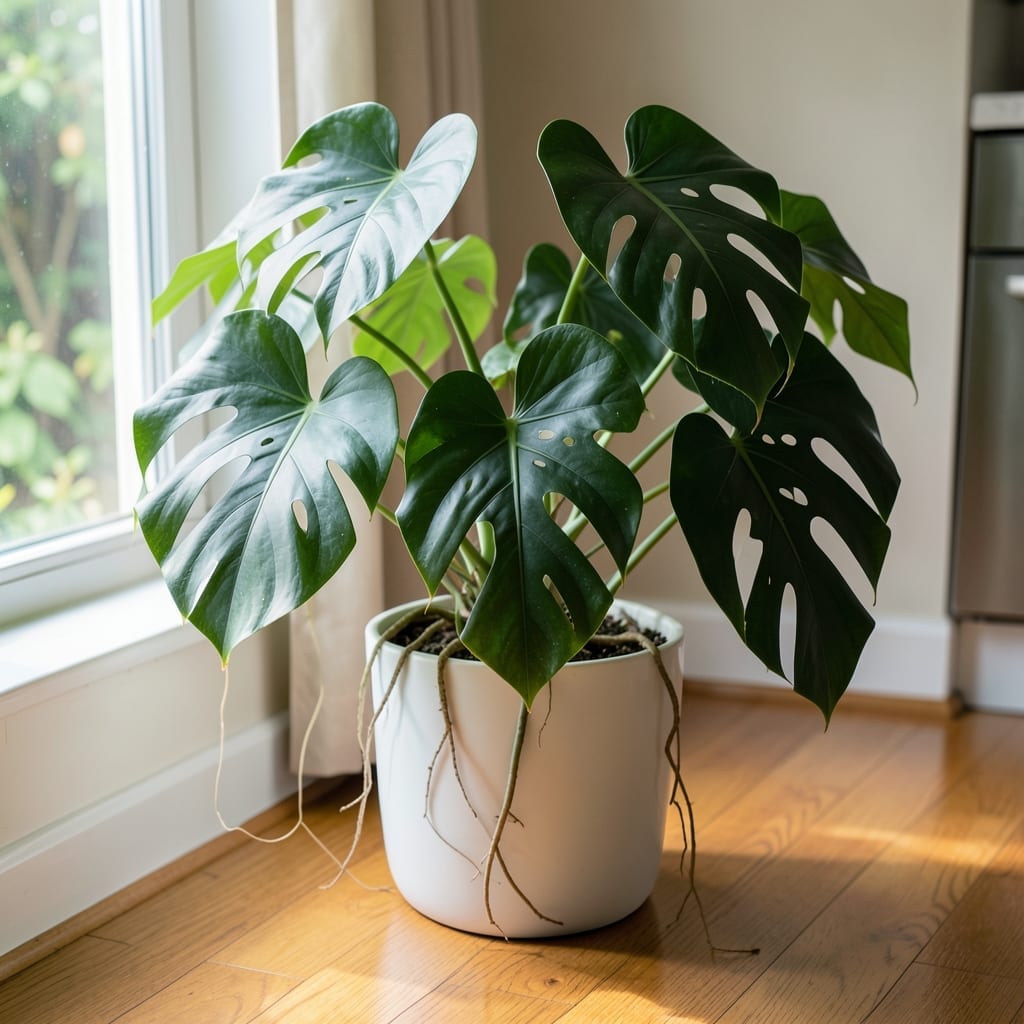
Those holes in your Monstera aren’t always a problem. 🌿 I panicked the first time I saw splits forming, thinking pests had moved in overnight.
The truth is, mature Monsteras develop natural fenestrations as they grow. But if the holes look jagged or the leaves feel weak, you might be dealing with pests, low humidity, or nutrient gaps instead.
I’ve saved dozens of these plants by checking the basics first: light levels, watering habits, and leaf undersides for tiny invaders. Most issues fix themselves with simple adjustments.
The right care turns those holes from a worry into a sign your plant is thriving. Here’s how to tell the difference.
Those iconic splits and holes in Monstera deliciosa leaves aren’t random—they’re a natural part of the plant’s growth. Here’s the science behind why it happens:
Fenestrations are hardwired into the Monstera’s DNA. As the plant matures, its leaves naturally develop these openings to maximize light absorption and air circulation in its native tropical habitat. Younger plants or immature leaves often lack holes, but they’ll appear as the plant grows.
In dense rainforests, Monstera plants compete for sunlight. The holes and splits allow light to pass through the upper leaves and reach the lower foliage, ensuring all parts of the plant can photosynthesize efficiently. Low-light conditions may delay or reduce fenestration, so bright, indirect light encourages this process.
Fenestrations also help the plant conserve energy. By reducing the leaf surface area, the Monstera can grow larger leaves without expending extra resources on maintaining solid tissue. This adaptation is especially useful in humid environments where wind and rain could otherwise damage broad leaves.
Healthy, well-cared-for Monsteras are more likely to develop prominent fenestrations. If your plant isn’t forming holes, it may need more light, nutrients, or time to mature. Stress, poor soil, or pest issues can also delay this natural process.
If your Monstera isn’t developing its iconic holes (fenestrations), don’t worry—there are simple fixes to encourage healthy growth. Below are targeted solutions for common causes, along with prevention tips to keep your plant thriving.
Monstera plants need plenty of bright, indirect light to produce fenestrations. If your plant is in a dim corner, move it closer to a window with filtered sunlight. East- or north-facing windows are ideal. Avoid harsh direct light, which can scorch the leaves.
Prevention tip: 💡 Rotate your plant every few weeks to ensure even light distribution and balanced growth.
Young Monstera deliciosa plants typically start developing holes once they’re 2–3 years old. If your plant is still a juvenile, be patient and focus on providing optimal care. Ensure it has enough room to grow—repot into a slightly larger container if the roots are crowded.
Prevention tip: 🎯 Use a well-draining potting mix to support healthy root development as it matures.
A lack of essential nutrients, especially nitrogen, can stunt fenestration. Feed your Monstera with a balanced liquid fertilizer (e.g., 20-20-20) every 4–6 weeks during the growing season (spring and summer). Reduce or stop fertilizing in fall and winter.
Prevention tip: ✨ Flush the soil with water every few months to prevent salt buildup from fertilizers.
Inconsistent watering can stress your Monstera, delaying fenestration. Water when the top 1–2 inches of soil are dry, and ensure the pot has drainage holes to prevent root rot. If the leaves are yellowing, you may be overwatering; if they’re drooping, it might need more water.
Prevention tip: 🌡️ Use a moisture meter to take the guesswork out of watering.
In their natural habitat, Monsteras climb trees for support. Without a structure to cling to, they may focus on producing smaller, less fenestrated leaves. Insert a moss pole or trellis and gently tie the stems to encourage upward growth and larger, split leaves.
Prevention tip: 🌿 Mist the moss pole regularly to maintain humidity and encourage aerial root attachment.
With these adjustments, your Monstera will be on its way to flaunting those beautiful, holey leaves in no time!
Young plants typically start developing fenestrations at 2-3 years old. Ensure it gets bright, indirect light and proper nutrients to encourage growth.
Yes! Provide consistent light, fertilize with nitrogen-rich food every 4-6 weeks, and add a moss pole for climbing support.
Not usually—fenestrations are natural! But check for pests or yellowing if the holes look ragged or irregular.
Rotate every 2-3 weeks for even light exposure. This prevents lopsided growth and promotes balanced fenestrations.