
Beautiful Plants For Your Interior
Beautiful Plants For Your Interior
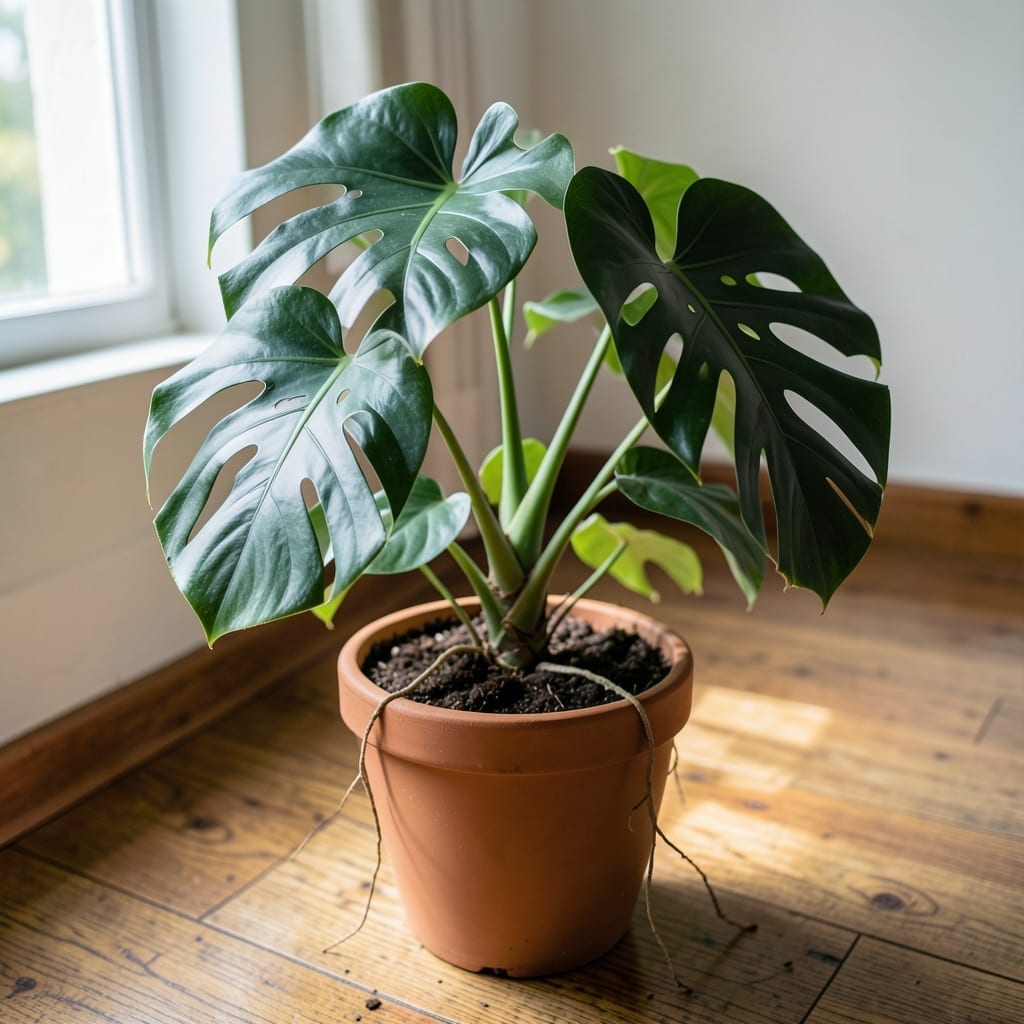
My monstera’s first curled leaf had me panicking. Turns out, it’s usually trying to tell you something—either it’s thirsty, drowning, or begging for more light.
I’ve seen 3 main culprits: underwatering (crispy, dry curls), overwatering (soft, yellowing leaves), or low humidity (brown edges). Pests can do this too, but they’re easier to spot.
Fixing it starts with checking the soil. If it’s bone-dry or soggy, adjust your watering. A humidifier or pebble tray helps with dry air, and moving it closer to a window can solve light issues.
Once you dial in the basics, new growth comes in big, glossy, and unfurled. Here’s how to keep it that way.
Understanding why your Monstera deliciosa leaves are curling starts with identifying the root cause. Here are the most common culprits behind this issue:
Underwatering: When your Monstera doesn’t receive enough water, its leaves may curl inward to conserve moisture. The soil will feel dry and dusty to the touch. This is a survival mechanism to reduce surface area and minimize water loss.
Overwatering: Conversely, too much water can drown the roots, leading to poor oxygen uptake. This causes stress, and the leaves may curl as a sign of distress. Check for soggy soil and yellowing leaves as additional clues.
Monstera plants thrive in bright, indirect light. Too much direct sunlight can scorch the leaves, causing them to curl or develop brown patches. On the flip side, insufficient light can weaken the plant, leading to diminished growth and curling as it struggles to reach for light.
Monstera plants prefer temperatures between 65–85°F (18–30°C). Exposure to cold drafts or temperatures below 50°F (10°C) can shock the plant, resulting in curled leaves. Similarly, low humidity levels (below 40%) can cause the edges of the leaves to crisp and curl as the plant tries to retain moisture.
Pests like spider mites, thrips, or mealybugs can stress your Monstera by feeding on its sap. As they damage the plant tissue, the leaves may curl or distort. Inspect the undersides of leaves and stems for tiny insects or webbing.
If your Monstera is root-bound (roots circling tightly in the pot), it may struggle to absorb nutrients and water efficiently, leading to curled leaves. Additionally, compacted or poor-quality soil can restrict root growth and drainage, exacerbating the issue.
Don’t panic—your Monstera deliciosa can bounce back with the right care. Below are targeted fixes for the most common causes of curling leaves, plus tips to keep your plant thriving long-term.
Fix: Check the soil first. If it’s bone-dry, give your Monstera a deep watering until water drains from the bottom. If it’s soggy, let it dry out completely before watering again. Use a pot with drainage holes to prevent root rot. For severe overwatering, repot the plant in fresh, well-draining soil.
Prevention: Stick to a consistent watering schedule—water when the top 1-2 inches of soil are dry. Use a moisture meter for precision. 💡 Pro tip: Lift the pot to feel its weight; a light pot means it’s time to water.
Fix: Move your Monstera to bright, indirect light. If leaves are crispy or bleached, it’s getting too much direct sun—relocate it a few feet away from the window or use a sheer curtain. For leggy growth or pale leaves, gradually introduce it to brighter light to avoid shock.
Prevention: Rotate your plant every few weeks for even light distribution. A north or east-facing window is ideal. 🎯 Pro tip: If natural light is limited, supplement with a grow light for 6-8 hours daily.
Fix: Keep your Monstera in a stable environment (65-85°F). If the air is too dry, mist the leaves or use a humidifier. For cold drafts, move it away from windows, vents, or AC units. Yellowing leaves? Trim them to redirect energy to healthy growth.
Prevention: Group plants together to boost humidity or place a tray of water with pebbles nearby. Avoid sudden temperature changes. ✨ Pro tip: Wipe leaves with a damp cloth weekly to keep them dust-free and hydrated.
Fix: Inspect the undersides of leaves for spider mites, mealybugs, or scale. Wipe off pests with a cotton swab dipped in rubbing alcohol or spray with neem oil. For severe cases, isolate the plant and repeat treatments weekly until pests are gone.
Prevention: Quarantine new plants for 2-3 weeks before introducing them to your collection. Keep leaves clean and avoid over-fertilizing, which can attract pests. 🌿 Pro tip: Introduce beneficial insects like ladybugs for natural pest control.
Water when the top 1-2 inches of soil feel dry. This usually means every 7-10 days, but adjust based on your home’s humidity and light conditions. Always check soil moisture first!
New growth will unfurl normally once conditions improve. Severely damaged leaves may not fully recover, but trimming them helps redirect energy to healthy foliage. Be patient—it can take 2-4 weeks to see improvement.
Monstera thrives in 40-60% humidity. Below that, leaves curl to retain moisture. Use a humidifier or pebble tray to boost levels, especially in dry climates or winter months.
Check the roots first—soggy roots need fresh soil, dry roots need water. Then move it to bright, indirect light and increase humidity. Most plants bounce back within 1-2 weeks with consistent care.