
Beautiful Plants For Your Interior
Beautiful Plants For Your Interior
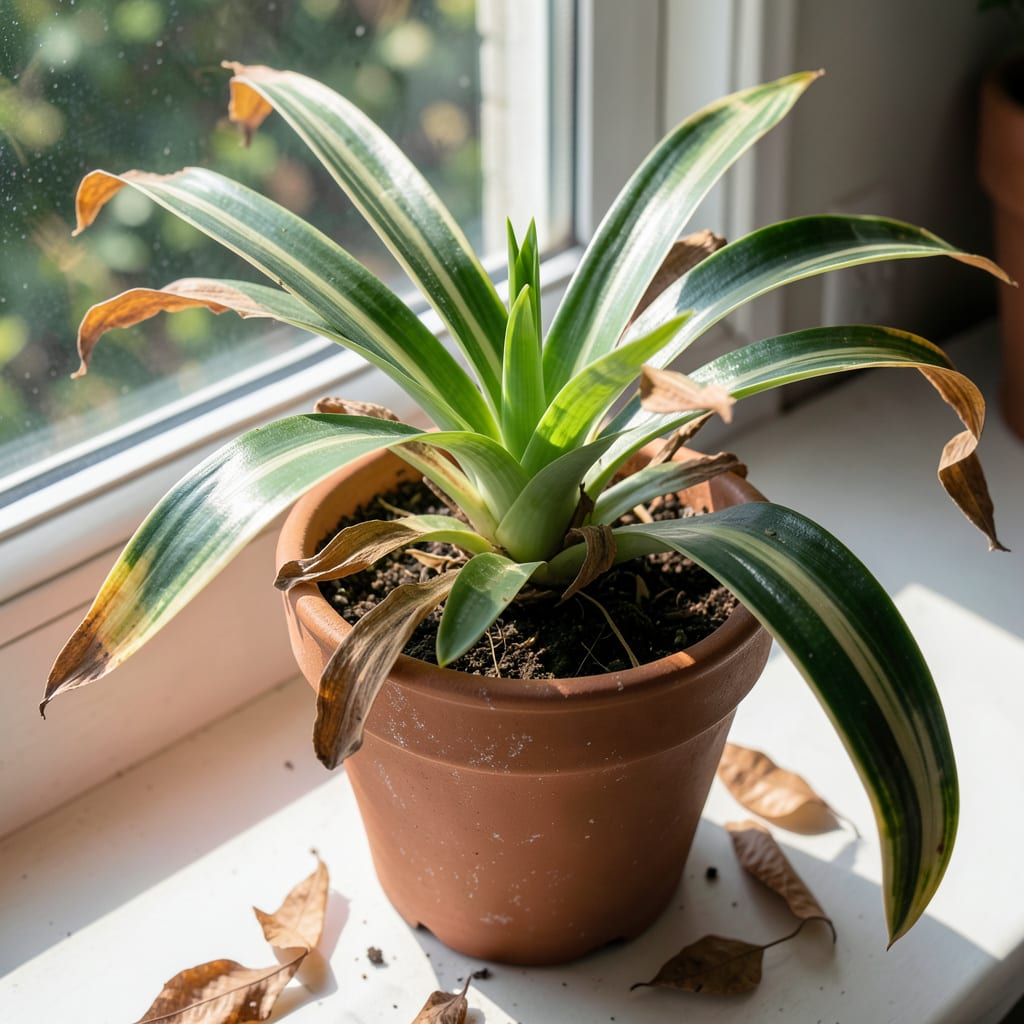
Brown tips on your spider plant aren’t a death sentence. I’ve nursed dozens back to health by spotting the real culprit—usually hiding in plain sight.
Most cases boil down to 3 simple issues: too much water, not enough humidity, or a thirst for nutrients. The fix often takes less than a week once you adjust your routine.
You’ll notice fresh green growth pushing through within 7-10 days of the right care. No fancy tools required—just consistency and a watchful eye.
Works for hanging baskets, shelf plants, or office desks. Here’s how to diagnose and fix it fast.
Spider plants (Chlorophytum comosum) develop brown leaves due to environmental or care-related stress. Here are the most common causes, explained with actionable insights:
Excess water suffocates roots, preventing oxygen uptake and leading to root rot. Fungal pathogens like Phytophthora thrive in soggy soil, causing leaf browning. Ensure pots have drainage holes and use well-draining soil mixes with perlite or sand.
Spider plants prefer bright, indirect light. Direct sunlight (especially afternoon rays) scorch leaves, turning tips or edges brown. Chlorophyll breaks down under UV stress, leaving dry, crispy patches. Move plants to east-facing windows or use sheer curtains.
Dry air (<40% humidity) causes leaf edges to brown and curl. Spider plants are tropical natives—ideal humidity is 50–60%. Cold drafts (below 50°F/10°C) or heat vents also stress leaves, disrupting cell membranes. Group plants or use a humidifier.
Excess salts from fertilizers (especially synthetic NPK blends) accumulate in soil, burning roots and leaves. This fertilizer burn manifests as brown tips. Flush soil with distilled water monthly and fertilize lightly (e.g., ½-strength liquid fertilizer every 4–6 weeks).
Tap water often contains fluoride or chlorine, which spider plants are sensitive to. These chemicals cause necrotic tip burn by interfering with nutrient uptake. Use filtered, distilled, or rainwater for irrigation.
Brown leaves on your spider plant are often a cry for help, but the good news is that most issues are fixable with a few simple adjustments. Below are targeted solutions for the most common causes, along with prevention tips to keep your plant thriving.
If soggy soil is the culprit, stop watering immediately and let the top 1-2 inches of soil dry out. Repot the plant in fresh, well-draining potting mix if root rot is suspected. Use a pot with drainage holes to prevent waterlogging. Prevention tip: Water only when the topsoil feels dry—stick your finger in to check! 💡
Spider plants prefer bright, indirect light. If leaves are scorched from harsh sun, move the plant to a shaded spot or use a sheer curtain to filter light. Gradually reintroduce it to brighter areas if needed. Prevention tip: Rotate the plant occasionally for even exposure. ✨
Brown tips often signal dry air. Mist the leaves regularly or place a tray of water near the plant to boost humidity. Grouping plants together also helps. Prevention tip: Keep your spider plant away from heaters or AC vents. 🌡️
Tap water minerals or fertilizer salt buildup can cause browning. Flush the soil by running water through the pot for 2-3 minutes, then let it drain completely. Switch to distilled water or rainwater if possible. Prevention tip: Fertilize lightly and only during the growing season (spring/summer). 🎯
Check for spider mites or mealybugs under leaves. Wipe leaves with a damp cloth or use insecticidal soap. Isolate the plant to prevent spreading. Prevention tip: Inspect new plants before bringing them near your spider plant. 🔍
Water when the top 1-2 inches of soil feel dry. Typically, this means watering every 1-2 weeks, but adjust based on your home’s humidity and light conditions. Overwatering is a common cause of brown leaves.
No, once tips turn brown, they won’t revert to green. However, trimming the brown tips with clean scissors can improve appearance and encourage healthy new growth. Focus on fixing the underlying issue.
Avoid using tap water if it contains fluoride or chlorine, as these can cause tip burn. Instead, use filtered, distilled, or rainwater to prevent chemical buildup in the soil.
Brown tips often signal low humidity, fluoride toxicity, or excess salt from fertilizers. Check your water source and increase humidity with misting or a pebble tray to resolve this.
