
Beautiful Plants For Your Interior
Beautiful Plants For Your Interior
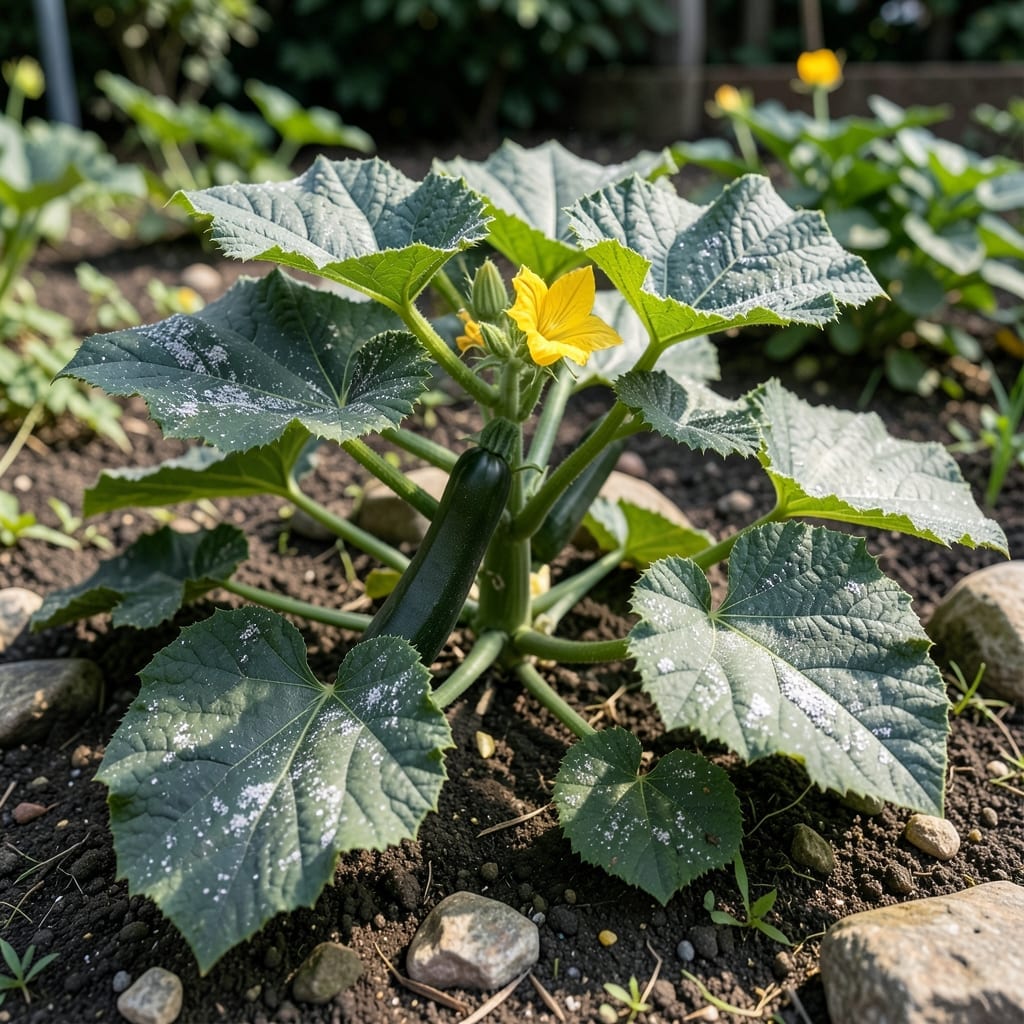
That white powder on your zucchini leaves isn’t dust—it’s trouble. I lost half my crop to mildew last summer before learning the simple fixes that actually work.
The problem starts with damp leaves and poor airflow, but the solution is easier than you think. A few tweaks to watering and spacing can stop it before it spreads.
Natural remedies like baking soda spray or neem oil work surprisingly well, and they won’t harm your plants or the pollinators visiting them.
With the right approach, you’ll see healthier leaves within a week and full recovery in 2-3 weeks. Here’s how to turn it around.
Mildew on zucchini plants is a common issue, often triggered by environmental and cultural factors. Understanding these causes helps gardeners prevent outbreaks and keep their crops healthy. Below are the primary reasons mildew develops on zucchini.
Mildew thrives in damp, stagnant conditions. When humidity exceeds 80%, spores germinate rapidly on zucchini leaves. Poor airflow—caused by dense plantings or lack of pruning—traps moisture, creating an ideal breeding ground for powdery mildew (Podosphaera xanthii) and downy mildew (Pseudoperonospora cubensis).
Watering zucchini from above leaves foliage wet for extended periods. This prolonged moisture allows fungal spores to settle and infect leaves. Switch to drip irrigation or water at the base to reduce leaf wetness.
Downy mildew favors cool, wet nights (50–60°F) followed by warm days (70–80°F). Powdery mildew, however, thrives in warm, dry climates but requires high humidity to spread. Sudden temperature shifts stress plants, weakening their defenses against fungal attacks.
Planting zucchini too closely restricts air circulation, increasing humidity around foliage. Follow spacing guidelines (2–3 feet apart) to improve ventilation and reduce mildew risk.
Excess nitrogen promotes lush, soft growth that’s more susceptible to mildew. Ensure balanced fertilization with adequate potassium and phosphorus to strengthen plant cell walls and resistance.
Mildew on your zucchini plants can be frustrating, but these practical solutions will help you tackle it head-on. Below are targeted fixes for common causes, along with prevention tips to keep your garden thriving.
If humidity or poor drainage is the culprit, start by pruning overcrowded leaves to boost air circulation. Water at the base of the plant in the morning so foliage dries quickly. For heavy clay soil, mix in compost or sand to improve drainage. Prevention tip: Space plants 2–3 feet apart for better airflow. 💡
For powdery or downy mildew, use a DIY baking soda spray (1 tsp baking soda + 1 quart water + a drop of dish soap). Spray weekly on leaves, focusing on undersides. Neem oil (mixed per label instructions) also works as a fungicide. Prevention tip: Rotate crops yearly to reduce fungal buildup in the soil. ✨
Stressed zucchini plants are more vulnerable. Boost their health with balanced fertilizer (10-10-10) or compost tea. Avoid over-fertilizing with nitrogen, which promotes leafy growth at the expense of resistance. Prevention tip: Mulch with straw to retain moisture and suppress weeds. 🎯
If cool nights or heat stress trigger mildew, use row covers to regulate temperature. Remove covers during the day for pollination. Prevention tip: Plant in a spot with consistent sunlight (6–8 hours daily). 🌡️
Act fast at the first sign of mildew, and combine fixes with prevention for long-term success. Your zucchini will thank you!
Powdery mildew appears as white, powdery spots on the upper leaf surfaces. Downy mildew shows yellow patches with a fuzzy, grayish growth underneath.
Yes, mildew spores travel easily by wind or water. Keep infected plants isolated and avoid working with them when leaves are wet.
The fruit itself remains safe to eat if washed. Discard any heavily spotted or rotting zucchini, as quality declines.
Use baking soda or neem oil sprays every 7-10 days, or after rain. Always apply in the morning for best absorption.