
Beautiful Plants For Your Interior
Beautiful Plants For Your Interior
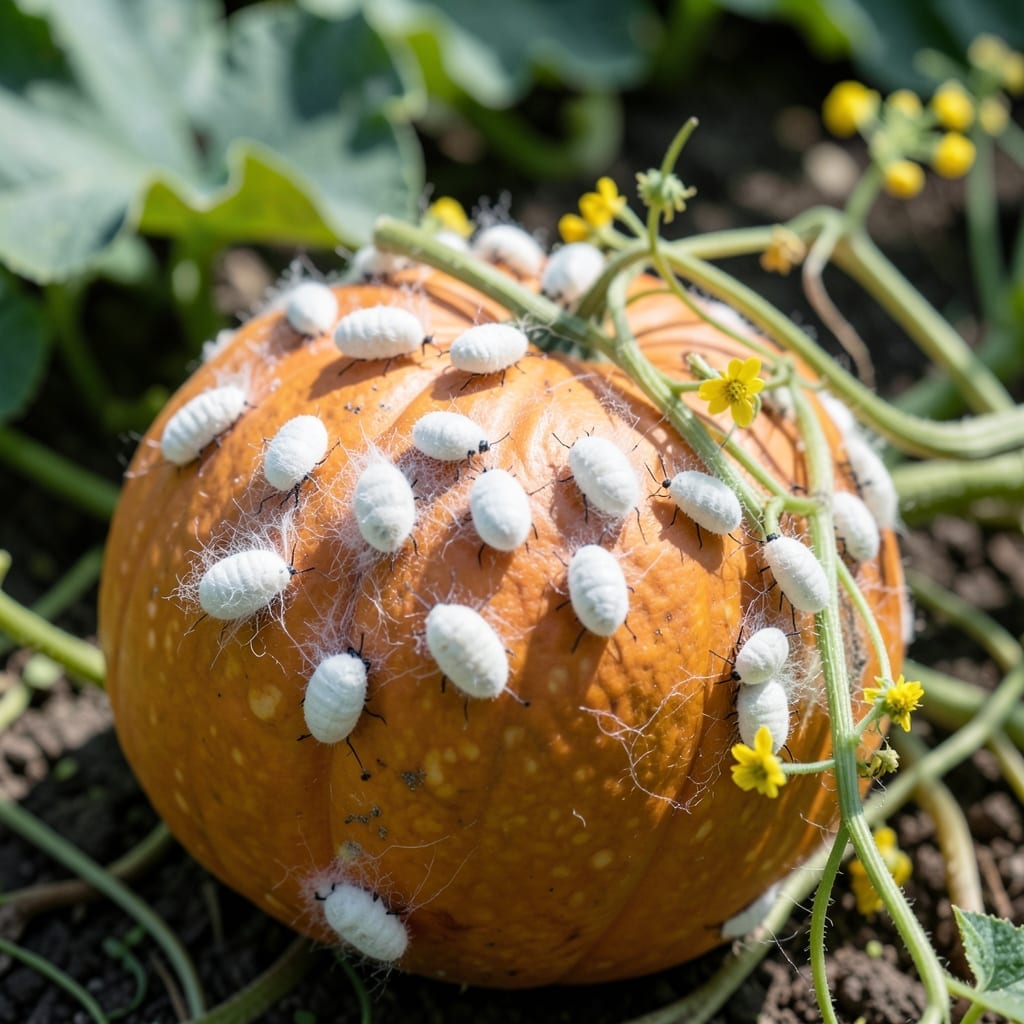
White cottony clusters on your pumpkin vines aren’t just ugly—they’re a mealybug invasion stealing your harvest. I lost an entire patch to these pests my first year before learning how to fight back without chemicals.
The damage shows up as yellowing leaves and stunted growth, but the real problem is the sticky honeydew they leave behind. My organic approach targets both the bugs and their eggs, keeping your plants healthy and productive.
Within 3-4 weeks of consistent treatment, you’ll see new growth returning to normal. The key is catching them early before they spread to every vine in your garden.
Works for all pumpkin varieties, whether you’re growing for pies or jack-o’-lanterns. Here’s how to reclaim your patch.
Mealybugs thrive on pumpkin plants due to several key environmental and cultural factors. Understanding these causes helps prevent and manage outbreaks effectively.
Mealybugs Planococcus spp. flourish in temperatures between 70–90°F (21–32°C) with high humidity. Pumpkin plants in greenhouses or crowded gardens create ideal microclimates for rapid mealybug reproduction. Poor air circulation exacerbates the issue by trapping moisture.
Excess nitrogen promotes lush, soft foliage—mealybugs’ favorite food. Pumpkins fed heavy nitrogen fertilizers (e.g., blood meal) grow tender new shoots that attract sap-sucking pests. Balance with phosphorus and potassium to toughen plant tissue.
Mealybugs multiply unchecked when beneficial insects like lady beetles, lacewings, or parasitic wasps are absent. Overuse of broad-spectrum pesticides kills these predators, disrupting natural pest control. Encourage biodiversity with companion plants like dill or marigolds.
Mealybugs hitchhike on infested tools, pots, or new plant additions. Always inspect and quarantine new pumpkin starts, and sterilize pruners with rubbing alcohol between uses to prevent spread.
Tackling mealybugs on your pumpkin plants is manageable with the right approach. Here’s how to address the issue based on the cause:
If you spot a few mealybugs early, remove them manually. Dip a cotton swab in 70% isopropyl alcohol and dab each bug to dissolve their protective coating. For larger patches, spray the affected areas with a mix of 1 part alcohol to 3 parts water. This kills the pests on contact without harming the plant.
For a widespread problem, use insecticidal soap or neem oil. Mix 1 tablespoon of mild liquid soap with 1 quart of water and spray thoroughly, focusing on the undersides of leaves where mealybugs hide. Repeat every 4–7 days until the infestation clears. Neem oil works similarly—mix 2 tablespoons with 1 gallon of water and a teaspoon of soap as an emulsifier.
Encourage beneficial insects like ladybugs, lacewings, or parasitic wasps, which feed on mealybugs. Plant companion flowers such as marigolds, alyssum, or dill to attract these helpers. Avoid broad-spectrum pesticides, as they can harm these allies.
With consistent care, your pumpkin plants can stay healthy and mealybug-free! 🌱
They appear as white, cottony masses clustered in leaf axils or undersides. You may also notice sticky honeydew or black sooty mold on leaves.
For alcohol sprays or insecticidal soap, repeat every 4-7 days until gone. Neem oil works best applied every 2 weeks as prevention.
Yes, they can quickly move to nearby plants. Isolate affected pumpkins and inspect neighbors weekly. Always sterilize tools between uses.