
Beautiful Plants For Your Interior
Beautiful Plants For Your Interior
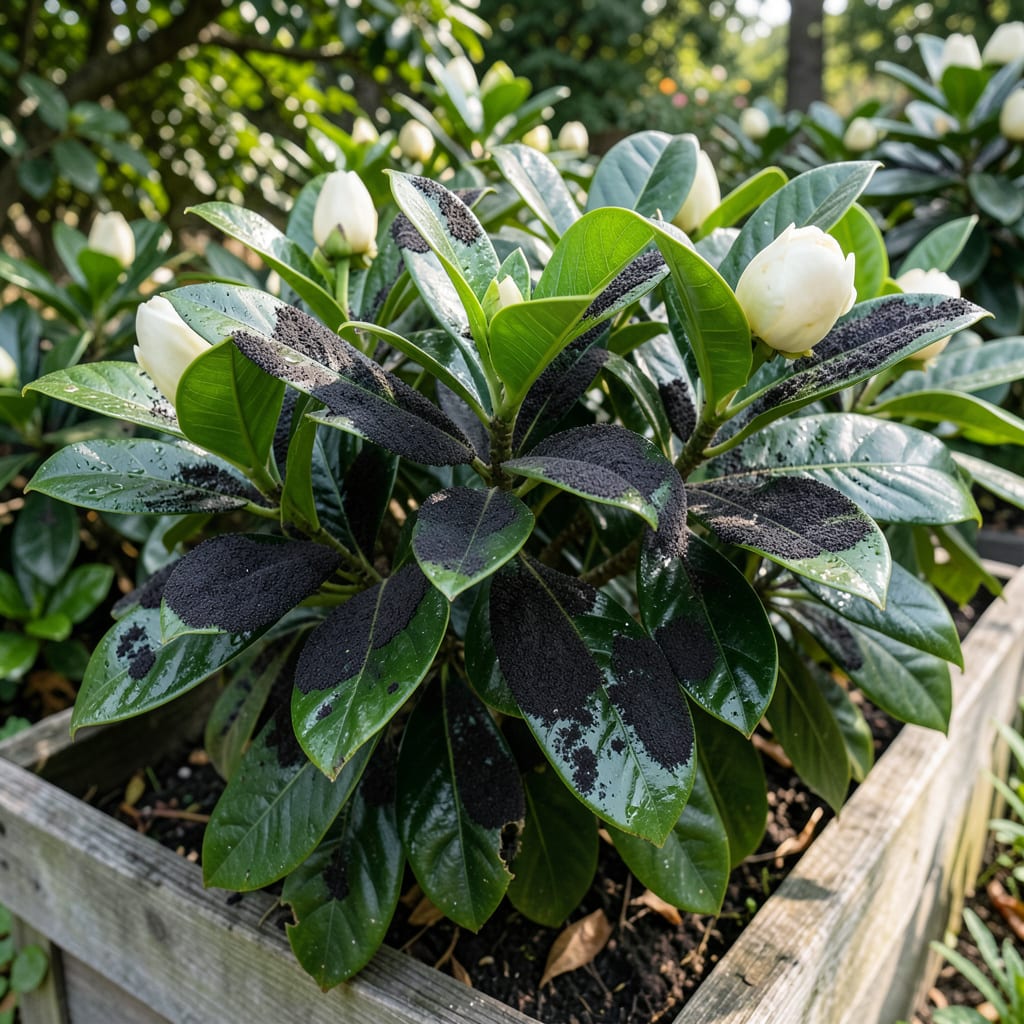
Black film on your gardenia leaves means trouble. I first noticed it on my prized bushes last summer—thought it was dirt until I realized it kept spreading. The culprit isn’t the mold itself but the insects leaving sticky residue behind.
This fungus grows on the honeydew secretions from aphids, scale, or whiteflies. Without addressing the pests first, you’re just treating the symptom. My gardenias bounced back within 2-3 weeks once I tackled both the insects and the mold together.
You’ll see the dark coating disappear as the pests vanish. The leaves regain their glossy green appearance, and new growth comes in clean. Proper air circulation prevents future outbreaks.
Works for potted plants, garden beds, and even indoor gardenias. Here’s the step-by-step fix.
Sooty mold on gardenias is a secondary issue triggered by underlying problems in your plant’s environment or health. This black, powdery fungus thrives on the honeydew excreted by sap-sucking pests, but its presence also signals deeper imbalances. Below are the primary causes, explained with actionable insights.
The most common culprit is honeydew-producing insects like aphids, scale, mealybugs, and whiteflies. These pests pierce plant tissues to feed on sap, excreting sticky honeydew as a byproduct. Sooty mold spores land on this sugary substance, germinate, and form the characteristic black coating. Check the undersides of leaves and stems for clusters of pests or their white, cottony residues.
Gardenia thrives in moderate humidity (40–60%), but stagnant air and excessive moisture create ideal conditions for both pests and sooty mold. Dense foliage, overcrowded planting, or lack of pruning can trap humidity around the plant, accelerating fungal growth. Prune regularly to improve airflow and reduce hiding spots for pests.
Watering from above leaves foliage damp for extended periods, promoting honeydew accumulation and fungal spores. Gardenias are particularly susceptible when their leaves stay wet for 6+ hours. Switch to drip irrigation or soil-level watering to keep leaves dry and discourage mold development.
Weak or stressed gardenias are more vulnerable to pest attacks and subsequent sooty mold. Excess nitrogen (e.g., from over-fertilizing) can cause lush, soft growth that attracts sap-sucking insects. Conversely, low potassium or phosphorus weakens plant defenses. Use a balanced, acid-loving plant fertilizer (e.g., 10-10-10 for gardenias) and test soil pH (ideal: 5.0–6.5).
Sooty mold on gardenias is manageable with the right approach. Address the root causes—typically pest infestations or poor plant health—and the mold will disappear. Here’s how to tackle it step by step:
Sooty mold thrives on the honeydew left by pests like aphids, scale, or whiteflies. Start by:
💡 Pro Tip: Introduce natural predators like ladybugs or lacewings to keep pest populations in check long-term.
Sooty mold loves damp, stagnant environments. Combat it by:
Once pests are gone, remove the mold:
✨ Prevention Tip: Regularly dust leaves with a damp cloth to discourage mold before it starts.
Check the undersides of leaves for tiny insects or sticky residue. Aphids, scale, and whiteflies are common culprits that leave honeydew, which feeds sooty mold.
Yes! Pruning improves airflow and reduces humidity around the plant. Remove dense foliage and dispose of infested leaves in the trash, not compost.
A mild soapy water solution (1 tsp dish soap per gallon of water) works well. Gently wipe leaves, then rinse with clean water to avoid residue.
Inspect weekly during growing season, focusing on new growth and leaf undersides. Early detection prevents pest populations from exploding and spreading mold.
