
Beautiful Plants For Your Interior
Beautiful Plants For Your Interior
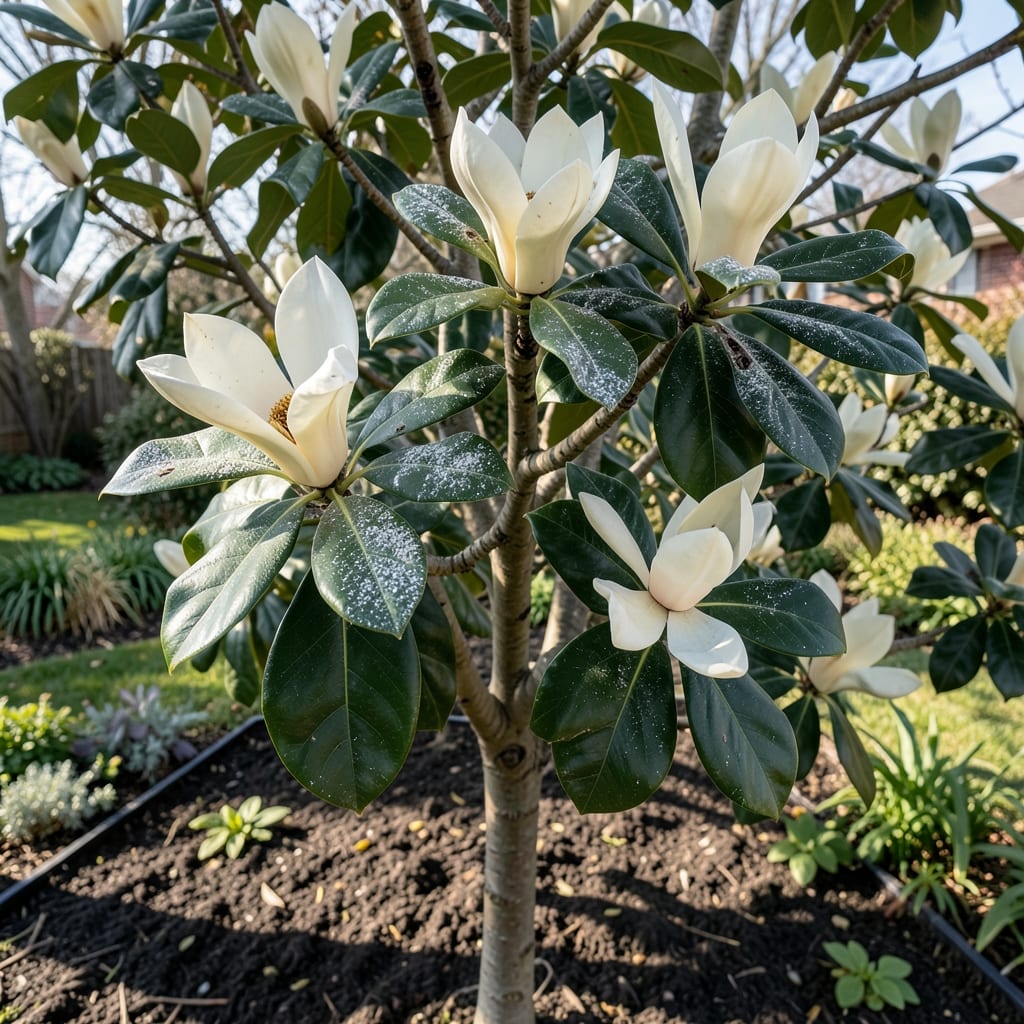
Spotted black splotches on your magnolia leaves last week. I ignored them until the brown spread to the branches, and suddenly my favorite tree looked like it was dying.
Here’s the thing—most fungal issues start small but explode without treatment. The good news is you can catch it early with a close look and fix it with organic solutions that actually work.
📚 In This Guide
Here’s how I systematically identify and address fungal issues on magnolias before they cause lasting damage.
Begin by examining the entire tree, focusing on leaf undersides, where fungal spores often first appear as powdery mildew or dark spots. I use a handheld magnifying glass to check for early signs—tiny white or black specks that most gardeners overlook until they’ve spread.
Pay special attention to new growth and flower buds, as these are prime targets for fungal infection. Look for discolored patches, curled edges, or premature leaf drop. A healthy magnolia leaf should be deep green and smooth; any deviation signals potential trouble.
Don’t forget the bark. Fungal cankers often present as sunken, discolored areas that ooze sap. Run your fingers along the trunk—healthy bark feels consistent, while infected areas may feel spongy or rough.
Once you’ve identified fungal signs, immediately remove all fallen leaves, flowers, and twigs from beneath the tree. I use a tarp to collect debris, which I then dispose of in sealed bags—not the compost pile, as this spreads spores.
Prune affected branches using sterilized tools, cutting at least 6 inches below visible damage to ensure you’ve removed all infected tissue. Make clean cuts at a 45-degree angle to encourage healing and prevent water pooling on the wound.
Real talk: if the infection is widespread, you may need to remove up to 30% of the canopy to save the tree. It seems drastic, but it prevents the fungus from overwintering and returning next season with vengeance.
For powdery mildew or leaf spot, I spray a solution of 1 tablespoon baking soda, 1 teaspoon mild soap, and 1 gallon of water every 7-10 days until symptoms disappear. This raises the pH on leaf surfaces, creating an inhospitable environment for spores.
For more aggressive infections like canker, apply a copper-based fungicide at the first sign of trouble. I prefer liquid copper soap, which remains effective even after rain. Always apply in the early morning when leaves are dry and temperatures are below 85°F to prevent burning.
Here’s the thing—consistency matters more than strength. A weak solution applied regularly outperforms a strong one used sporadically. Reapply after heavy rain or when new growth appears.
Magnolias thrive in well-draining soil with consistent moisture, but soggy conditions invite fungal growth. I adjust my watering schedule to deliver 1-2 inches per week, always at the base of the tree to keep foliage dry. Drip irrigation works best for this.
Ensure proper air circulation by thinning crowded branches in the tree’s interior. Aim for an open center that allows light and air to penetrate. This is the moment that matters: fungi hate moving air and bright light.
Finally, apply a 2-3 inch layer of organic mulch around the base, keeping it 6 inches away from the trunk. This prevents soil-borne spores from splashing onto leaves during rain. Refresh mulch annually as it decomposes.
Early detection and consistent care make all the difference in saving your tree.
The Inspection Advantage: In Step 1, focus on the undersides of leaves where fungal spores first appear. Use a hand lens to spot subtle discolorations that are easy to miss. The leaf axils often harbor spores, especially in humid conditions, so examine these areas carefully.
Diagnosis Precision: For Step 2, photograph suspicious symptoms and compare them to trusted references. Powdery mildew shows as white coatings on upper surfaces, while leaf spot fungi create circular lesions with dark margins. Confirm patterns across multiple leaves to avoid misdiagnosis from environmental stress.
The Treatment Timing: In Step 3, apply the baking soda solution every 7-10 days until symptoms fade. For neem oil or copper fungicides, spray in early morning or late evening to prevent leaf burn. Always cover both leaf surfaces for full protection.
Prevention Focus: Step 4’s pruning of 10-15% of the inner canopy dramatically improves airflow. Combine this with the 2-3 inch mulch layer from Step 4 to prevent soil splashing that spreads spores. Clean up all fallen debris to eliminate spore hiding spots.
Look for dark spots on leaves, powdery mildew, or cankers on bark. Yellowing leaves or premature leaf drop are also red flags. Early detection is key!
Yes! Try neem oil, baking soda sprays, or copper fungicides. Remove infected leaves and prune affected branches to improve airflow and reduce spread.
Treat at the first sign of infection, ideally in early spring or fall. Avoid applying fungicides during extreme heat or rain to ensure effectiveness.
For severe cases, consult an arborist. They may recommend stronger fungicides or cultural practices like improving drainage and reducing stress on the tree.
Water at the base (not leaves), ensure good airflow, and avoid over-fertilizing. Regularly clean up fallen leaves and debris to minimize fungal spores.