
Beautiful Plants For Your Interior
Beautiful Plants For Your Interior
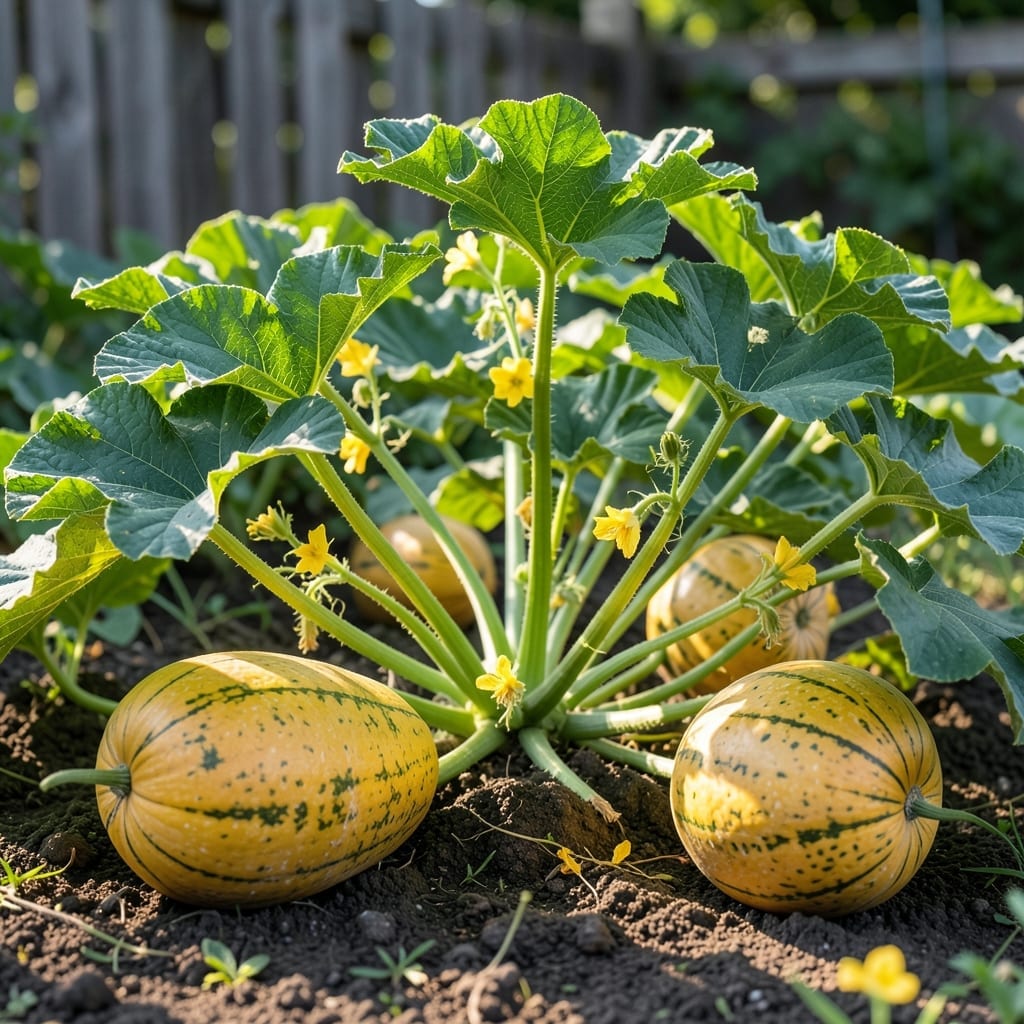
Casaba is a winter melon variety with golden-yellow rind when ripe, sweet orange flesh, and a mild, honey-like flavor. It thrives in warm climates and stores well for months.
I love how this melon stands out from others with its unique rind that shifts from green to brilliant gold as it matures. Casaba’s flesh offers a subtle sweetness that’s less intense than honeydew, making it perfect for fresh eating or light salads. Its ability to keep for several months in cool, dry storage makes it a favorite among gardeners and market vendors alike. ✨
💡 In This Article
Casaba melons trace their roots to Central Asia, particularly Persia, where they’ve been cultivated for over 2,000 years. Traders later introduced them to Europe and the Americas, where they flourished in warm, dry climates.
The Cucumis melo var. inodorus species thrives in regions with 70-90°F temperatures and well-draining, sandy loam soils with a pH of 6.0-7.5. 🔥
These melons need full sun exposure—at least 8-10 hours daily—and consistent moisture during the early growth stages. However, reducing water as harvest approaches boosts sugar concentration in the fruit. The vines can spread up to 6-8 feet, requiring ample space or trellising for vertical growth in smaller gardens.
Plant seeds when soil temperatures reach 70°F, typically 2-4 weeks after the last frost. In cooler climates, start seeds indoors 3-4 weeks before transplanting. The growing season spans 85-100 days, with fruits maturing in late summer to early fall. Regular feeding with compost or balanced fertilizer supports vigorous vine growth.
Casaba’s thick rind makes it more drought-tolerant than other melons, but consistent watering during fruit set prevents cracking. Mulching helps retain soil moisture and suppress weeds. Unlike many melons, casabas don’t slip from the vine when ripe, requiring careful observation of color and aroma changes. ✨
Historically, casabas were prized for their long storage life, often kept in cool, dry cellars for 2-3 months. This made them valuable for winter consumption in ancient agricultural societies. Their ability to ripen off the vine also made them ideal for long-distance trade routes across continents. 💫
Casaba melons first appeared in Central Asia, particularly Persia, over 2,000 years ago. Traders later introduced them to Europe and the Americas, where they adapted well to warm climates.
Look for a golden-yellow rind and a sweet aroma at the stem end. The blossom end should yield slightly to gentle pressure, and the stem may soften. Harvest in the morning for best results.
Once fully ripe, they keep for 2-3 weeks at room temperature. In cool, dry storage like a basement, they can last up to 2-3 months. Store on a rack for airflow.
They thrive in warm, dry regions with 70-90°F temperatures. Full sun and well-draining soil with a pH of 6.0-7.5 are ideal. Consistent moisture early on helps growth.