
Beautiful Plants For Your Interior
Beautiful Plants For Your Interior
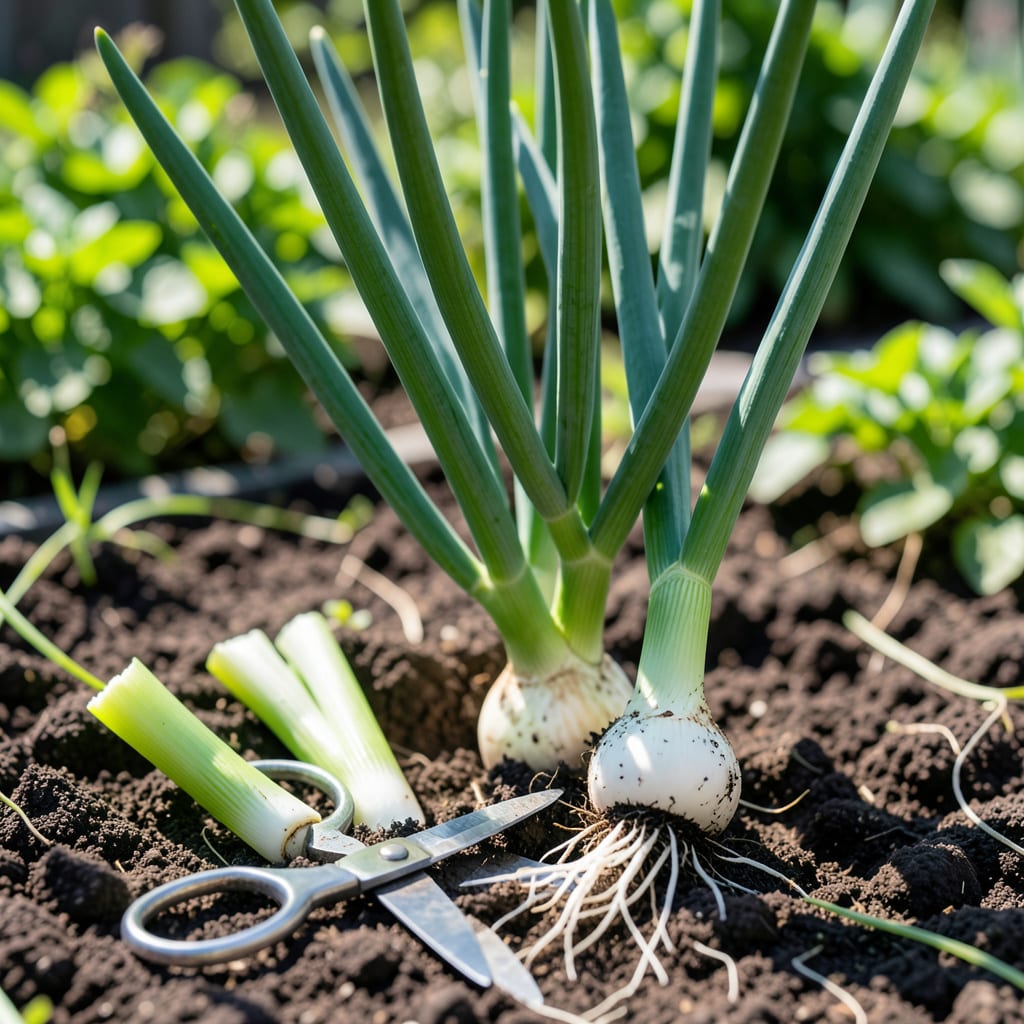
Imagine snipping fresh Green Onion 🧅 from your garden week after week. That endless supply is absolutely possible with the right approach to harvesting.
I’ll share the cut-and-come-again technique that keeps plants thriving. You’ll learn where to cut, when to harvest, and how to care for them afterward so they bounce back faster.


Harvesting green onions properly means you can keep enjoying fresh cut-and-come-again growth. The secret lies in making clean cuts at the right height and timing.
I always use sharp scissors or pruners to avoid crushing the stems. This helps the plant recover faster and reduces disease risk from jagged edges.
Timing your harvests is just as important as the technique. I’ve found that morning harvesting works best because the plants are turgid with moisture.
After cutting, give your green onions a good drink of water. This helps them recover from the stress and encourages new growth to emerge quickly.
If you notice any yellowing leaves, remove them immediately. This prevents disease spread and allows the plant to focus energy on healthy growth.
For continuous harvests, I recommend staggering your plantings. Sow new seeds every 2-3 weeks to ensure you always have fresh green onions ready.
The cut-and-come-again method works best with healthy, well-established plants. Make sure your green onions have strong root systems before you start harvesting.
With these simple steps, you’ll enjoy a steady supply of fresh green onions all season long. The key is consistency in your care and harvesting practices. ✂️
Even experienced gardeners sometimes make mistakes that stop green onions from regrowing. I’ve learned the hard way that small errors can cost you that second harvest.
One of the biggest issues is cutting too low. If you remove more than 2 inches above the soil, the plant struggles to recover. Always leave enough foliage for photosynthesis.
⚠️ Warning: Avoid these common harvesting mistakes that kill regrowth potential.
Another frequent mistake is using dull tools. I always keep sharp scissors dedicated to my green onions. Clean cuts heal faster and reduce disease risk significantly.
Timing matters more than many realize. Harvesting during the hottest part of the day puts unnecessary stress on your plants. Early morning is ideal when plants are most hydrated.
Watering practices after harvesting often get overlooked. While you should water after cutting, overwatering can be just as harmful as underwatering. Aim for 1 inch per week total.
Finally, don’t ignore the health of your plants between harvests. Remove any yellow or damaged leaves promptly to keep your green onions focused on new growth. ✂️
Not all green onions respond equally to the cut-and-come-again method. I’ve tested several types and found that some varieties bounce back faster and stronger after harvesting.
For the best results, choose perennial types that naturally regrow. These are bred to handle repeated cutting and will give you the most consistent harvests throughout the season.
| Variety | Notes |
|---|---|
| Evergreen Hardy White | Cold-hardy, fast regrowth, mild flavor |
| White Lisbon | Classic variety, reliable regrowth, crisp texture |
| Red Baron | Purple-red stems, bold flavor, regrows well |
| Guardsman | Disease-resistant, thick stems, excellent regrowth |
I’ve had great success with Evergreen Hardy White. It’s incredibly forgiving and will often regrow even after multiple harvests in a single season. The flavor stays consistently mild.
White Lisbon is another favorite. It’s a classic variety that’s been trusted by gardeners for generations. Its crisp texture makes it perfect for fresh eating right from the garden.
For a pop of color, try Red Baron. The purple-red stems add visual interest to your garden and plates. It has a slightly stronger flavor that holds up well in various dishes.
No matter which variety you choose, give them full sun and well-draining soil for the best results. With proper care, you’ll enjoy multiple harvests from each plant. ✂️
Harvest every 2-3 weeks once plants reach 6-8 inches tall. This gives them time to recover while maintaining steady production.
This usually happens if you cut too low or removed more than 1/3 of the plant. Always leave at least 2 inches above soil and use sharp tools for clean cuts.
Yes! Place the white roots in 1 inch of water. Change water daily and you’ll see new growth in 5-7 days. Transplant to soil once roots develop.
Early morning is ideal when plants are most hydrated. Avoid midday heat which stresses plants and can slow recovery.
