
Beautiful Plants For Your Interior
Beautiful Plants For Your Interior
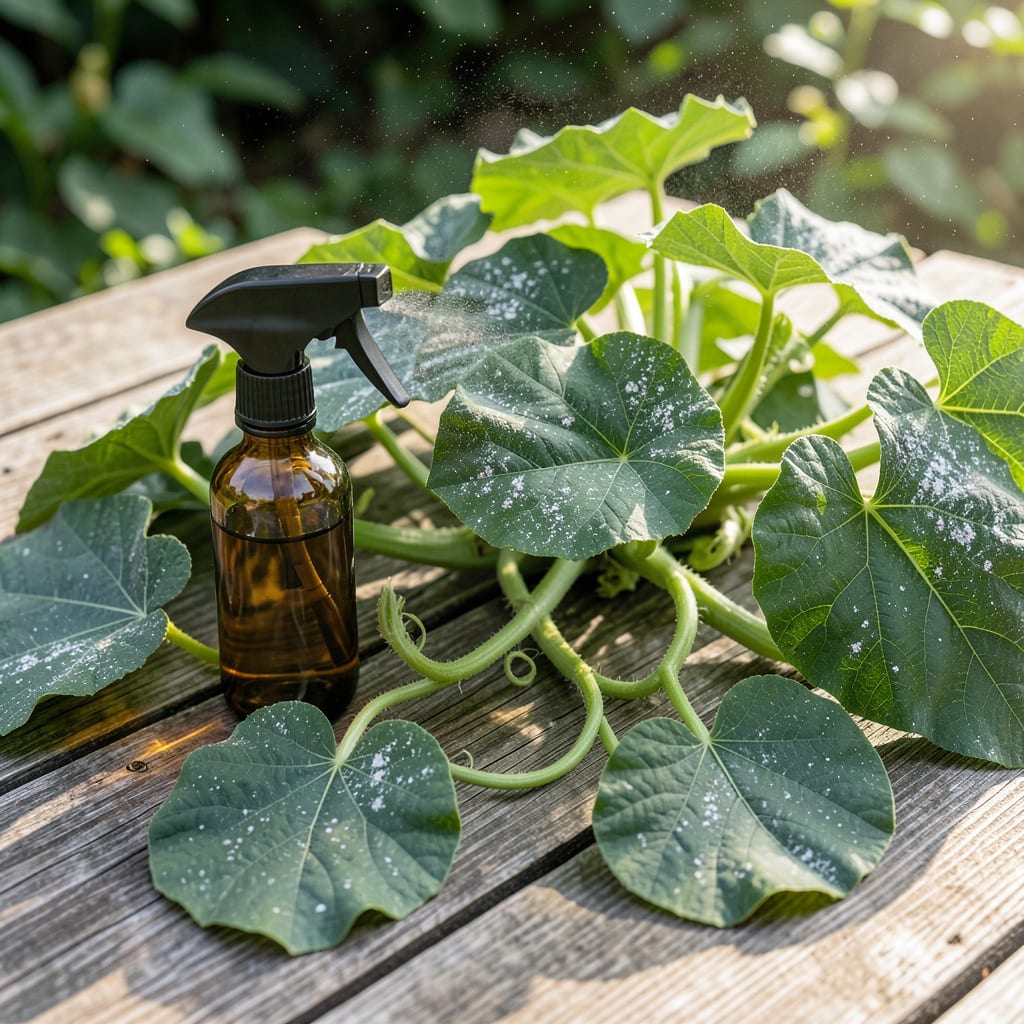
That white dust on your pumpkin leaves isn’t just ugly—it’s stealing your harvest. I’ve watched powdery mildew spread overnight, turning healthy vines into crispy messes by morning.
Neem oil stops it cold. The key is timing: apply at dusk, cover both sides of leaves, and reapply every 7-10 days until the problem vanishes. Your pumpkins will thank you with stronger vines and bigger fruit.
📚 In This Guide
Here’s the method I rely on to stop powdery mildew in its tracks and protect your pumpkin vines.
Check your pumpkin leaves for the first signs of white, powdery spots on the upper surfaces, typically appearing in late summer when humidity rises. I’ve found that catching it early—before it spreads to stems and vines—makes treatment far more effective.
Don’t confuse powdery mildew with downy mildew, which forms on the undersides of leaves. This fungal issue thrives in dry foliage with high humidity, so even a light morning dew can accelerate its growth. Inspect plants weekly, especially after rain or watering.
Combine 1 tablespoon of neem oil with 1 teaspoon of mild liquid soap (as an emulsifier) in 1 gallon of water. The soap helps the oil disperse evenly and stick to the leaves. I use warm water to help the oil blend more smoothly.
Shake the mixture vigorously before use, and re-shake every few minutes during application. Neem oil separates quickly, and an uneven solution won’t coat the leaves effectively. Test a small area first to ensure no phytotoxicity occurs on your specific pumpkin variety.
Spray the solution evenly over both sides of the leaves, focusing on the upper surfaces where powdery mildew appears. Use a fine mist to ensure full coverage without runoff. I apply in the early morning or late evening to avoid leaf burn from the sun.
Avoid spraying during the hottest part of the day or when temperatures exceed 90°F. Neem oil can scorch leaves under intense heat. Reapply every 7-10 days or after rain to maintain protection.
After the first application, watch for new powdery mildew spots over the next 3-5 days. If the issue persists, reapply the neem oil solution. I’ve found that improving air circulation around plants by spacing them properly and pruning dense foliage helps prevent recurrence.
Remove and destroy any severely infected leaves to reduce the fungal load. Water at the base of the plant to keep foliage dry, as wet leaves create an ideal environment for powdery mildew to thrive.
These practical insights will help you maximize effectiveness while avoiding common pitfalls with this organic solution.
Solution Stability: I learned this the hard way after ruining two batches—neem oil separates from water incredibly fast. Shake your spray bottle vigorously before each use and re-shake every few minutes during application. The emulsifier in Step 2 helps, but you’ll still need to agitate frequently to maintain an even coating on the leaves.
Timing Strategy: In Step 3, those early morning or late evening applications aren’t just suggestions—they’re critical. Applying when temperatures exceed 90°F can scorch your pumpkin leaves, and the midday sun can cause the oil to bake onto the foliage. I wait until the sun is completely off the plants or just starting to rise.
Coverage Technique: Don’t just spray the tops of the leaves as mentioned in Step 3. Powdery mildew can spread to undersides, so flip leaves gently to coat both surfaces. Use a fine mist setting on your sprayer to prevent runoff, which wastes solution and can damage plants. I test my spray pattern on a spare leaf first.
Prevention Focus: Between us, Step 4’s advice about air circulation is often overlooked. Space your pumpkin plants properly and prune dense foliage to allow airflow. This single step prevents more mildew than any treatment. I’ve seen gardens where proper spacing eliminated the need for repeated applications.
Apply neem oil every 7–10 days as a preventative, or every 5–7 days if powdery mildew is active. Always spray in the early morning or late evening to avoid leaf burn from the sun.
Yes, but avoid mixing it with chemical fungicides, as this may reduce effectiveness. Use neem oil alone or alternate with organic options like sulfur or baking soda sprays for a stronger defense.
Early morning or late evening is ideal. This prevents the oil from evaporating too quickly and reduces the risk of sunburn on leaves. Avoid spraying in direct sunlight or high heat.
Neem oil is low-toxicity but can harm beneficial insects if applied directly. Spray in the evening when pollinators are less active, and focus on the undersides of leaves to minimize contact.
Check your mix ratio (1–2 tbsp neem oil per gallon of water + soap as an emulsifier). Ensure thorough coverage, especially on leaf undersides, and reapply after rain. Severe cases may need a stronger treatment.
