
Beautiful Plants For Your Interior
Beautiful Plants For Your Interior
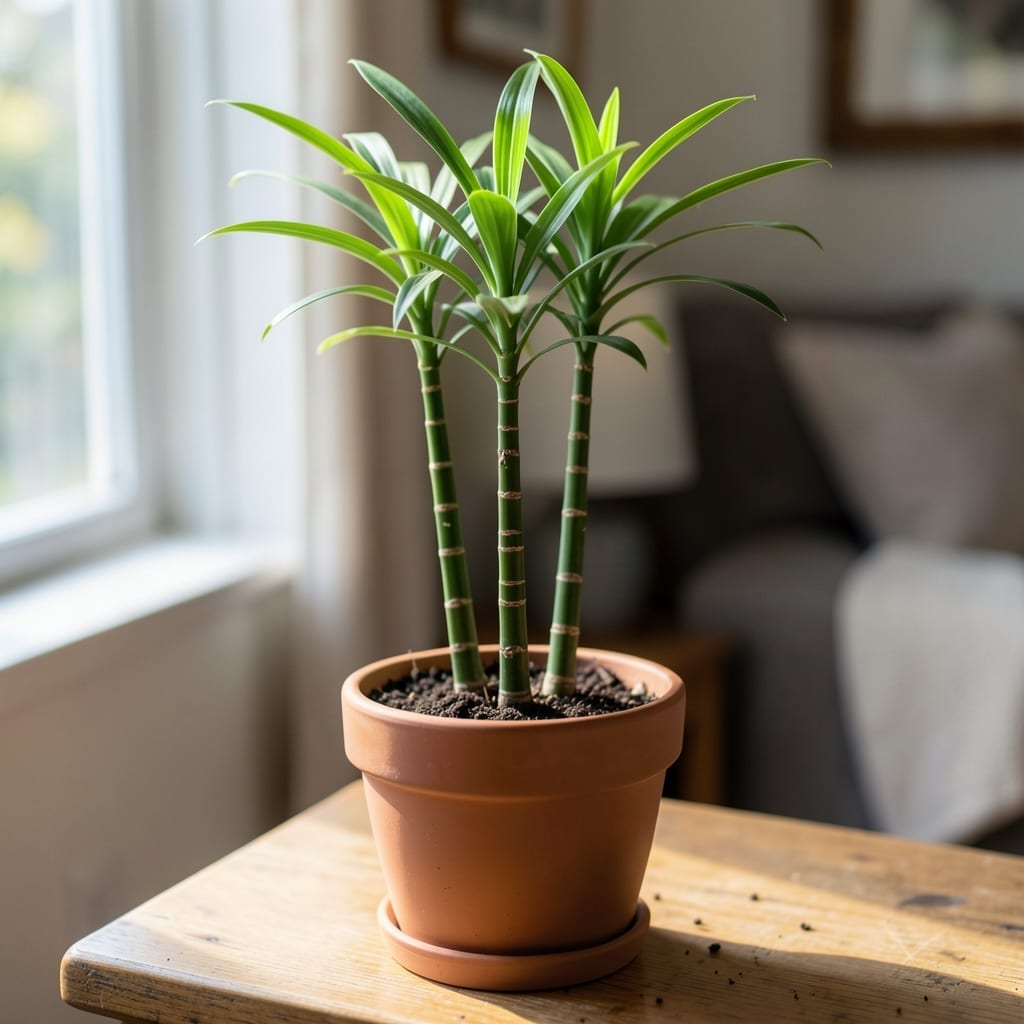
Brown spots on lucky bamboo leaves always signal something’s off. I’ve seen this happen with both overwatering and underwatering—turns out these plants are surprisingly picky about their moisture levels.
With a few adjustments to your watering routine and light conditions, you’ll see new green growth in 2-3 weeks. The key is catching the issue early before the stems start to weaken.
📚 In This Guide
Here is the method I use to nurse lucky bamboo back to health when leaves develop unsightly brown spots.
Begin by examining the entire plant for brown spots, yellowing, or crisp edges on the leaves. Each symptom tells a different story—brown tips often indicate low humidity, while full brown patches usually signal over-fluoridation or chlorine in the water. I always check the stems too; soft or black stems mean root rot has already set in.
Move the plant away from other houseplants immediately. This prevents potential spread of pathogens and lets you focus on recovery without cross-contamination. Place it in a spot with bright, indirect light—the same type it normally thrives in—to avoid additional stress from sudden changes.
Using clean, sharp scissors or pruning shears, remove any leaves with significant brown spotting. Cut at the base where the leaf meets the stem, making a clean, angled cut. I never remove more than one-third of the foliage at once; the plant still needs healthy leaves to photosynthesize and recover.
If stems are mushy or discolored, trim them below the affected area. Cutting into healthy tissue prevents the spread of decay. Sterilize your tools with rubbing alcohol between cuts to avoid transferring pathogens. This step feels drastic, but it redirects the plant’s energy toward new, healthy growth.
Lucky bamboo is sensitive to chemicals in tap water. Switch to using distilled, filtered, or rainwater only. If you must use tap water, let it sit out for 24 hours to allow chlorine to evaporate, though this won’t remove fluoride.
Ensure the container has proper drainage or that the water level in a vase setup covers only the roots, not the stems. Change the water every 7-10 days to prevent stagnation and bacterial growth. I’ve found that adding a few drops of hydrogen peroxide to the water (1 teaspoon per cup) can help oxygenate the roots and combat rot.
Increase humidity around the plant by misting the leaves lightly with distilled water every 2-3 days. Alternatively, place the container on a tray filled with pebbles and a small amount of water to create a humid microclimate. Avoid wetting the stems directly to prevent rot.
Maintain a consistent temperature between 65-80°F. Avoid placing the plant near drafts, heating vents, or air conditioning units, as sudden temperature fluctuations stress the plant. I use a small indoor thermometer to monitor conditions closely during recovery.
After pruning and adjusting care, watch for new growth emerging from the top of the stems or at the nodes. This is a positive sign that the plant is recovering. It can take 4-6 weeks to see noticeable improvement, so patience is key.
Fertilize lightly with a diluted, balanced liquid fertilizer (one-quarter strength) once new leaves appear. Over-fertilizing at this stage can burn the recovering roots and set back progress. I’ve learned that less is more—lucky bamboo is resilient and often recovers with just clean water and stability.
Here is what I have learned from reviving many lucky bamboo plants with brown leaves.
Water Quality Insight: The 24-hour chlorine evaporation method for tap water only removes chlorine, not fluoride. For best results, always use distilled, filtered, or rainwater as the instructions specify. This single change often prevents new brown spots from forming.
Pruning Precision: When removing damaged foliage in Step 2, never exceed the one-third limit of total leaves. I once removed too much and the plant struggled to recover. Also, always sterilize tools between cuts to prevent spreading problems to healthy areas.
Environmental Consistency: Maintain that 65-80°F temperature range religiously. I use a small thermometer near my plants and was surprised to find drafts from windows creating problematic fluctuations. Even a few degrees outside this range can slow recovery significantly.
Patience Timeline: The 4-6 week recovery period mentioned in Step 5 is realistic. Don’t be tempted to over-fertilize to speed things up—this often does more harm than good. I’ve found that plants showing new growth at the nodes are well on their way to full recovery.
Yellowing or browning leaves often signal overwatering, poor drainage, or too much direct sunlight. Check your watering routine and ensure the plant isn’t sitting in soggy soil. Filtered or distilled water can prevent chlorine damage.
Water every 7–10 days, or when the top inch of soil feels dry. Avoid tap water with fluoride or chlorine, as these can cause leaf discoloration. Mist the leaves occasionally to maintain humidity.
Yes! Trim the brown tips with clean scissors, cutting just the damaged parts. Ensure the plant gets indirect light and proper water quality. Recovery takes a few weeks, so be patient.
Use distilled, rainwater, or filtered water to avoid chemical buildup. Bottled spring water is another great option. Avoid softened water, as it contains salts that can harm the plant.
Curling leaves usually indicate low humidity or underwatering. Increase humidity with a pebble tray or humidifier, and keep the soil lightly moist. Avoid placing the plant near drafts or heaters.