
Beautiful Plants For Your Interior
Beautiful Plants For Your Interior
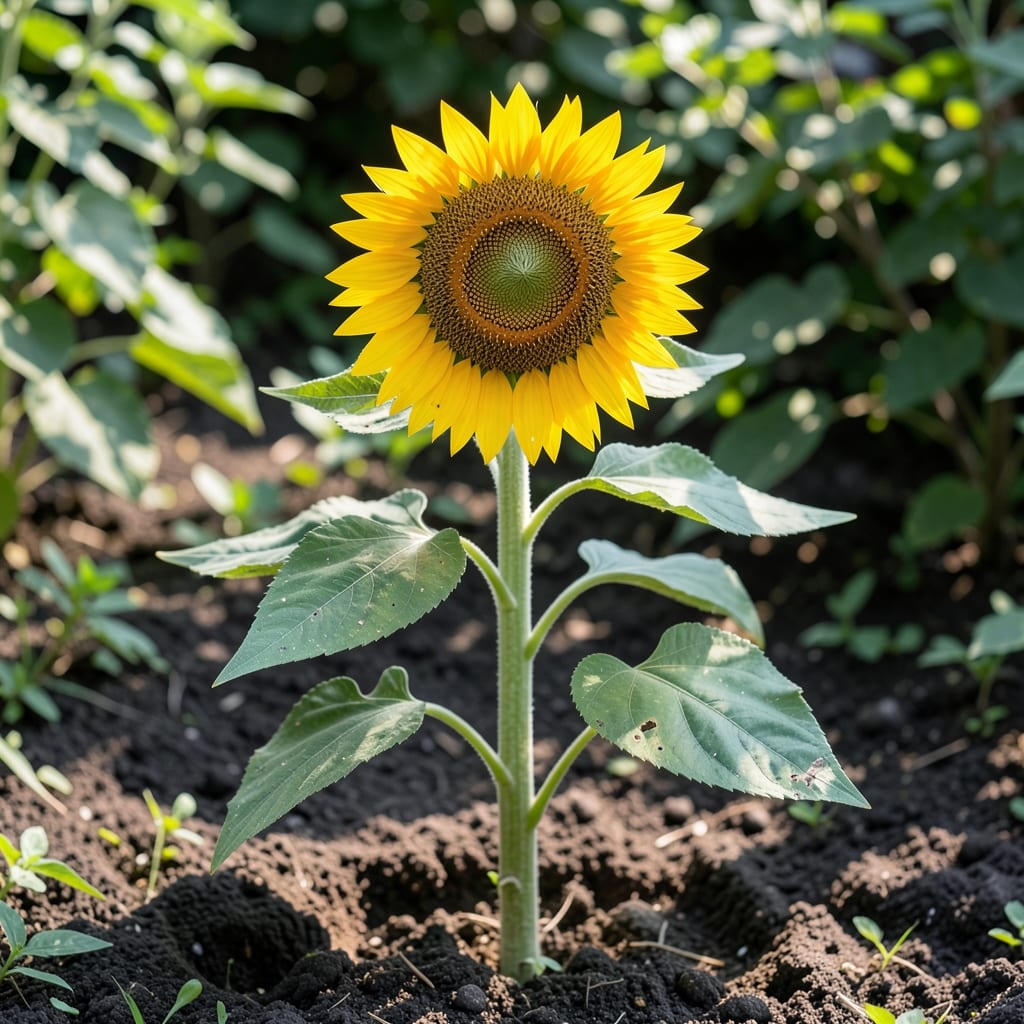
Sunflower leaves tell you everything about your plant’s health before the blooms even appear. I check mine daily for color changes, spots, or wilting—early signs of trouble that are easier to fix than you’d think.
Healthy foliage means stronger stems and bigger flowers. With a few simple habits—proper spacing, good airflow, and consistent watering—you’ll keep those vibrant green leaves working hard all season long.
📚 In This Guide
Here’s how I diagnose and treat common leaf problems to keep sunflowers thriving all season.
Begin by examining both upper and lower leaf surfaces with a hand lens. Look for subtle changes in color, texture, or pattern that indicate trouble. I always start at the base of the plant and work upward, as many diseases manifest in lower leaves first.
Watch for yellowing between veins, which often signals nutrient deficiencies or early fungal infection. Dark spots with yellow halos typically indicate bacterial leaf spot. White powdery coatings point to powdery mildew, while downy mildew appears as yellow patches on upper surfaces with corresponding fuzzy gray growth underneath.
This systematic approach catches problems before they spread to the entire plant. Early detection often means the difference between saving your sunflowers and losing them to disease.
Once you spot symptoms, compare them to known disease profiles. Rust appears as orange-brown pustules on leaf undersides, while alternaria leaf spot creates brown to black spots with concentric rings. Septoria leaf spot shows as irregular brown spots with gray centers.
I’ve found that photographing symptoms and comparing them to university extension guides provides the most accurate identification. Note the pattern of leaf damage—whether it’s random, clustered, or following vein patterns—as this helps distinguish between fungal, bacterial, and viral issues.
Remember that environmental factors like excess moisture or poor air circulation often contribute to disease development, so observe growing conditions as part of your diagnosis.
At the first sign of disease, remove infected leaves immediately using clean pruners. I always sterilize my tools between cuts with 70% isopropyl alcohol to prevent spreading pathogens to healthy tissue. Place all removed foliage in a sealed bag—not in your compost—to prevent spores from reinfecting your garden.
For severe infections, remove entire plants if more than 30% of foliage shows damage. This sacrifices one plant to save the rest. Never work with wet plants, as this spreads fungal spores. I wait until mid-morning when dew has evaporated but temperatures remain cool.
After removal, monitor remaining plants daily for new symptoms. Some diseases have a 7-14 day incubation period before new signs appear.
For fungal diseases like powdery mildew or rust, apply a copper-based fungicide or neem oil according to label instructions. I’ve had success with baking soda solutions (1 tablespoon per gallon of water plus a drop of dish soap) for mild powdery mildew cases. Always apply in the evening to prevent leaf burn.
Bacterial issues respond best to copper sprays applied at 5-7 day intervals. For viral diseases, removal of infected plants remains the only effective control, as viruses cannot be cured with chemicals. Improve plant vigor with balanced fertilization to help sunflowers outgrow minor infections.
Rotate treatments to prevent pathogen resistance. I keep detailed records of what works against specific diseases in my garden, as local conditions can affect treatment efficacy.
Space sunflowers at least 12-18 inches apart to ensure good air circulation. I plant mine in a location with full sun and well-draining soil to reduce moisture-related problems. Water at the base of plants using drip irrigation to keep foliage dry.
Rotate crops yearly to prevent pathogen buildup in the soil. Remove all plant debris at season’s end, as many fungal spores overwinter in dead leaves. Consider planting resistant varieties like ‘Moulin Rouge’ or ‘ProCut’ series for next season.
Apply a 2-3 inch layer of organic mulch around plants to prevent soil-borne spores from splashing onto leaves during rain. This simple practice has reduced my disease incidents by nearly 50% in recent years.
Small details make the difference between thriving plants and a lost season.
Early Detection Strategy: In Step 1, when examining leaves, use a magnifying glass to catch subtle signs like yellowing between veins or fuzzy gray growth before they spread. I learned the hard way that missing these early warnings can mean the difference between saving your plants and losing them.
Sterilization Protocol: During Step 3, always sterilize your pruners with 70% isopropyl alcohol between cuts. This prevents spreading pathogens from infected to healthy foliage. I keep a spray bottle of alcohol handy while working through my garden.
Treatment Timing: For Step 4, apply treatments in the evening to prevent leaf burn from the sun. This is especially critical for the baking soda solution—it’s effective but can damage leaves if applied during peak sunlight hours.
Prevention Technique: In Step 5, the 2-3 inch layer of mulch isn’t just for moisture retention. It creates a physical barrier that prevents soil-borne spores from splashing onto leaves during rain, which has cut my disease incidents nearly in half.
Yes! Yellowing or spotted leaves often signal disease, pests, or nutrient deficiencies. Healthy leaves are vibrant green and firm.
Act at the first sign of trouble—discoloration, spots, or wilting. Early treatment prevents spread and maximizes recovery chances.
Neem oil, baking soda sprays, or compost tea can combat fungal issues. Remove severely infected leaves to stop disease progression.
Brown leaves may result from underwatering, over-fertilizing, or fungal infections like rust. Check soil moisture and adjust care accordingly.