
Beautiful Plants For Your Interior
Beautiful Plants For Your Interior
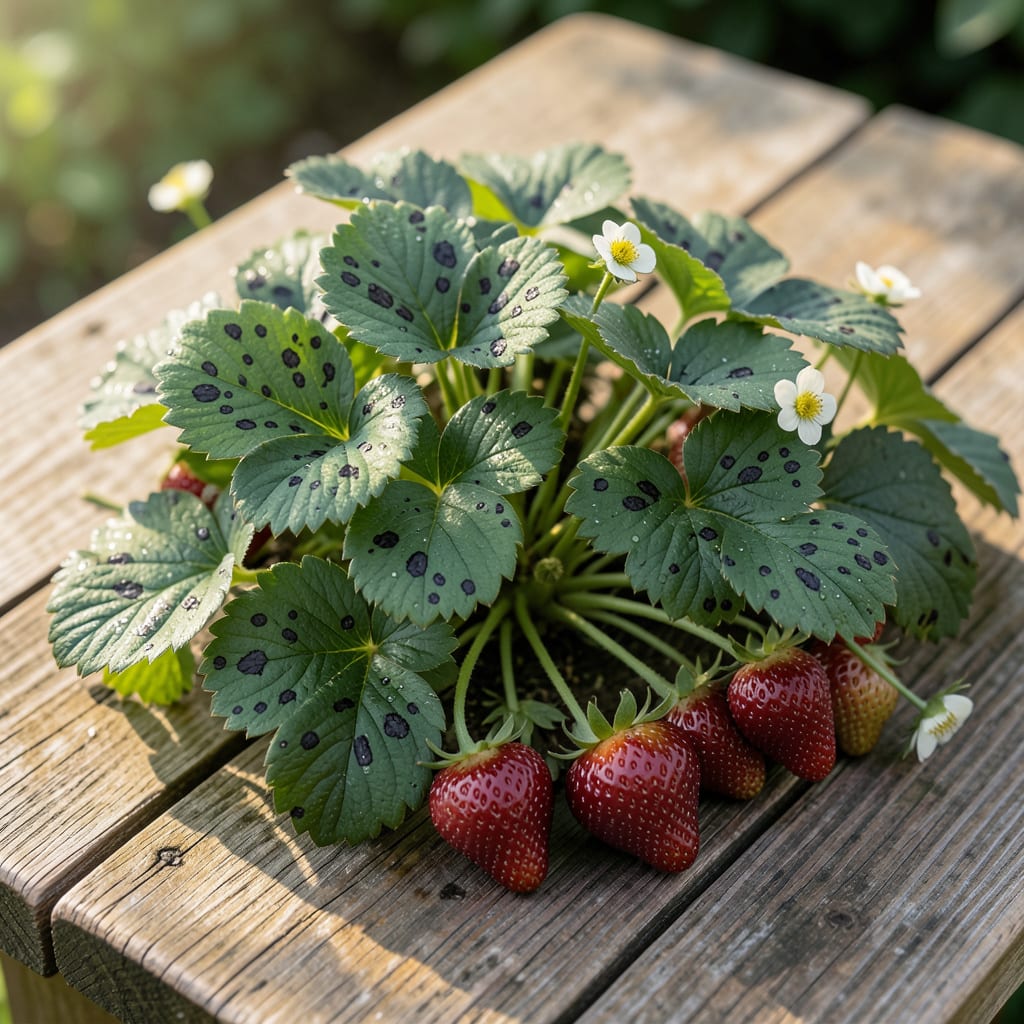
Those black spots on your strawberry leaves aren’t just ugly—they’re a warning sign. 🌿 I’ve seen entire patches wiped out by ignoring this early symptom, but catching it now means saving your plants and next year’s harvest.
Most often, it’s leaf spot fungus, thriving in wet conditions. Overhead watering, crowded plants, or last season’s debris create the perfect breeding ground. The good news? This is 100% treatable with the right approach.
Start with removing infected leaves and improving air flow. A simple baking soda spray works wonders as an organic fungicide. Within 7-10 days, you’ll see the spread stop and new growth emerge clean.
Prevention is simpler than cure. Space plants properly, water at the base, and clean up fallen leaves. Your strawberries will thank you with bigger, healthier yields next season.
Black spots on strawberry leaves often signal underlying issues that can threaten plant health. Here are the most common causes, explained scientifically:
Leaf Spot Disease (Mycosphaerella fragariae) is a primary culprit. This fungus thrives in wet, humid conditions, producing circular black or purple-brown spots with gray centers. Spores spread via water splashes or contaminated tools, infecting new foliage.
Xanthomonas fragariae causes angular black spots, often with yellow halos. Bacteria enter through wounds or stomata, multiplying rapidly in warm, wet weather. Unlike fungal spots, these may appear water-soaked initially.
Sap-sucking pests like spider mites or aphids weaken leaves, creating entry points for pathogens. Their feeding can also cause stippling or blackened areas from secondary infections.
Overwatering, poor drainage, or excessive shade can stress plants, making them vulnerable to diseases. Nutrient deficiencies (e.g., potassium or calcium) may also manifest as dark spots or necrotic tissue.
Overuse of fertilizers or pesticides can scorch foliage, leaving black or brown patches. Always follow application rates and rinse leaves if accidental exposure occurs.
Tackling black spots on strawberry leaves starts with identifying the cause and applying the right fix. Below are targeted solutions for common culprits, along with prevention tips to keep your plants thriving.
Fix: Remove and destroy infected leaves immediately to prevent spread. Apply copper-based fungicides or a homemade mix of 1 tsp baking soda + 1 quart water + a few drops of dish soap. Spray every 7–10 days until symptoms vanish.
Prevention: Improve airflow by spacing plants 12–18 inches apart. Water at the base (not overhead) and avoid wet foliage. 💡 Pro tip: Mulch with straw to reduce soil splashing onto leaves.
Fix: Blast pests off with a strong stream of water. For stubborn infestations, use neem oil or insecticidal soap, applying in the early morning or late evening. Repeat every 4–5 days until gone.
Prevention: Encourage beneficial insects like ladybugs by planting companion flowers (e.g., marigolds). Inspect leaves weekly for early signs of pests.
Fix: Amend soil with wood ash (for potassium) or crushed eggshells (for calcium). For a quick boost, use a balanced organic fertilizer (e.g., 5-5-5) and follow package instructions.
Prevention: Test soil annually and enrich with compost before planting. ✨ Pro tip: Avoid over-fertilizing with nitrogen, which can worsen susceptibility to disease.
Fix: Let the top 1–2 inches of soil dry out between waterings. If drainage is poor, transplant strawberries to raised beds or containers with well-draining potting mix.
Prevention: Use drip irrigation to keep foliage dry. Ensure pots have drainage holes, and avoid soggy soil at all costs.
Consistency is key—monitor your plants regularly and act at the first sign of trouble. Healthy strawberries reward you with sweet, bountiful harvests! 🍓
Yes, fungal and bacterial causes can spread quickly. Remove infected leaves immediately and avoid overhead watering to prevent contamination.
If the fruit itself isn’t spotted, it’s safe. Wash thoroughly before eating. Discard any berries with dark spots or signs of mold.
For fungal issues, apply organic sprays every 7-10 days until symptoms disappear. Monitor closely for new spots during wet weather.
Clean up all plant debris in fall, rotate crops, and space plants 12-18 inches apart. Start with disease-resistant varieties if available.
