
Beautiful Plants For Your Interior
Beautiful Plants For Your Interior
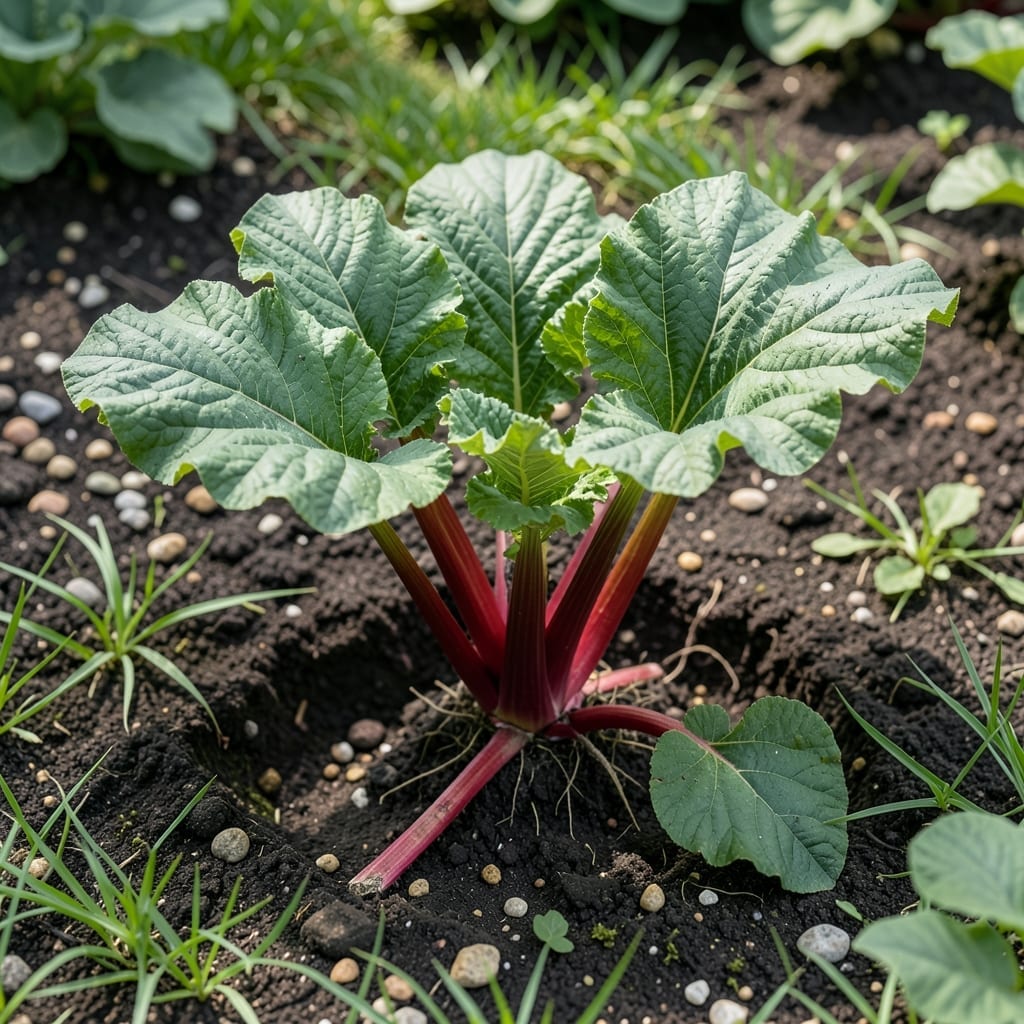
I learned the hard way that rhubarb leaves aren’t just bitter—they’re toxic. Oxalic acid in those big, beautiful leaves can cause serious harm if eaten, even in small amounts.
Here’s the thing—safe identification is simple once you know what to look for. The edible stalks are crisp and tart, while the leaves are always poisonous, no matter how healthy they appear.
📚 In This Guide
Here’s the method I use to distinguish toxic leaves from edible stalks without any guesswork.
Start by looking at the shape and color of the foliage. Rhubarb leaves are broad, heart-shaped, and often measure 1-2 feet across at maturity. The surface is typically a deep, vibrant green with a slightly wrinkled texture.
I always check the underside too—it’s usually a lighter shade of green with prominent veins. The edges can be smooth or slightly wavy, but never serrated like some edible greens. This distinct appearance is your first visual confirmation.
If the leaves look wilted or discolored, don’t assume they’re safe. Even damaged leaves retain their toxicity.
Rhubarb leaves grow directly from the crown at the base of the plant, attached to thick, fleshy stalks. The stalks are the only edible part, and they range in color from red to green, depending on the variety. The contrast is stark: bright, crisp stalks with large, green leaves.
I run my fingers along the stalk to feel its smooth, firm texture. The leaf itself is soft and pliable when fresh but turns leathery as it ages. Never confuse the leaf’s texture with the stalk’s—this is a critical distinction.
Remember, the leaf’s base wraps partially around the stalk. This is a key identifier that separates it from look-alike plants.
Rhubarb plants form large clumps with multiple stalks rising from a central crown. They thrive in well-drained, fertile soil and are often found in garden beds or old homestead sites. The leaves emerge in early spring and can remain through the first frost.
I look for the plant’s overall height, which typically reaches 2-4 feet tall. The leaves create a bushy canopy over the stalks. If you see this growth habit, you’re likely looking at rhubarb.
Wild rhubarb is rare, so most encounters happen in cultivated settings. Still, always confirm with multiple checks before handling.
Crush a small piece of the leaf between your fingers and take a cautious sniff. Rhubarb leaves emit a faint, earthy odor that’s not overly strong. Some describe it as slightly sour, but it’s subtle.
I never taste-test—this is purely about scent. The stalk, when cut, has a tangy aroma, but the leaf’s smell is more muted. This test, combined with visual checks, helps rule out similar-looking plants like dock or sorrel.
If the scent is pungent or unfamiliar, do not proceed. It’s better to be safe and avoid any doubt.
Rhubarb leaves contain high levels of oxalic acid, which is toxic if ingested. Even small amounts can cause nausea, vomiting, or kidney issues. I always wear gloves when handling the leaves, especially if I’m pruning or removing them.
Dispose of leaves in a way that prevents accidental consumption by pets or wildlife. Composting is safe only if your pile reaches high temperatures to break down the toxins. Otherwise, discard them with household waste.
When in doubt, focus on the stalks and leave the leaves untouched. Safe identification means never taking risks.
These practical pointers will help you confidently distinguish rhubarb leaves from edible plants.
Visual Confirmation: In Step 1, focus on the heart-shaped leaves measuring 1-2 feet across. The deep green, wrinkled surface with lighter undersides and prominent veins is a dead giveaway. Don’t rush this step—careful observation prevents dangerous mistakes.
Texture Matters: As mentioned in Step 2, the contrast between the thick, smooth stalks and the soft, pliable leaves is crucial. The leaf base wrapping around the stalk is another reliable identifier. I always double-check this before handling any part of the plant.
Safety First: Step 5 emphasizes the toxicity of rhubarb leaves due to oxalic acid. I always wear gloves when handling them, and I recommend disposing of leaves in sealed trash bags rather than compost to prevent accidental ingestion by pets or wildlife.
Yes, rhubarb leaves contain oxalic acid and anthraquinone glycosides, which are toxic. Ingesting them can cause nausea, vomiting, or even kidney damage. Always discard leaves and only consume the stalks.
It’s best to avoid composting rhubarb leaves due to their high oxalic acid content, which can harm plants. If composted, use small amounts and balance with other green materials to minimize toxicity.
Rinse your mouth and drink plenty of water. If symptoms like nausea or dizziness occur, seek medical attention immediately. Never induce vomiting unless instructed by a healthcare professional.
Edible rhubarb has thick, crisp stalks (usually red or green) and large, broad leaves. Only the stalks are safe to eat—always remove and discard the leaves before consumption.
If you need greens for cooking, try spinach, Swiss chard, or kale. These are safe, nutrient-rich alternatives that won’t pose the same risks as rhubarb leaves.