
Beautiful Plants For Your Interior
Beautiful Plants For Your Interior
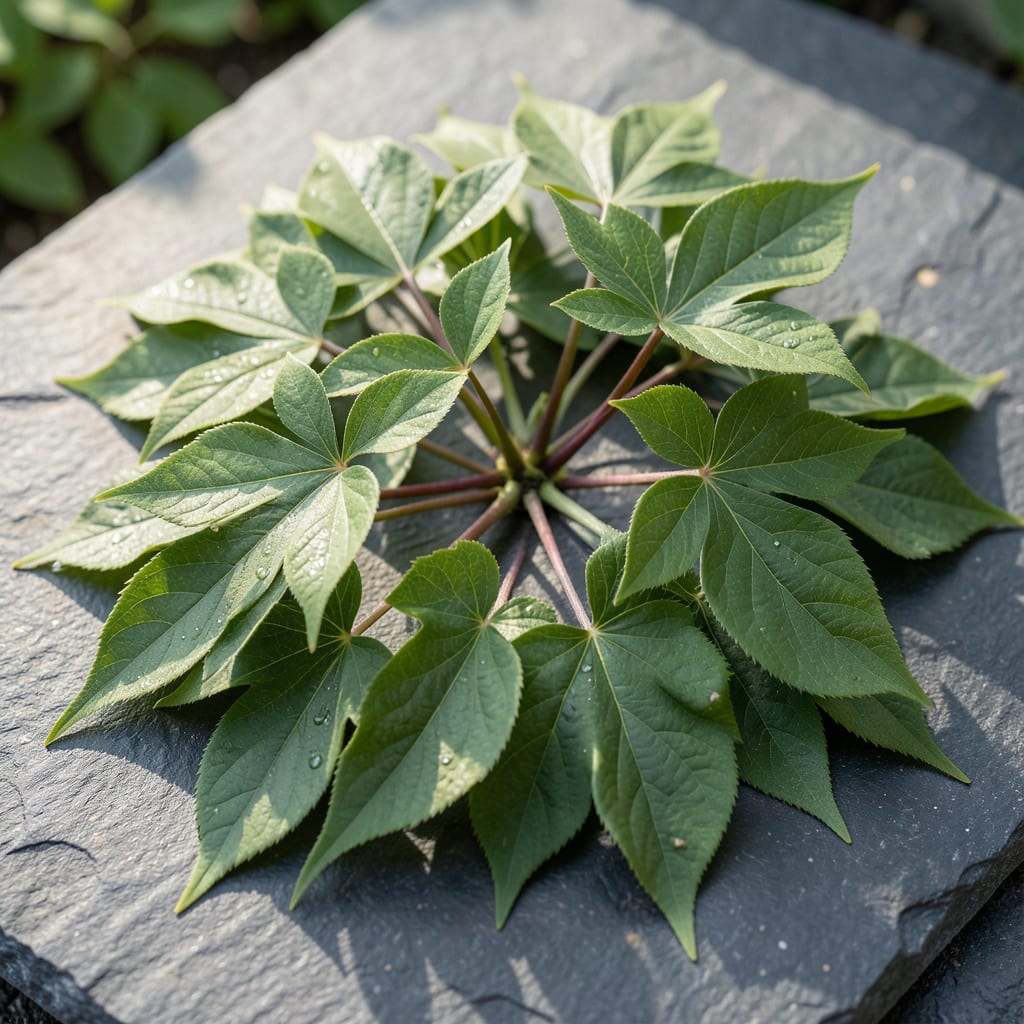
Clematis leaves are compound, typically with 3-5 leaflets arranged in pairs along a central stem. Each leaflet is oval or lance-shaped with smooth edges, growing 2-6 inches long depending on the variety.
Color ranges from deep green to purgle-tinged in some cultivars, with a slightly textured surface. The arrangement alternates along the vine, creating a ladder-like pattern that’s distinctive once you notice it.
📚 In This Guide
Here’s how to recognize the distinct characteristics of clematis foliage with confidence.
Clematis leaves are compound, meaning each leaf is composed of multiple leaflets arranged along a central stem. Most varieties have 3 to 5 leaflets per leaf, though some may have up to 7. This structure is the first clue that you’re looking at clematis rather than a simple-leaf plant.
I always start by counting the leaflets on a mature specimen. The leaflets emerge in pairs along the central rachis, with a single terminal leaflet at the tip. This pinnate arrangement is consistent across the majority of clematis species and cultivars.
The individual leaflets typically display an ovate to lanceolate shape, tapering to a point at the tip. The base of each leaflet may be rounded or slightly heart-shaped, depending on the variety. This shape is particularly noticeable in the popular large-flowered hybrids.
Examine the edges carefully. Most clematis leaflets have entire margins (smooth edges), though some species like Clematis montana may exhibit finely serrated edges. The texture is generally smooth to slightly leathery, with a glossy upper surface that catches the light.
Clematis leaves grow in an opposite arrangement along the stems, with pairs emerging at each node. This is a key distinguishing feature from plants with alternate leaf arrangements. As you move up the stem, you’ll see this pattern repeat consistently.
I find it helpful to look at where the leaves attach to the stem. Each pair of leaves emerges at a 90-degree angle to the pair below it, creating a spiral effect as the vine grows. This decussate arrangement is particularly evident in vigorous growers like Clematis jackmanii.
Leaf size varies significantly between species and cultivars. Large-flowered hybrids typically have leaflets measuring 2 to 4 inches long, while some species like Clematis armandii can produce leaflets up to 6 inches in length. The overall leaf (including all leaflets) may span 6 to 12 inches across.
Color is another important identifier. Most clematis leaves are a vibrant medium to dark green during the growing season. However, some varieties like Clematis recta ‘Purpurea’ display striking purple-tinged foliage. New growth often appears lighter green or even reddish before maturing to its typical color.
Clematis leaves undergo noticeable changes throughout the growing season. In spring, new foliage emerges with a lighter, almost chartreuse color that gradually deepens. During summer, the leaves reach their full size and deepest green hue.
As autumn approaches, many clematis varieties develop spectacular fall color. You might observe leaves turning golden yellow, burnt orange, or even deep red before they drop. This seasonal transformation can be particularly dramatic in species like Clematis terniflora.
Here are key insights to help you identify clematis foliage with precision.
Leaf Structure Clue: Always count the leaflets first—most clematis have 3 to 5 leaflets per leaf, arranged in a pinnate pattern along a central rachis. This compound structure immediately distinguishes them from simple-leaf plants. I’ve found that mature specimens show this arrangement most clearly.
Arrangement Insight: The opposite leaf arrangement along stems is a dead giveaway. Each pair emerges at a 90-degree angle to the pair below, creating a spiral effect. This decussate pattern is particularly noticeable in vigorous varieties like Clematis jackmanii.
Seasonal Cues: Don’t overlook seasonal changes. In spring, new growth often appears lighter or reddish before deepening to medium or dark green. By autumn, many varieties transform into golden yellow, burnt orange, or deep red, which can be stunning in species like Clematis terniflora.
Edge and Texture Tip: While most clematis leaflets have smooth, entire margins, some species like Clematis montana may have finely serrated edges. The texture is usually smooth to slightly leathery with a glossy upper surface, which helps catch the light for easy identification.
Clematis leaves are typically compound, with 3-7 leaflets arranged in pairs along a central stem. They’re often green, oval or lance-shaped, and may have serrated edges. Some varieties feature smooth or slightly textured surfaces.
Yellowing leaves often signal overwatering, poor drainage, or nutrient deficiencies. Check soil moisture and ensure proper drainage. A balanced fertilizer can help restore vibrant green foliage.
No, leaf shapes vary by species. Some have simple, heart-shaped leaves, while others display feathery, fern-like foliage. Always refer to your specific clematis variety for accurate identification.
Clematis leaves typically appear in early to mid-spring, depending on the climate. Warmer regions may see foliage sooner, while cooler areas might experience a slight delay.
Some clematis varieties may cause mild skin irritation due to natural compounds. Wear gloves when pruning or handling the plant to avoid potential reactions.
